THE ADVENTURE COLLECTIVE® · Independent discovery and booking for outdoor travel

A brisk 1.5-hour golf cart tour that links Janiculum Hill’s panoramic views with Trastevere’s historic churches and mosaics. Ideal for travelers who want concentrated history, photo stops, and minimal walking.
A brisk 1.5-hour golf cart tour that links Janiculum Hill’s panoramic views with Trastevere’s historic churches and mosaics. Ideal for travelers who want concentrated history, photo stops, and minimal walking.
You crest a low Roman hill and the city opens: tiled roofs, church domes, and the sweep of the Tiber below. The golf cart hums quietly as your guide points out the equestrian statue of Giuseppe Garibaldi on the Janiculum—an inescapable marker of Italy’s 19th-century unification—while a cool breeze carries the faint bell toll from Trastevere’s narrow lanes.
Verified experiences and guided adventures in the surrounding area.
Operated by Arcadia Tour Operator e DMC · Rome, Lazio
You crest a low Roman hill and the city opens: tiled roofs, church domes, and the sweep of the Tiber below. The golf cart hums quietly as your guide points out the equestrian statue of Giuseppe Garibaldi on the Janiculum—an inescapable marker of Italy’s 19th-century unification—while a cool breeze carries the faint bell toll from Trastevere’s narrow lanes.
The route moves from panoramic belvederes to compact urban churches. Bramante’s Tempietto at San Pietro in Montorio sits within a cloistered courtyard, a compact example of Renaissance geometry carved into the city’s fabric. Nearby, the Fountain of Acqua Paola pours a baroque welcome, its stonework hewn from Rome’s aqueduct history. In Trastevere, basilicas like Santa Cecilia and Santa Maria display golden mosaics and centuries of liturgical art; Bernini’s sculptural drama at San Francesco a Ripa offers a close, human-scale encounter with Baroque feeling.
This 90-minute circuit covers short drives and brief stops rather than long walks—ideal for travelers who want concentrated history and photo-ready viewpoints without hours on foot. Expect cobbled streets where the cart must yield to pedestrians and occasional narrow turns that reward patient driving. Bring comfortable shoes for short walks between stops, a light layer for hilltop wind, and a charged phone for photos.
Timing matters: late afternoon softens mosaics and reduces midday crowds, while early morning brings cleaner light and cooler pavement. The experience is compact, informative, and suited to anyone seeking a brisk, low-impact introduction to Rome’s western hills and Trastevere’s intimate streets.
The tour lasts about 1.5 hours (approximately 90 minutes) with several short stops for photos and brief visits.
Yes; infants may sit on an adult’s lap and children are welcome — inform the operator about ages when booking.
No — walking is minimal, limited to short walks at each stop to view viewpoints and enter church entrances if desired.
After booking you must contact the operator to confirm the pickup address and time; contact details are provided with your reservation.
Arcadia Tour Operator e DMC operates guided outdoor trips and adventures with an emphasis on safety, stewardship, and memorable experiences.
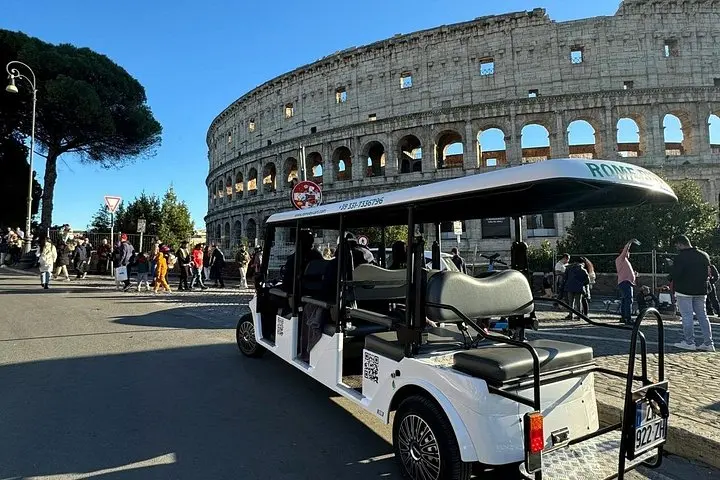
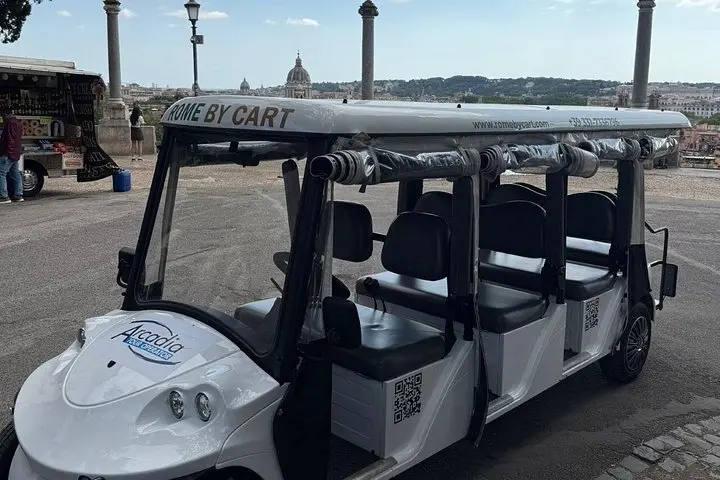
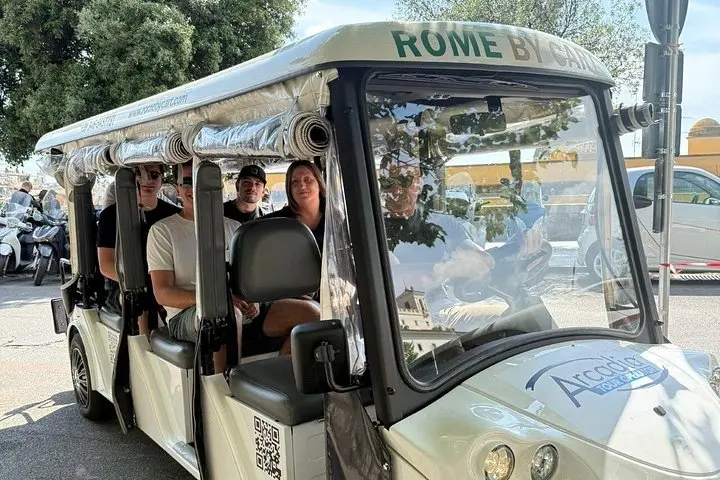
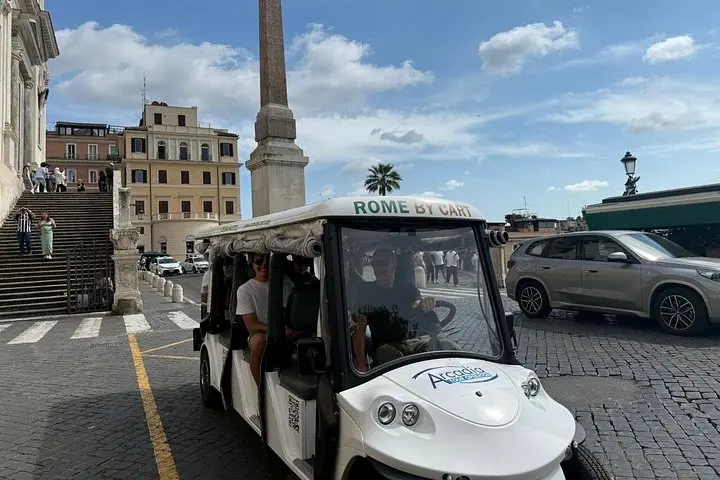
You crest a low Roman hill and the city opens: tiled roofs, church domes, and the sweep of the Tiber below. The golf cart hums quietly as your guide points out the equestrian statue of Giuseppe Garibaldi on the Janiculum—an inescapable marker of Italy’s 19th-century unification—while a cool breeze carries the faint bell toll from Trastevere’s narrow lanes.
You crest a low Roman hill and the city opens: tiled roofs, church domes, and the sweep of the Tiber below. The golf cart hums quietly as your guide points out the equestrian statue of Giuseppe Garibaldi on the Janiculum—an inescapable marker of Italy’s 19th-century unification—while a cool breeze carries the faint bell toll from Trastevere’s narrow lanes.
The route moves from panoramic belvederes to compact urban churches. Bramante’s Tempietto at San Pietro in Montorio sits within a cloistered courtyard, a compact example of Renaissance geometry carved into the city’s fabric. Nearby, the Fountain of Acqua Paola pours a baroque welcome, its stonework hewn from Rome’s aqueduct history. In Trastevere, basilicas like Santa Cecilia and Santa Maria display golden mosaics and centuries of liturgical art; Bernini’s sculptural drama at San Francesco a Ripa offers a close, human-scale encounter with Baroque feeling.
This 90-minute circuit covers short drives and brief stops rather than long walks—ideal for travelers who want concentrated history and photo-ready viewpoints without hours on foot. Expect cobbled streets where the cart must yield to pedestrians and occasional narrow turns that reward patient driving. Bring comfortable shoes for short walks between stops, a light layer for hilltop wind, and a charged phone for photos.
Timing matters: late afternoon softens mosaics and reduces midday crowds, while early morning brings cleaner light and cooler pavement. The experience is compact, informative, and suited to anyone seeking a brisk, low-impact introduction to Rome’s western hills and Trastevere’s intimate streets.