THE ADVENTURE COLLECTIVE® · Independent discovery and booking for outdoor travel

Spend a focused half-day on Santa Cruz exploring Los Gemelos sink holes, hiking Scalesia cloud forest, and meeting free-roaming giant tortoises at a protected reserve. This 3–4 hour shared tour blends geology, wildlife viewing and a short lava-tube visit—ideal for first-time Galápagos visitors.
Spend a focused half-day on Santa Cruz exploring Los Gemelos sink holes, hiking Scalesia cloud forest, and meeting free-roaming giant tortoises at a protected reserve. This 3–4 hour shared tour blends geology, wildlife viewing and a short lava-tube visit—ideal for first-time Galápagos visitors.
A low, warm wind carries the smell of volcanic rock as the van eases away from Puerto Ayora. Within minutes the coastal scrub opens into a patchwork of ferns and the tall, crooked trunks of the Scalesia cloud forest. Sunlight cuts through the canopy in bright shafts; somewhere ahead, a slow, mottled carapace moves without hurry.
Verified experiences and guided adventures in the surrounding area.
Operated by Galapagos Outdoors CL · Puerto Ayora, Galápagos
A low, warm wind carries the smell of volcanic rock as the van eases away from Puerto Ayora. Within minutes the coastal scrub opens into a patchwork of ferns and the tall, crooked trunks of the Scalesia cloud forest. Sunlight cuts through the canopy in bright shafts; somewhere ahead, a slow, mottled carapace moves without hurry.
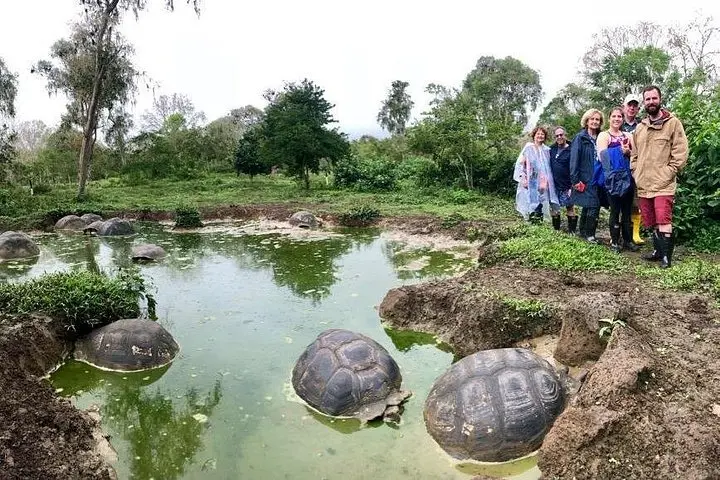
This half-day tour threads three of Santa Cruz’s signature landscapes: the Los Gemelos sink holes, the Scalesia cloud forest, and the Giant Tortoise Reserve, finishing with a quick descent into an inland lava tube. The Galápagos are young islands — raw basalt flows folded and collapsed by repeated eruptions — and Los Gemelos are visible proof: twin collapse pits rimmed in endemic vegetation that hint at the subterranean forces that built the archipelago.
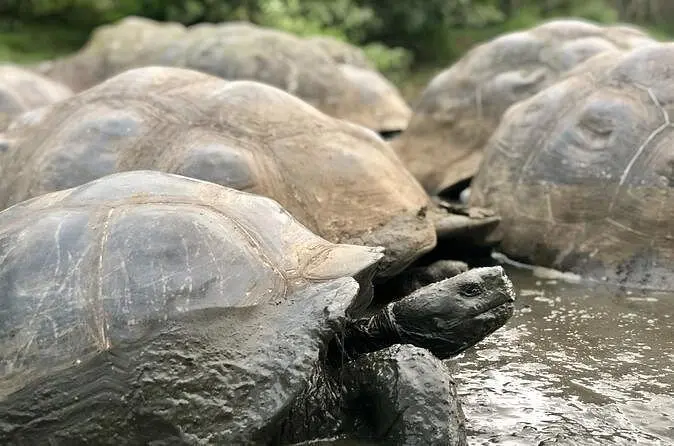
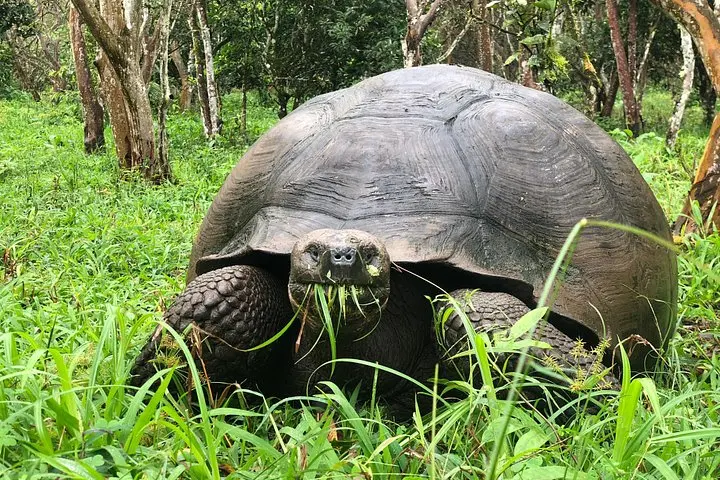
Culturally and scientifically the area is inseparable from Darwin-era inquiry and modern conservation. Naturalist guides explain tortoise demographics, island endemism, and the human-led efforts to restore native species. Expect interpretive stops where Darwin’s finches flit, and guides point out the slow grazing patterns of Chelonoidis nigra.
Practicalities are straightforward: departures run mornings and afternoons, the outing lasts about 3–4 hours, and the walking is easy but over uneven ground. Wear sturdy shoes, bring sun protection and water, and reserve any camera gear before you go — tortoises are curious and photo-friendly but often stationary.
This is an accessible, high-reward half-day for first-time Galápagos visitors who want close wildlife encounters, quick geology lessons, and the particular stillness of a place shaped by fire and sea.
The shared tour lasts about 3–4 hours with two daily departures (typically morning and afternoon). Confirm pickup/meeting time when you book.
Yes—walking is generally easy, but uneven surfaces mean children must be supervised and those with mobility limits may find parts challenging.
Yes; Galápagos entrance and reserve fees are included in the tour price per the operator’s listing.
No—due to uneven terrain and steps in places like lava tubes, the tour is not stroller- or wheelchair-accessible.
Galapagos Outdoors CL operates guided outdoor trips and adventures with an emphasis on safety, stewardship, and memorable experiences.
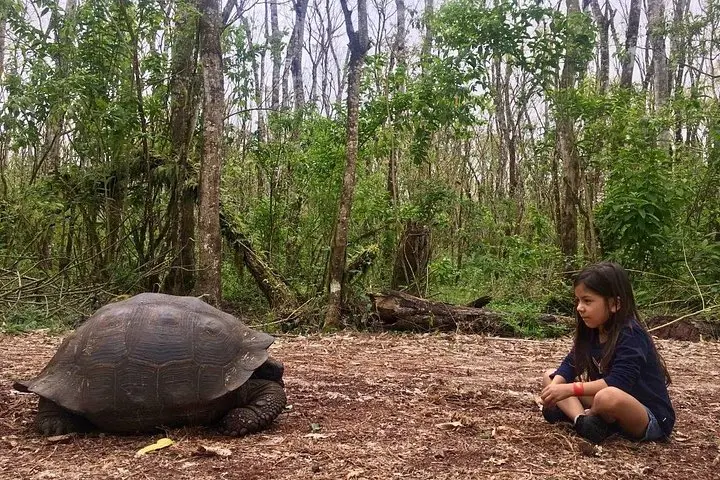
A low, warm wind carries the smell of volcanic rock as the van eases away from Puerto Ayora. Within minutes the coastal scrub opens into a patchwork of ferns and the tall, crooked trunks of the Scalesia cloud forest. Sunlight cuts through the canopy in bright shafts; somewhere ahead, a slow, mottled carapace moves without hurry.
A low, warm wind carries the smell of volcanic rock as the van eases away from Puerto Ayora. Within minutes the coastal scrub opens into a patchwork of ferns and the tall, crooked trunks of the Scalesia cloud forest. Sunlight cuts through the canopy in bright shafts; somewhere ahead, a slow, mottled carapace moves without hurry.
This half-day tour threads three of Santa Cruz’s signature landscapes: the Los Gemelos sink holes, the Scalesia cloud forest, and the Giant Tortoise Reserve, finishing with a quick descent into an inland lava tube. The Galápagos are young islands — raw basalt flows folded and collapsed by repeated eruptions — and Los Gemelos are visible proof: twin collapse pits rimmed in endemic vegetation that hint at the subterranean forces that built the archipelago.
Culturally and scientifically the area is inseparable from Darwin-era inquiry and modern conservation. Naturalist guides explain tortoise demographics, island endemism, and the human-led efforts to restore native species. Expect interpretive stops where Darwin’s finches flit, and guides point out the slow grazing patterns of Chelonoidis nigra.
Practicalities are straightforward: departures run mornings and afternoons, the outing lasts about 3–4 hours, and the walking is easy but over uneven ground. Wear sturdy shoes, bring sun protection and water, and reserve any camera gear before you go — tortoises are curious and photo-friendly but often stationary.
This is an accessible, high-reward half-day for first-time Galápagos visitors who want close wildlife encounters, quick geology lessons, and the particular stillness of a place shaped by fire and sea.