THE ADVENTURE COLLECTIVE® · Independent discovery and booking for outdoor travel

A full‑day private tour from Alexandria to the Giza Plateau and the Egyptian Museum. Experience two hours among the pyramids, a Sphinx visit, a local lunch, then a focused museum tour—ideal for first‑time visitors who want an efficient, guided introduction.
A full‑day private tour from Alexandria to the Giza Plateau and the Egyptian Museum. Experience two hours among the pyramids, a Sphinx visit, a local lunch, then a focused museum tour—ideal for first‑time visitors who want an efficient, guided introduction.
You step out of an air‑conditioned van onto a sunbaked sweep of stone and sand—three geometric giants rise from the desert like raw history given scale. The Great Pyramid looms to the north, the Sphinx squints toward the Nile, and guides break the silence with measured stories that stitch cairn to civilization.
Verified experiences and guided adventures in the surrounding area.
Operated by Hyatt Tours Egypt day tours · Cairo, Cairo Governorate
You step out of an air‑conditioned van onto a sunbaked sweep of stone and sand—three geometric giants rise from the desert like raw history given scale. The Great Pyramid looms to the north, the Sphinx squints toward the Nile, and guides break the silence with measured stories that stitch cairn to civilization.
Giza’s plateau is more than monuments: it’s 4,500 years of funerary engineering, quarried limestone and granite hauled into place before written records were standardized. Geology shows the pyramids sit on a limestone ridge with softer layers below, which influenced ancient quarrying and modern conservation. Cairo’s culture pulses nearby—street vendors, mosque calls, and the layered history preserved in the nearby Egyptian Museum at Tahrir, where Tutankhamun’s mask and royal mummies reframe the city’s more modern bustle.
Practically, this is a long day: expect significant walking on uneven stone, desert sun, and crowded viewpoints. From Alexandria the road to Giza is a multi‑hour drive, so plan for an early pickup and a full 10–12 hour day. Bring sun protection, a refillable water bottle, comfortable closed shoes for climbing steps and loose rubble, and small Egyptian pounds for tips and local purchases. If you plan to enter the pyramid interiors or the museum’s special exhibits, reserve in advance—space is limited. Keep to marked paths, respect restricted areas, and allow time to stand quietly and absorb the scale—the best photos and memories come from slowing your pace and looking up.
Expect roughly 2.5–3 hours each way by private vehicle depending on traffic—plan for a full 10–12 hour day including stops.
Confirm with the operator; some tours include standard site admission but pyramid interior tickets or special museum exhibits often require an extra fee or advance booking.
Yes, but interior access is limited and must be reserved ahead of time—notify the operator in advance to secure those tickets.
The itinerary notes basic wheelchair accessibility; however, the pyramid plateau and museum have uneven terrain and areas with steps—access may be limited for full mobility needs.
Hyatt Tours Egypt day tours operates guided outdoor trips and adventures with an emphasis on safety, stewardship, and memorable experiences.

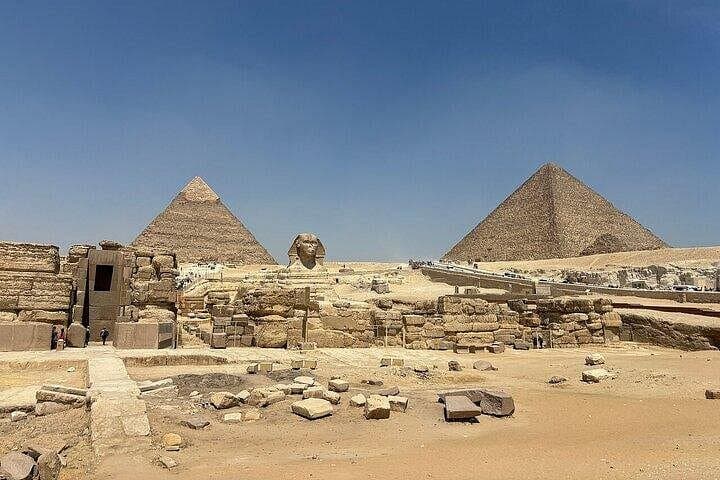
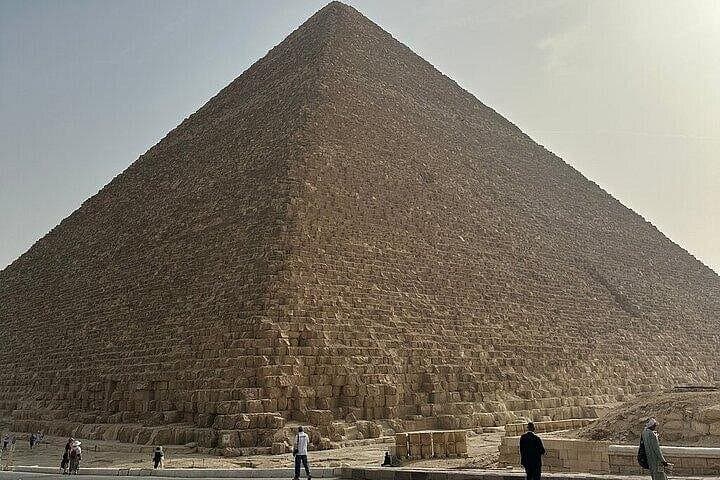
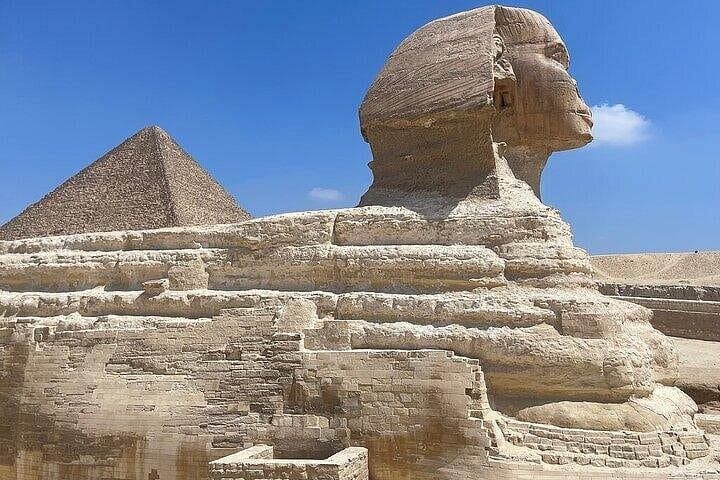
You step out of an air‑conditioned van onto a sunbaked sweep of stone and sand—three geometric giants rise from the desert like raw history given scale. The Great Pyramid looms to the north, the Sphinx squints toward the Nile, and guides break the silence with measured stories that stitch cairn to civilization.
You step out of an air‑conditioned van onto a sunbaked sweep of stone and sand—three geometric giants rise from the desert like raw history given scale. The Great Pyramid looms to the north, the Sphinx squints toward the Nile, and guides break the silence with measured stories that stitch cairn to civilization.
Giza’s plateau is more than monuments: it’s 4,500 years of funerary engineering, quarried limestone and granite hauled into place before written records were standardized. Geology shows the pyramids sit on a limestone ridge with softer layers below, which influenced ancient quarrying and modern conservation. Cairo’s culture pulses nearby—street vendors, mosque calls, and the layered history preserved in the nearby Egyptian Museum at Tahrir, where Tutankhamun’s mask and royal mummies reframe the city’s more modern bustle.
Practically, this is a long day: expect significant walking on uneven stone, desert sun, and crowded viewpoints. From Alexandria the road to Giza is a multi‑hour drive, so plan for an early pickup and a full 10–12 hour day. Bring sun protection, a refillable water bottle, comfortable closed shoes for climbing steps and loose rubble, and small Egyptian pounds for tips and local purchases. If you plan to enter the pyramid interiors or the museum’s special exhibits, reserve in advance—space is limited. Keep to marked paths, respect restricted areas, and allow time to stand quietly and absorb the scale—the best photos and memories come from slowing your pace and looking up.