THE ADVENTURE COLLECTIVE® · Independent discovery and booking for outdoor travel

Race across Sahara sands with the Giza pyramids looming nearby on a guided quad bike tour. Expect wide desert vistas, a safety briefing, and hotel transfers for a compact, high-adrenaline experience.
Race across Sahara sands with the Giza pyramids looming nearby on a guided quad bike tour. Expect wide desert vistas, a safety briefing, and hotel transfers for a compact, high-adrenaline experience.
You push off from the transfer van and the desert opens: wind lifting grit, broad dunes folding away toward three stone giants. The quad's engine rumbles under you as the Giza plateau slides into view; the pyramids sit like old machines of the earth, patient and precise, while the sand dares you to chase the horizon.
Verified experiences and guided adventures in the surrounding area.
Operated by Upper Egypt Services · Giza, Giza Governorate
You push off from the transfer van and the desert opens: wind lifting grit, broad dunes folding away toward three stone giants. The quad's engine rumbles under you as the Giza plateau slides into view; the pyramids sit like old machines of the earth, patient and precise, while the sand dares you to chase the horizon.
The Giza Plateau has been a human stage for about 4,500 years — the Khufu, Khafre and Menkaure pyramids are funerary complexes built during Egypt’s Fourth Dynasty. Geologically the plateau is a limestone cap over older sedimentary beds; the sweeping desert you cross today is wind-scoured sand and gravel that reveals layers of millennia underfoot.
Locally, this is active land: Bedouin guides and camel handlers have long read the dunes, and modern quad operators now share routes that avoid restricted archaeological areas. Expect wide open vistas, sudden ridgelines, and the close-up profile of the pyramids from angles few tourists see.
Practical: tours run about three hours including transfers and a safety briefing; helmets and a guide are supplied. Ride steady on loose sand — throttle control beats speed. Morning and late-afternoon departures offer the best light and cooler temperatures; mid-day can be harsh.
Bring sunscreen, eye protection, and a small hydration pack. Keep to the marked trails to protect both fragile desert flora and unseen antiquities. With a bit of caution, this is a direct, visceral way to experience one of the world's oldest landscapes — fast, framed, and unforgettable.
No—guides give a safety briefing and basic instruction; the route suits beginners and experienced riders alike.
You’ll get close-up views from approved vantage points, but the tour avoids restricted archaeological zones and climbing on monuments is prohibited.
Yes—this tour typically includes round-trip hotel transfers to the quad base station in Cairo/Giza.
Closed-toe shoes, sun protection, and comfortable layers; avoid loose scarves or long skirts that could catch on the bike.
Upper Egypt Services operates guided outdoor trips and adventures with an emphasis on safety, stewardship, and memorable experiences.


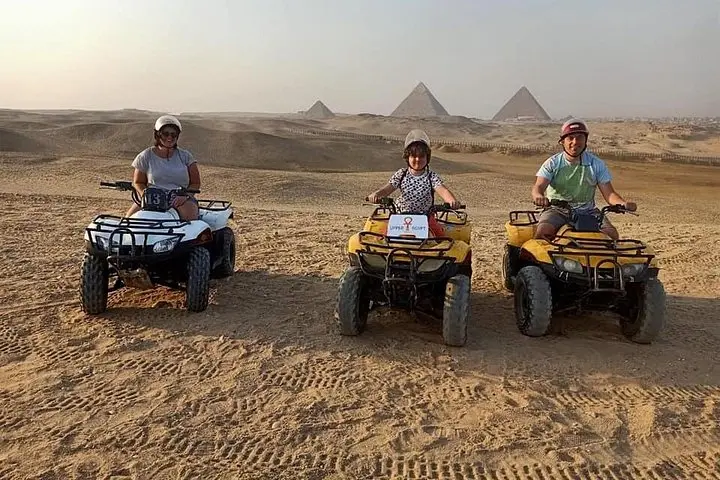
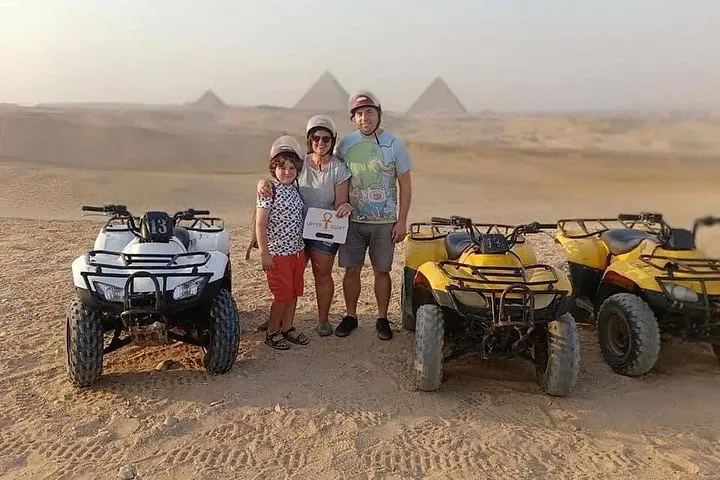
You push off from the transfer van and the desert opens: wind lifting grit, broad dunes folding away toward three stone giants. The quad's engine rumbles under you as the Giza plateau slides into view; the pyramids sit like old machines of the earth, patient and precise, while the sand dares you to chase the horizon.
You push off from the transfer van and the desert opens: wind lifting grit, broad dunes folding away toward three stone giants. The quad's engine rumbles under you as the Giza plateau slides into view; the pyramids sit like old machines of the earth, patient and precise, while the sand dares you to chase the horizon.
The Giza Plateau has been a human stage for about 4,500 years — the Khufu, Khafre and Menkaure pyramids are funerary complexes built during Egypt’s Fourth Dynasty. Geologically the plateau is a limestone cap over older sedimentary beds; the sweeping desert you cross today is wind-scoured sand and gravel that reveals layers of millennia underfoot.
Locally, this is active land: Bedouin guides and camel handlers have long read the dunes, and modern quad operators now share routes that avoid restricted archaeological areas. Expect wide open vistas, sudden ridgelines, and the close-up profile of the pyramids from angles few tourists see.
Practical: tours run about three hours including transfers and a safety briefing; helmets and a guide are supplied. Ride steady on loose sand — throttle control beats speed. Morning and late-afternoon departures offer the best light and cooler temperatures; mid-day can be harsh.
Bring sunscreen, eye protection, and a small hydration pack. Keep to the marked trails to protect both fragile desert flora and unseen antiquities. With a bit of caution, this is a direct, visceral way to experience one of the world's oldest landscapes — fast, framed, and unforgettable.