THE ADVENTURE COLLECTIVE® · Independent discovery and booking for outdoor travel

Ride a camel on the quieter edge of the Giza Plateau at sunrise or sunset and watch the pyramids shift from shadow to gold. This four-hour trip offers wide desert panoramas, fewer crowds, and guided local context for the landscape and monuments.
Ride a camel on the quieter edge of the Giza Plateau at sunrise or sunset and watch the pyramids shift from shadow to gold. This four-hour trip offers wide desert panoramas, fewer crowds, and guided local context for the landscape and monuments.
You swing into the saddle before dawn and the horizon is a black knife; by the time the sun lifts, the pyramids cut silhouettes brighter than any city light. Or, at sunset, the desert throws its colors across the stones and the camel’s steady gait becomes a metronome for quiet thought.
Verified experiences and guided adventures in the surrounding area.
You swing into the saddle before dawn and the horizon is a black knife; by the time the sun lifts, the pyramids cut silhouettes brighter than any city light. Or, at sunset, the desert throws its colors across the stones and the camel’s steady gait becomes a metronome for quiet thought.
The Giza Plateau is 4,500 years of human ambition—limestone beds hewn into the Great Pyramid, wind-polished ridges telling a longer geological story, and a living culture that has used the desert as both route and refuge. Camels arrived in the region centuries later and now serve as a slow, intimate way to read the landscape. This trip runs outside the busiest tourist ring of the main pyramid complex, offering broader desert angles while keeping the iconic monuments within sight.
Expect sandy, uneven terrain and open, exposed stretches of plateaus and low dunes. The guide will point out geological layers, local flora clinging to the grit, and occasional desert birdlife, while explaining how the plateau’s alignment and sightlines shaped ancient approaches to the monuments.
Practical notes: pickups are early (around 4:00 a.m. for sunrise) or late afternoon (around 16:00 for sunset); total tour time is roughly four hours. Wear closed-toe shoes that can handle sand, layered clothing for temperature swings, and bring sun protection and at least one liter of water. Photography is excellent at golden hour—arrive charged and ready. Respect local customs, follow the guide’s route to limit impact, and be prepared for a gentle but sometimes bumpy ride.
Yes—this tour runs outside the busiest zone but keeps clear views of the Giza pyramids from open desert vantage points.
The overall experience lasts about four hours including transfers; actual time on the camel is typically 60–90 minutes depending on route and stops.
Children can usually ride with supervision; those with limited mobility should check with the operator—mounting a camel requires some agility and handlers assist but it can be challenging.
Confirm inclusions at booking (transport and guide typically included). Tipping the camel handler and guide is customary for good service.
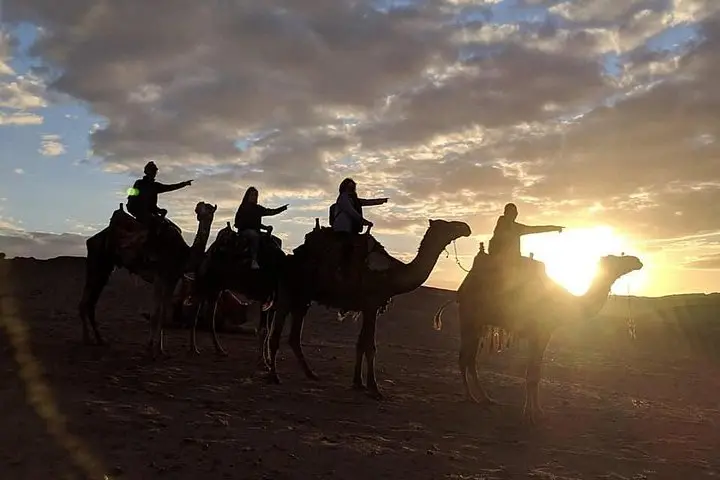
You swing into the saddle before dawn and the horizon is a black knife; by the time the sun lifts, the pyramids cut silhouettes brighter than any city light. Or, at sunset, the desert throws its colors across the stones and the camel’s steady gait becomes a metronome for quiet thought.
You swing into the saddle before dawn and the horizon is a black knife; by the time the sun lifts, the pyramids cut silhouettes brighter than any city light. Or, at sunset, the desert throws its colors across the stones and the camel’s steady gait becomes a metronome for quiet thought.
The Giza Plateau is 4,500 years of human ambition—limestone beds hewn into the Great Pyramid, wind-polished ridges telling a longer geological story, and a living culture that has used the desert as both route and refuge. Camels arrived in the region centuries later and now serve as a slow, intimate way to read the landscape. This trip runs outside the busiest tourist ring of the main pyramid complex, offering broader desert angles while keeping the iconic monuments within sight.
Expect sandy, uneven terrain and open, exposed stretches of plateaus and low dunes. The guide will point out geological layers, local flora clinging to the grit, and occasional desert birdlife, while explaining how the plateau’s alignment and sightlines shaped ancient approaches to the monuments.
Practical notes: pickups are early (around 4:00 a.m. for sunrise) or late afternoon (around 16:00 for sunset); total tour time is roughly four hours. Wear closed-toe shoes that can handle sand, layered clothing for temperature swings, and bring sun protection and at least one liter of water. Photography is excellent at golden hour—arrive charged and ready. Respect local customs, follow the guide’s route to limit impact, and be prepared for a gentle but sometimes bumpy ride.