THE ADVENTURE COLLECTIVE® · Independent discovery and booking for outdoor travel

Spend a day moving between ancient and modern Egypt: walk the Giza Plateau among the pyramids and Sphinx, then explore the Grand Egyptian Museum’s vast pharaonic collection. This guided tour combines accessible walking with expert context and a local lunch.
Spend a day moving between ancient and modern Egypt: walk the Giza Plateau among the pyramids and Sphinx, then explore the Grand Egyptian Museum’s vast pharaonic collection. This guided tour combines accessible walking with expert context and a local lunch.
You arrive at the Giza Plateau before the heat has fully set in; the limestone blocks throw long, cool shadows and wind carries sand across the tarmac. The Great Pyramid—flat-faced and immense—dominates the skyline, while the Sphinx stares eastward, its weathered profile keeping a quiet, immovable watch.
Verified experiences and guided adventures in the surrounding area.
Operated by Premier Egy Tours · Giza, Giza Governorate
You arrive at the Giza Plateau before the heat has fully set in; the limestone blocks throw long, cool shadows and wind carries sand across the tarmac. The Great Pyramid—flat-faced and immense—dominates the skyline, while the Sphinx stares eastward, its weathered profile keeping a quiet, immovable watch.
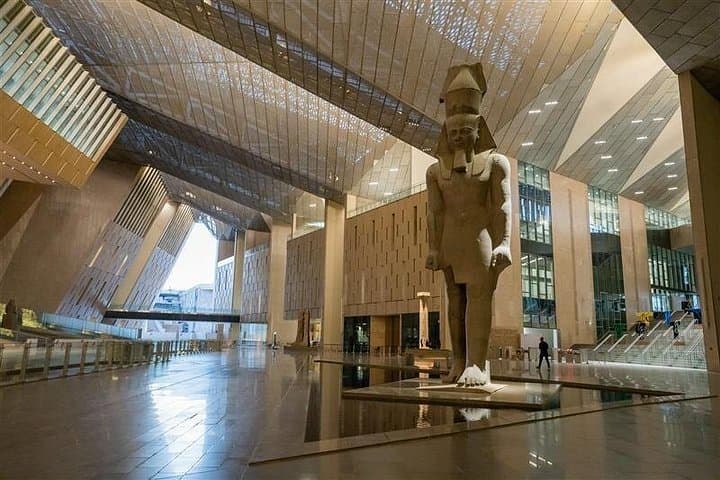
This full-day route pairs Egypt’s oldest stone work with its newest museum. The pyramids date to the Fourth Dynasty (around 2560 BCE) and were built as monumental tombs for pharaohs like Khufu; the nearby Valley Temple and the Sphinx reflect ritual and funerary architecture carved from local limestone. Across the plateau, the Grand Egyptian Museum (GEM) gathers thousands of artifacts—royal funerary objects, gold jewelry, and the recent comprehensive Tutankhamun collection—bringing 5,000 years of Nile civilization into contemporary display.
Expect a mix of short walks on packed sand and uneven stone surfaces, guided explanations at major monuments, and a midday restaurant lunch. The tour typically includes hotel pickup in Cairo, transport in an air-conditioned vehicle, and guiding; admissions to monuments may not always be included, so confirm before you go. Practical notes: wear sun protection and closed-toe shoes for the plateau, carry 1–2 liters of water, and plan for security checks and moderate walking. Photographers will find dramatic angles at sunrise or late afternoon; mid-day is hottest but best for museum galleries. Respect site rules—avoid climbing on monuments and keep to marked paths—to help preserve fragile archaeology while you explore.
Not always—this tour often includes transport and guiding but may require separate payment for monument or museum admissions; confirm at booking.
Some areas, like museum galleries and vehicle pickup, are wheelchair accessible, but the plateau itself has uneven surfaces and limited ramping—contact the operator for specific arrangements.
About nine hours total with guided stops; expect a mix of short walks, photo stops, and up to several hours of museum exploration.
Lightweight, modest clothing that covers shoulders and knees is recommended for cultural respect and sun protection; comfortable closed-toe shoes are advised.
Premier Egy Tours operates guided outdoor trips and adventures with an emphasis on safety, stewardship, and memorable experiences.
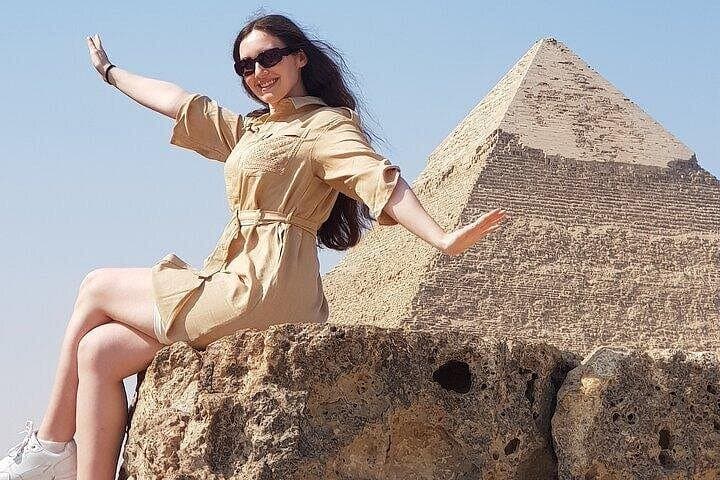
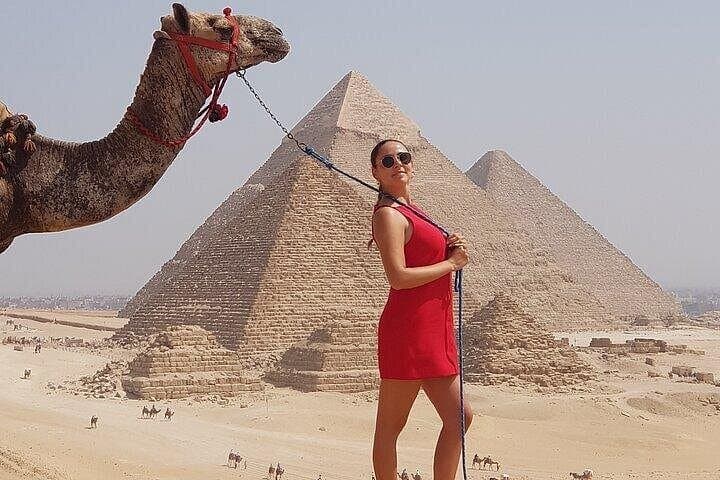
You arrive at the Giza Plateau before the heat has fully set in; the limestone blocks throw long, cool shadows and wind carries sand across the tarmac. The Great Pyramid—flat-faced and immense—dominates the skyline, while the Sphinx stares eastward, its weathered profile keeping a quiet, immovable watch.
You arrive at the Giza Plateau before the heat has fully set in; the limestone blocks throw long, cool shadows and wind carries sand across the tarmac. The Great Pyramid—flat-faced and immense—dominates the skyline, while the Sphinx stares eastward, its weathered profile keeping a quiet, immovable watch.
This full-day route pairs Egypt’s oldest stone work with its newest museum. The pyramids date to the Fourth Dynasty (around 2560 BCE) and were built as monumental tombs for pharaohs like Khufu; the nearby Valley Temple and the Sphinx reflect ritual and funerary architecture carved from local limestone. Across the plateau, the Grand Egyptian Museum (GEM) gathers thousands of artifacts—royal funerary objects, gold jewelry, and the recent comprehensive Tutankhamun collection—bringing 5,000 years of Nile civilization into contemporary display.
Expect a mix of short walks on packed sand and uneven stone surfaces, guided explanations at major monuments, and a midday restaurant lunch. The tour typically includes hotel pickup in Cairo, transport in an air-conditioned vehicle, and guiding; admissions to monuments may not always be included, so confirm before you go. Practical notes: wear sun protection and closed-toe shoes for the plateau, carry 1–2 liters of water, and plan for security checks and moderate walking. Photographers will find dramatic angles at sunrise or late afternoon; mid-day is hottest but best for museum galleries. Respect site rules—avoid climbing on monuments and keep to marked paths—to help preserve fragile archaeology while you explore.