THE ADVENTURE COLLECTIVE® · Independent discovery and booking for outdoor travel

Spend a full day moving between the monumental geometry of the Giza Plateau and the dense archaeological wealth of the Egyptian Museum. This practical guide explains what to expect on the ground—logistics, timing, and essentials for a smooth visit.
Spend a full day moving between the monumental geometry of the Giza Plateau and the dense archaeological wealth of the Egyptian Museum. This practical guide explains what to expect on the ground—logistics, timing, and essentials for a smooth visit.
You step off an air-conditioned van onto a wind-flattened plain where stone blocks the size of small houses hold the horizon. The Great Pyramid rises ahead—geometric, sun-bled—while the Sphinx squints toward the city. The air smells faintly of dust and diesel; vendors call from shaded stalls; the plateau demands steady footing more than stamina.
Verified experiences and guided adventures in the surrounding area.
Operated by Available travel Egypt · Cairo, Cairo Governorate
You step off an air-conditioned van onto a wind-flattened plain where stone blocks the size of small houses hold the horizon. The Great Pyramid rises ahead—geometric, sun-bled—while the Sphinx squints toward the city. The air smells faintly of dust and diesel; vendors call from shaded stalls; the plateau demands steady footing more than stamina.
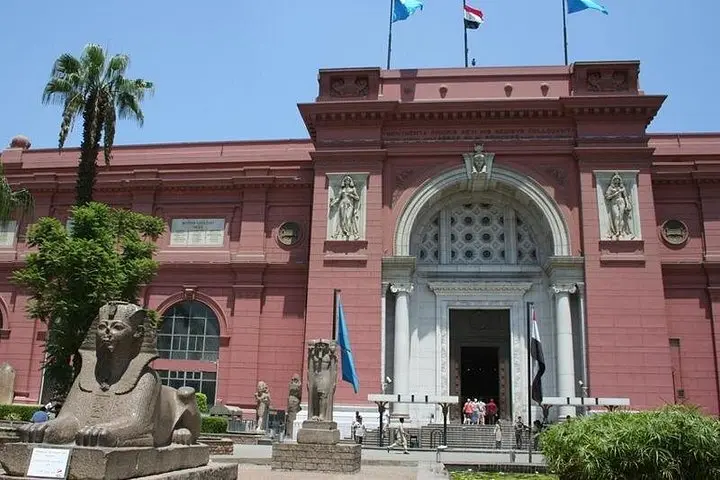
This one-day loop pairs two of Egypt’s most concentrated encounters with antiquity. The Giza Plateau preserves Old Kingdom royal architecture dating to about 2600 BCE: three major pyramids, satellite tombs, and the limestone Sphinx carved as a guardian figure. Later, the Egyptian Museum in Tahrir Square, completed in the early 20th century, aggregates thousands of pharaonic artifacts, including the Tutankhamun collection—an essential context for what you see at Giza.
Expect a mostly flat walk across the plateau of roughly 1–3 km between viewpoints, minimal elevation change, but uneven packed-sand surfaces and loose stones. The museum requires indoor navigation through crowded galleries and stairs.
Practical guidance: start early to avoid heat and crowds, carry at least 1.5–2 liters of water, sunscreen, and a brimmed hat. Admission for pyramid interiors and museum entry is often separate from guided tours; confirm ticket inclusions before arrival. Wear sturdy closed-toe shoes; be prepared to negotiate offers from local vendors and to tip guides when helpful. With basic planning this day trip packs two millennia of history into an accessible, walkable experience that rewards attention to detail as much as a steady pace.
Not always—many group tours include transfers and a guide but not museum or pyramid-interior admission; check the booking details before you go.
Interior access is limited, requires a separate ticket, and can be physically restrictive; confirm availability in advance and expect narrow, steep passages.
Parts of the itinerary, transfers, and museum entrances state wheelchair accessibility, but the Giza Plateau terrain is uneven and may limit access to certain viewpoints.
Early morning avoids peak heat and larger crowds; late afternoon can be cooler for photos but may coincide with tour-group influx.
Available travel Egypt operates guided outdoor trips and adventures with an emphasis on safety, stewardship, and memorable experiences.
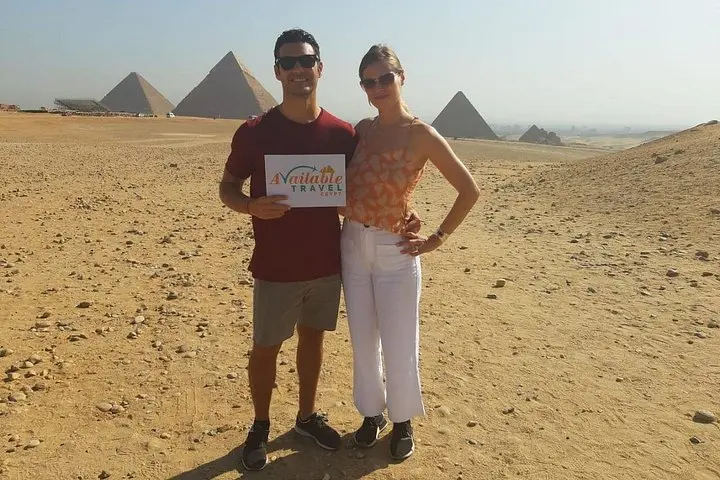
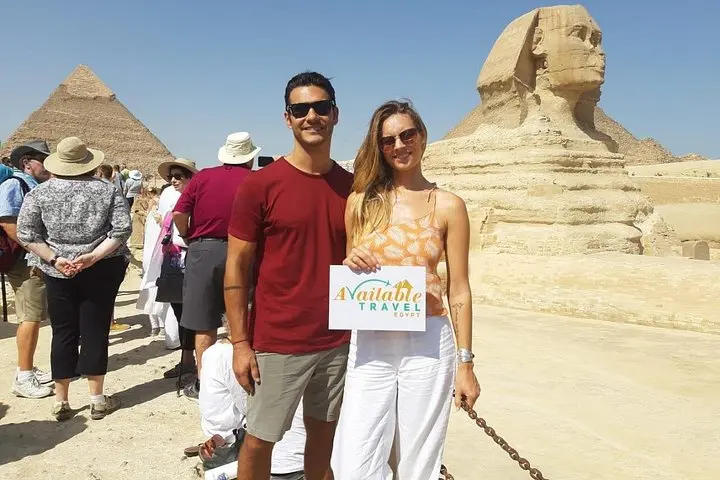
You step off an air-conditioned van onto a wind-flattened plain where stone blocks the size of small houses hold the horizon. The Great Pyramid rises ahead—geometric, sun-bled—while the Sphinx squints toward the city. The air smells faintly of dust and diesel; vendors call from shaded stalls; the plateau demands steady footing more than stamina.
You step off an air-conditioned van onto a wind-flattened plain where stone blocks the size of small houses hold the horizon. The Great Pyramid rises ahead—geometric, sun-bled—while the Sphinx squints toward the city. The air smells faintly of dust and diesel; vendors call from shaded stalls; the plateau demands steady footing more than stamina.
This one-day loop pairs two of Egypt’s most concentrated encounters with antiquity. The Giza Plateau preserves Old Kingdom royal architecture dating to about 2600 BCE: three major pyramids, satellite tombs, and the limestone Sphinx carved as a guardian figure. Later, the Egyptian Museum in Tahrir Square, completed in the early 20th century, aggregates thousands of pharaonic artifacts, including the Tutankhamun collection—an essential context for what you see at Giza.
Expect a mostly flat walk across the plateau of roughly 1–3 km between viewpoints, minimal elevation change, but uneven packed-sand surfaces and loose stones. The museum requires indoor navigation through crowded galleries and stairs.
Practical guidance: start early to avoid heat and crowds, carry at least 1.5–2 liters of water, sunscreen, and a brimmed hat. Admission for pyramid interiors and museum entry is often separate from guided tours; confirm ticket inclusions before arrival. Wear sturdy closed-toe shoes; be prepared to negotiate offers from local vendors and to tip guides when helpful. With basic planning this day trip packs two millennia of history into an accessible, walkable experience that rewards attention to detail as much as a steady pace.