THE ADVENTURE COLLECTIVE® · Independent discovery and booking for outdoor travel

Spend a day among the Great Pyramids and the Grand Egyptian Museum with a private guide. This six-hour tour covers the Pyramid Plateau, the Sphinx and the GEM collection, with transport, admission and lunch included.
Spend a day among the Great Pyramids and the Grand Egyptian Museum with a private guide. This six-hour tour covers the Pyramid Plateau, the Sphinx and the GEM collection, with transport, admission and lunch included.
A low, wind-scoured plateau outside Cairo opens into an abrupt geometry: three tombs of stone—Khufu, Khafre and Menkaure—cut a clean silhouette against the sky. The Great Sphinx watches the plain, its face turned toward the rising sun that dares visitors to stand still and take it in.
Verified experiences and guided adventures in the surrounding area.
Operated by This Is Egypt · Giza, Giza Governorate
A low, wind-scoured plateau outside Cairo opens into an abrupt geometry: three tombs of stone—Khufu, Khafre and Menkaure—cut a clean silhouette against the sky. The Great Sphinx watches the plain, its face turned toward the rising sun that dares visitors to stand still and take it in.
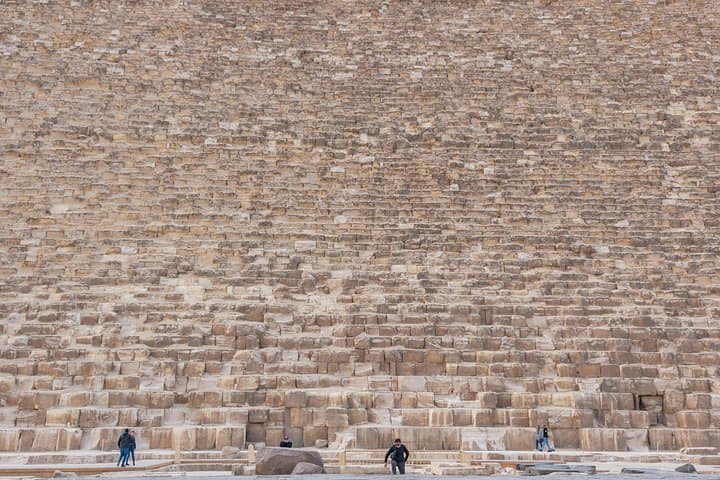
These monuments date to Egypt’s Old Kingdom (roughly 2600–2500 BCE), built as funerary complexes to project royal power into eternity. Geology here is obvious: massive limestone and granite blocks quarried locally and ferried across the Nile, layers of sediment and worked stone still visible where restoration exposes the original joints. The Valley Temple and the Sphinx complex speak to ritual practices—mummification and purification—that framed royal burials.
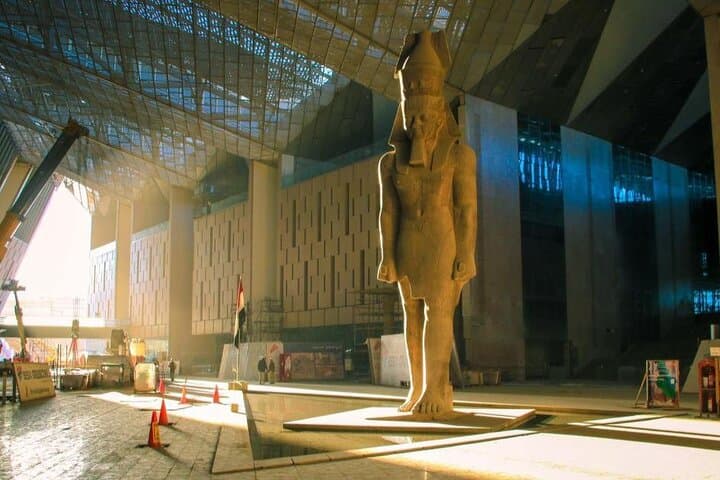
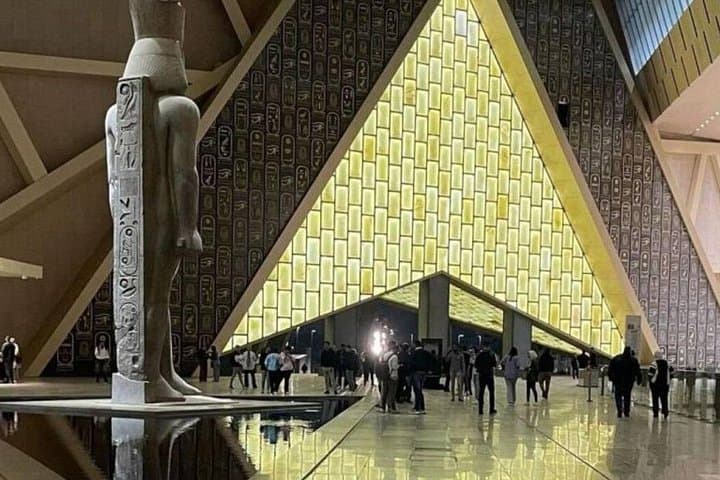
The Grand Egyptian Museum nearby gathers artifacts ranging from colossal statuary to the largely complete Tutankhamun collection, offering close-up context for the stones on the plateau. Local life brushes against antiquity: hawks wheel overhead, vendors weave between tour groups, and the desert wind pushes sand across modern walkways.
Practically, expect a six-hour private tour: pickup in an air‑conditioned vehicle, guided stops at the Pyramid plateau, the Valley Temple, and the GEM, with admissions and lunch included. Wear sturdy shoes for uneven limestone surfaces, carry at least 1–2 liters of water and sun protection, and budget time for photography and short walks between sites. Climbing the pyramids is prohibited—respect conservation rules and stay on designated paths. The tour suits most fitness levels and offers a concise, layered view into Egypt’s pharaonic heart.
Yes—this tour’s itinerary includes admission to the Giza complex and the Grand Egyptian Museum as noted in the booking details.
No—climbing the pyramids is prohibited and interior access is restricted; follow your guide’s directions for permitted viewing points.
The operator lists the tour as wheelchair accessible, but some areas in the complex have uneven terrain; contact the provider in advance to confirm pickup and on-site assistance.
Lunch is included and vegetarian options are available—add dietary requirements when booking or inform the guide at pickup.
This Is Egypt operates guided outdoor trips and adventures with an emphasis on safety, stewardship, and memorable experiences.
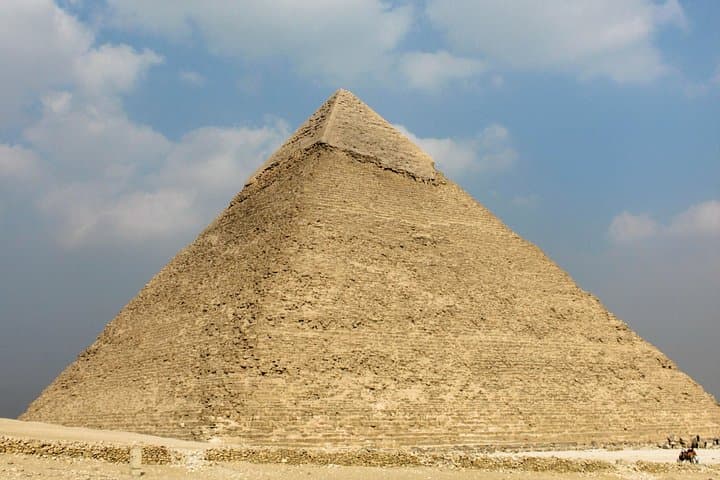
A low, wind-scoured plateau outside Cairo opens into an abrupt geometry: three tombs of stone—Khufu, Khafre and Menkaure—cut a clean silhouette against the sky. The Great Sphinx watches the plain, its face turned toward the rising sun that dares visitors to stand still and take it in.
A low, wind-scoured plateau outside Cairo opens into an abrupt geometry: three tombs of stone—Khufu, Khafre and Menkaure—cut a clean silhouette against the sky. The Great Sphinx watches the plain, its face turned toward the rising sun that dares visitors to stand still and take it in.
These monuments date to Egypt’s Old Kingdom (roughly 2600–2500 BCE), built as funerary complexes to project royal power into eternity. Geology here is obvious: massive limestone and granite blocks quarried locally and ferried across the Nile, layers of sediment and worked stone still visible where restoration exposes the original joints. The Valley Temple and the Sphinx complex speak to ritual practices—mummification and purification—that framed royal burials.
The Grand Egyptian Museum nearby gathers artifacts ranging from colossal statuary to the largely complete Tutankhamun collection, offering close-up context for the stones on the plateau. Local life brushes against antiquity: hawks wheel overhead, vendors weave between tour groups, and the desert wind pushes sand across modern walkways.
Practically, expect a six-hour private tour: pickup in an air‑conditioned vehicle, guided stops at the Pyramid plateau, the Valley Temple, and the GEM, with admissions and lunch included. Wear sturdy shoes for uneven limestone surfaces, carry at least 1–2 liters of water and sun protection, and budget time for photography and short walks between sites. Climbing the pyramids is prohibited—respect conservation rules and stay on designated paths. The tour suits most fitness levels and offers a concise, layered view into Egypt’s pharaonic heart.