THE ADVENTURE COLLECTIVE® · Independent discovery and booking for outdoor travel

A full-day private tour that pairs the Giza Plateau’s ancient pyramids with the Grand Egyptian Museum’s modern conservation spaces. Expect 6–8 hours of walking, photography opportunities, and close-up views of the Great Pyramid and Sphinx.
A full-day private tour that pairs the Giza Plateau’s ancient pyramids with the Grand Egyptian Museum’s modern conservation spaces. Expect 6–8 hours of walking, photography opportunities, and close-up views of the Great Pyramid and Sphinx.
You step from an air-conditioned vehicle onto wind-baked limestone, the desert air pushing against your jacket as the Great Pyramid rises like an engineered mountain above the plateau. Camels stand patient at the perimeter; vendors arrange brass and papyrus under the open sky. The plateau’s scale compels a slow, observational pace—every block a measured gesture of an era that still shapes the skyline.
Verified experiences and guided adventures in the surrounding area.
Operated by Egyptravel Tours · Giza, Giza Governorate
You step from an air-conditioned vehicle onto wind-baked limestone, the desert air pushing against your jacket as the Great Pyramid rises like an engineered mountain above the plateau. Camels stand patient at the perimeter; vendors arrange brass and papyrus under the open sky. The plateau’s scale compels a slow, observational pace—every block a measured gesture of an era that still shapes the skyline.
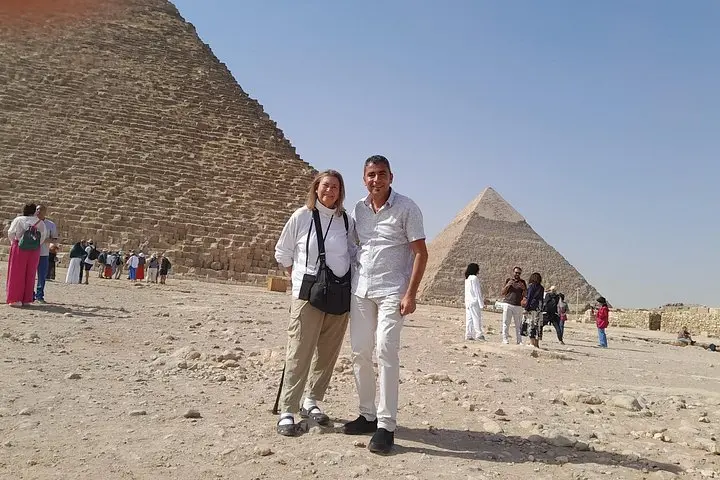
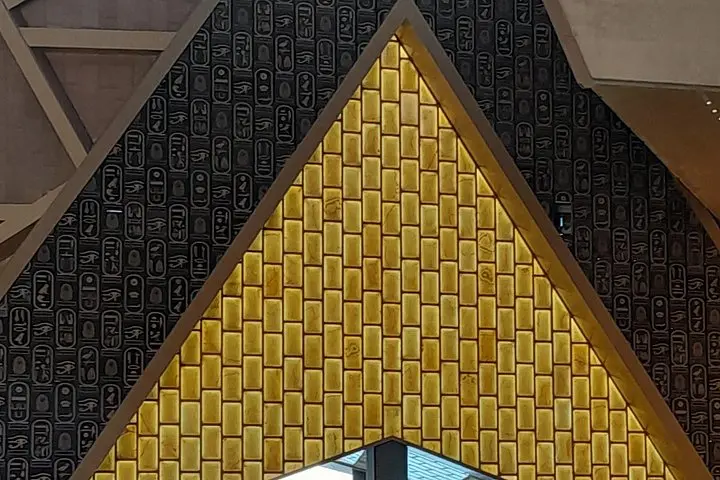
The Giza complex dates to about 4,500 years ago: Khufu’s Great Pyramid, Khafre’s slightly smaller neighbor and Menkaure’s compact monument are funerary architecture and engineering feats. Geologically, the plateau is a band of Eocene limestone cut by millennia of wind, which gives the monuments their pale, worn faces. Nearby, the Grand Egyptian Museum (GEM) represents modern Egypt’s effort to conserve and contextualize that past; when fully open it will house the complete Tutankhamun collection and large conservation labs.
Culture here is immediate — street vendors, guide narratives from Egyptologists, and living practices around the site inform how the past is presented. Expect assertive surface-level commerce and strict rules in protected areas.
Practical guidance: plan for a full day (6–8 hours), bring sun protection and at least 2 liters of water, and wear closed, comfortable shoes for uneven limestone and short climbs. Morning light is best for photography and cooler weather; afternoons grow hot and dusty. The GEM currently permits access to the Grand Hall, staircase, exterior gardens and commercial areas only, so allow time for the plateau experience and the limited museum preview. Carry ID for ticketing and be prepared for security checks.
This tour includes entrance for the currently accessible areas of GEM (Grand Hall, Grand Staircase, exterior gardens); full gallery access may be restricted until the official opening.
Yes, the tour departs from central Cairo pickup points; confirm your pickup location and time when booking.
Main visitor areas and transportation are wheelchair accessible, but some uneven stone surfaces and slopes on the plateau can be challenging—contact the operator to plan assistance.
Yes, camel rides are offered by local operators near the plateau but are paid separately and require negotiating price and safety expectations in advance.
Egyptravel Tours operates guided outdoor trips and adventures with an emphasis on safety, stewardship, and memorable experiences.
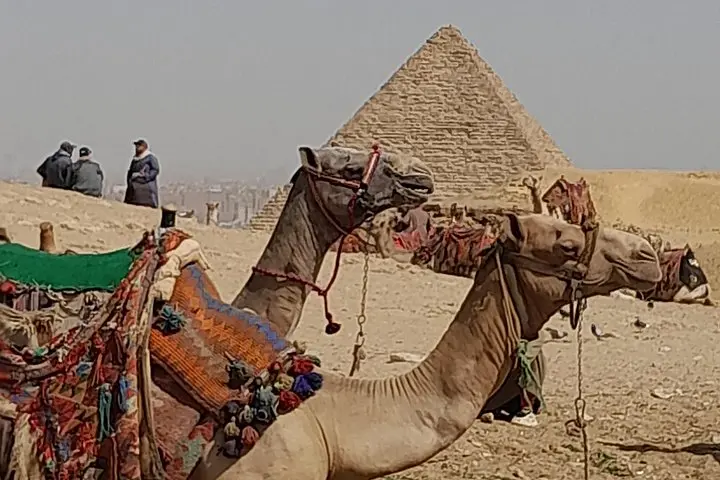
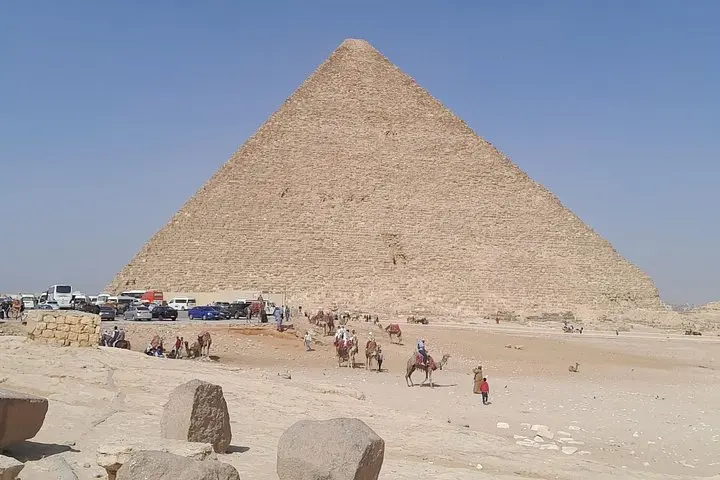
You step from an air-conditioned vehicle onto wind-baked limestone, the desert air pushing against your jacket as the Great Pyramid rises like an engineered mountain above the plateau. Camels stand patient at the perimeter; vendors arrange brass and papyrus under the open sky. The plateau’s scale compels a slow, observational pace—every block a measured gesture of an era that still shapes the skyline.
You step from an air-conditioned vehicle onto wind-baked limestone, the desert air pushing against your jacket as the Great Pyramid rises like an engineered mountain above the plateau. Camels stand patient at the perimeter; vendors arrange brass and papyrus under the open sky. The plateau’s scale compels a slow, observational pace—every block a measured gesture of an era that still shapes the skyline.
The Giza complex dates to about 4,500 years ago: Khufu’s Great Pyramid, Khafre’s slightly smaller neighbor and Menkaure’s compact monument are funerary architecture and engineering feats. Geologically, the plateau is a band of Eocene limestone cut by millennia of wind, which gives the monuments their pale, worn faces. Nearby, the Grand Egyptian Museum (GEM) represents modern Egypt’s effort to conserve and contextualize that past; when fully open it will house the complete Tutankhamun collection and large conservation labs.
Culture here is immediate — street vendors, guide narratives from Egyptologists, and living practices around the site inform how the past is presented. Expect assertive surface-level commerce and strict rules in protected areas.
Practical guidance: plan for a full day (6–8 hours), bring sun protection and at least 2 liters of water, and wear closed, comfortable shoes for uneven limestone and short climbs. Morning light is best for photography and cooler weather; afternoons grow hot and dusty. The GEM currently permits access to the Grand Hall, staircase, exterior gardens and commercial areas only, so allow time for the plateau experience and the limited museum preview. Carry ID for ticketing and be prepared for security checks.