THE ADVENTURE COLLECTIVE® · Independent discovery and booking for outdoor travel

Ride a camel around the Great Pyramids and Sphinx with an expert guide who layers history, geology, and local insight onto every panoramic stop. This 3–4 hour private tour mixes sweeping views with practical tips to help you navigate heat, crowds, and delicate archaeology.
Ride a camel around the Great Pyramids and Sphinx with an expert guide who layers history, geology, and local insight onto every panoramic stop. This 3–4 hour private tour mixes sweeping views with practical tips to help you navigate heat, crowds, and delicate archaeology.
A low sun cuts across the painted desert, throwing the Pyramids into a sharp relief that seems to reach for the sky. Visitors arrive by air-conditioned vehicle and step onto sand that has borne footprints for millennia; camels wait like patient ships, ready to carry you around Cheops, Chephren, Mykerinus and the Great Sphinx. The rhythm of the camel’s gait sets the pace — slow, steady, insistent — letting you take in panoramic angles most visitors only glimpse from the edge of the plateau.
Verified experiences and guided adventures in the surrounding area.
Operated by Egypt Royal Tours · Giza, Giza Governorate
A low sun cuts across the painted desert, throwing the Pyramids into a sharp relief that seems to reach for the sky. Visitors arrive by air-conditioned vehicle and step onto sand that has borne footprints for millennia; camels wait like patient ships, ready to carry you around Cheops, Chephren, Mykerinus and the Great Sphinx. The rhythm of the camel’s gait sets the pace — slow, steady, insistent — letting you take in panoramic angles most visitors only glimpse from the edge of the plateau.
These stone giants date to Egypt’s Fourth Dynasty, built as tombs for pharaohs whose names still shape modern Cairo. The limestone casing that once gleamed in sunlight has been stripped by time and reuse, exposing the engineering inside: massive, precisely cut blocks stacked with an exactness that still prompts questions about ancient logistics. Local guides connect these facts to culture — explaining funerary rites, the function of the Valley Temple, and the Sphinx’s changing visage.
Practical guidance: plan 3–4 hours for pickup, museum-area stops, and a 30–60 minute camel circuit. Wear closed-toe shoes for sand and stone, a wide-brim hat, and layered sun protection; temperatures swing and the desert can be abrasive. Bring at least 1–2 liters of water, photocopies of IDs for admissions, and small bills for tips and stall purchases. Expect some walking on uneven surfaces and follow your guide’s route to protect fragile archaeology.
Respect the site: avoid climbing on monuments, heed conservation signs, and consider a morning slot to minimize heat and crowds while getting the best light for photos.
Yes—handlers lead camels and provide basic mounting instructions; however, riders should be comfortable with heights and able to hold on during movement.
Yes, entry to the Giza Pyramids area is included in the tour package as stated in the inclusions.
Yes—operators often offer a horse option if preferred; request this at booking and confirm availability.
The operator lists wheelchair accessibility for transfers, but archaeological surfaces and camel riding require mobility—check specific accessibility needs with the provider in advance.
Egypt Royal Tours operates guided outdoor trips and adventures with an emphasis on safety, stewardship, and memorable experiences.
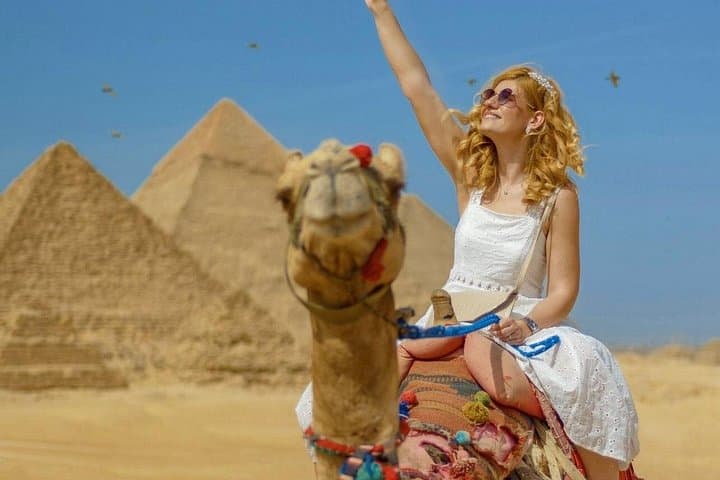

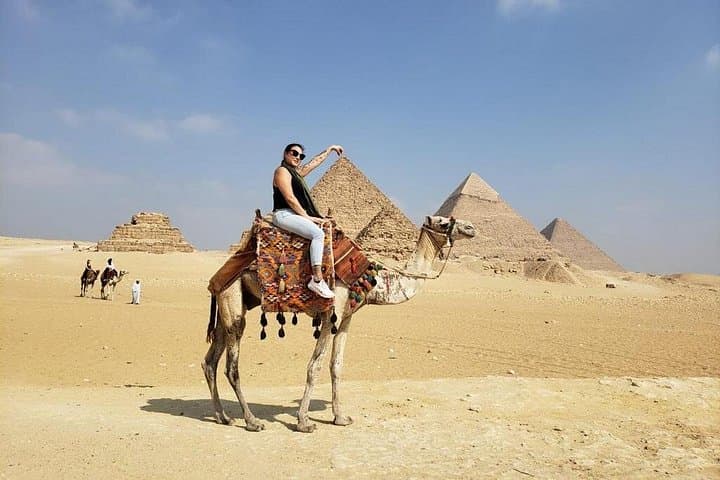
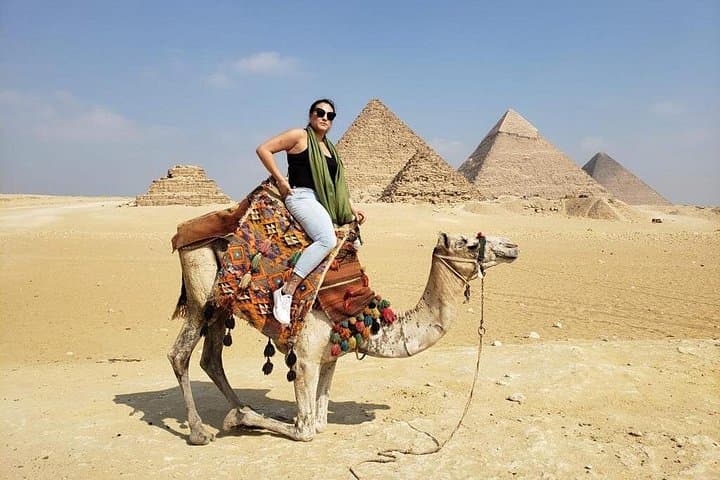
A low sun cuts across the painted desert, throwing the Pyramids into a sharp relief that seems to reach for the sky. Visitors arrive by air-conditioned vehicle and step onto sand that has borne footprints for millennia; camels wait like patient ships, ready to carry you around Cheops, Chephren, Mykerinus and the Great Sphinx. The rhythm of the camel’s gait sets the pace — slow, steady, insistent — letting you take in panoramic angles most visitors only glimpse from the edge of the plateau.
A low sun cuts across the painted desert, throwing the Pyramids into a sharp relief that seems to reach for the sky. Visitors arrive by air-conditioned vehicle and step onto sand that has borne footprints for millennia; camels wait like patient ships, ready to carry you around Cheops, Chephren, Mykerinus and the Great Sphinx. The rhythm of the camel’s gait sets the pace — slow, steady, insistent — letting you take in panoramic angles most visitors only glimpse from the edge of the plateau.
These stone giants date to Egypt’s Fourth Dynasty, built as tombs for pharaohs whose names still shape modern Cairo. The limestone casing that once gleamed in sunlight has been stripped by time and reuse, exposing the engineering inside: massive, precisely cut blocks stacked with an exactness that still prompts questions about ancient logistics. Local guides connect these facts to culture — explaining funerary rites, the function of the Valley Temple, and the Sphinx’s changing visage.
Practical guidance: plan 3–4 hours for pickup, museum-area stops, and a 30–60 minute camel circuit. Wear closed-toe shoes for sand and stone, a wide-brim hat, and layered sun protection; temperatures swing and the desert can be abrasive. Bring at least 1–2 liters of water, photocopies of IDs for admissions, and small bills for tips and stall purchases. Expect some walking on uneven surfaces and follow your guide’s route to protect fragile archaeology.
Respect the site: avoid climbing on monuments, heed conservation signs, and consider a morning slot to minimize heat and crowds while getting the best light for photos.