THE ADVENTURE COLLECTIVE® · Independent discovery and booking for outdoor travel

A practical full-day itinerary that links the Giza plateau with the ancient capitals of Memphis, Saqqara and Dahshur. Expect 6–8 hours of mostly flat walking, key historical context, and tips for managing heat, tickets and timing.
A practical full-day itinerary that links the Giza plateau with the ancient capitals of Memphis, Saqqara and Dahshur. Expect 6–8 hours of mostly flat walking, key historical context, and tips for managing heat, tickets and timing.
You step from the air-conditioned vehicle into a wind that tastes of dust and history. The Giza Plateau spreads out in hard, pale stone; three great cones—Khufu, Khafre and Menkaure—rise against a Cairo skyline. The Sphinx watches, its profile sun-browned, while vendors and guideposts mark pathways between ancient stones and modern commerce.
Verified experiences and guided adventures in the surrounding area.
Operated by Egyptian Felucca ride On the Nile · Giza, Giza Governorate
You step from the air-conditioned vehicle into a wind that tastes of dust and history. The Giza Plateau spreads out in hard, pale stone; three great cones—Khufu, Khafre and Menkaure—rise against a Cairo skyline. The Sphinx watches, its profile sun-browned, while vendors and guideposts mark pathways between ancient stones and modern commerce.
This full-day route threads Fourth and Old Kingdom sites, moving from the Khufu complex and valley temples to the funerary fields of Saqqara and the quieter pyramids at Dahshur. Geologically, you’re on a limestone bench about 60 metres above the Nile floodplain; much of the visible stone is local Tura limestone and the pinkish alabaster of Memphis speaks to the region’s trade in quarried materials.
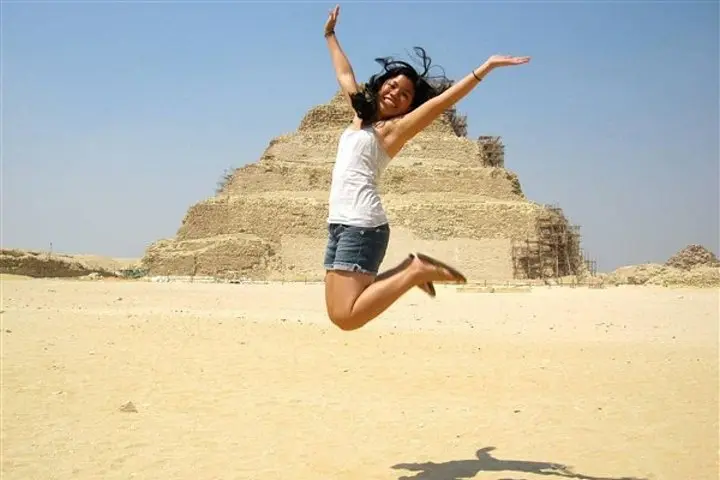
Culturally, these sites span millennia—Memphis was a 1st-dynasty power center, Saqqara holds the Step Pyramid of Djoser and the first Pyramid Texts, while Dahshur shows the experiments that led to true pyramid form. Local artisans and small museum displays offer insight into papyrus, perfume and carpet-making traditions you’ll likely see on government-authorized stops.
Practical guidance: expect 6–8 hours door-to-door with roughly 3–5 km of walking over sand, packed limestone and uneven paving; elevation changes are minimal but footing is irregular. Bring sun protection, sturdy closed shoes, and cash for optional entry upgrades, tips and souvenirs. Plan to move steadily—time at each stop is limited—and prioritize interior access (requires additional tickets) if you want to enter burial chambers. Hydrate, start early to avoid peak sun, and keep a flexible pace: the stones won’t hurry you, but the day’s schedule will.
The tour is approximately 8 hours from hotel pickup (usually around 7:00 AM) to drop-off; exact timing depends on hotel location and traffic.
Basic area entry may be included depending on the option chosen, but interior pyramid access and some museum entries usually require additional tickets purchased onsite or as an add-on.
The tour is labeled easy but involves uneven ground and steps; it’s not recommended for those with serious spinal or mobility problems without assistance.
Lunch at a local restaurant is generally included if that option is selected; a bottle of water is typically provided, but bring extra for hot days.
Egyptian Felucca ride On the Nile operates guided outdoor trips and adventures with an emphasis on safety, stewardship, and memorable experiences.
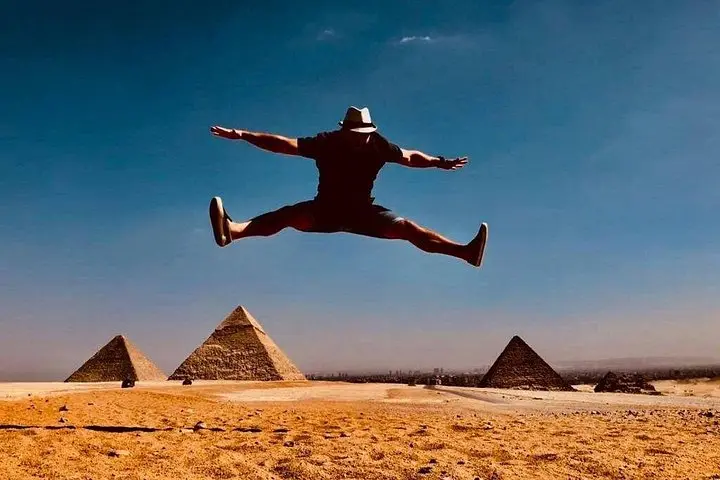
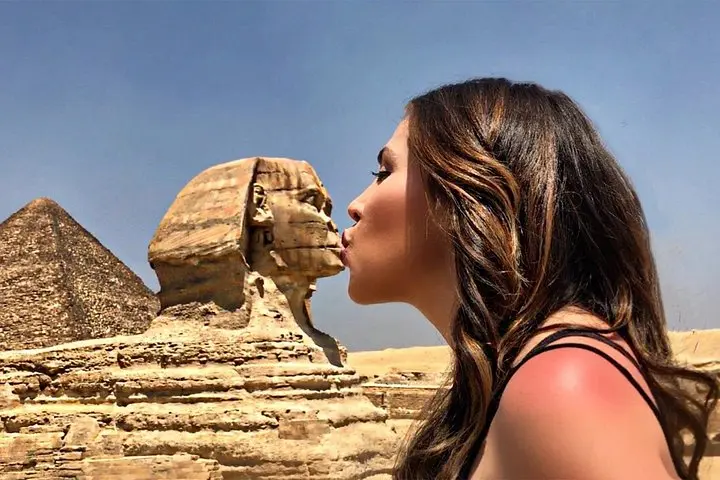
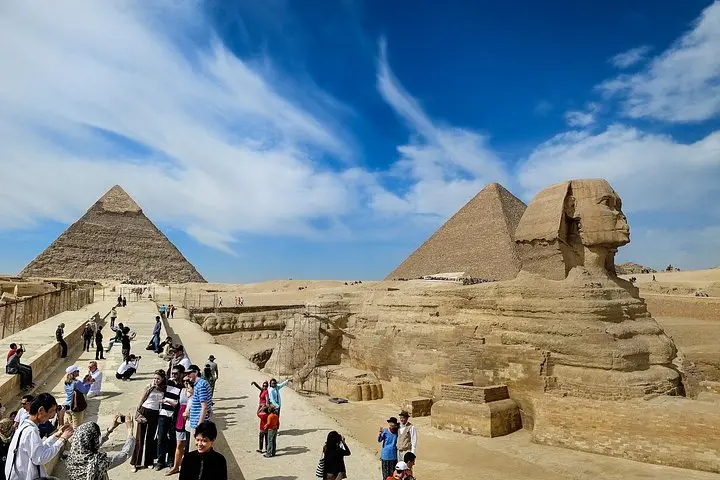
You step from the air-conditioned vehicle into a wind that tastes of dust and history. The Giza Plateau spreads out in hard, pale stone; three great cones—Khufu, Khafre and Menkaure—rise against a Cairo skyline. The Sphinx watches, its profile sun-browned, while vendors and guideposts mark pathways between ancient stones and modern commerce.
You step from the air-conditioned vehicle into a wind that tastes of dust and history. The Giza Plateau spreads out in hard, pale stone; three great cones—Khufu, Khafre and Menkaure—rise against a Cairo skyline. The Sphinx watches, its profile sun-browned, while vendors and guideposts mark pathways between ancient stones and modern commerce.
This full-day route threads Fourth and Old Kingdom sites, moving from the Khufu complex and valley temples to the funerary fields of Saqqara and the quieter pyramids at Dahshur. Geologically, you’re on a limestone bench about 60 metres above the Nile floodplain; much of the visible stone is local Tura limestone and the pinkish alabaster of Memphis speaks to the region’s trade in quarried materials.
Culturally, these sites span millennia—Memphis was a 1st-dynasty power center, Saqqara holds the Step Pyramid of Djoser and the first Pyramid Texts, while Dahshur shows the experiments that led to true pyramid form. Local artisans and small museum displays offer insight into papyrus, perfume and carpet-making traditions you’ll likely see on government-authorized stops.
Practical guidance: expect 6–8 hours door-to-door with roughly 3–5 km of walking over sand, packed limestone and uneven paving; elevation changes are minimal but footing is irregular. Bring sun protection, sturdy closed shoes, and cash for optional entry upgrades, tips and souvenirs. Plan to move steadily—time at each stop is limited—and prioritize interior access (requires additional tickets) if you want to enter burial chambers. Hydrate, start early to avoid peak sun, and keep a flexible pace: the stones won’t hurry you, but the day’s schedule will.