THE ADVENTURE COLLECTIVE® · Independent discovery and booking for outdoor travel
Spend a full day at the Giza Plateau — walk among the Great Pyramids, ride a camel beside Khufu’s tomb, then explore the Egyptian Museum’s millennia of artifacts. This practical guide covers what to expect, what to bring and how to plan for a memorable day in Cairo.
Spend a full day at the Giza Plateau — walk among the Great Pyramids, ride a camel beside Khufu’s tomb, then explore the Egyptian Museum’s millennia of artifacts. This practical guide covers what to expect, what to bring and how to plan for a memorable day in Cairo.
You step out of an air-conditioned car onto a wind-scoured limestone plateau and the three great pyramids loom like engineered mountains, their faces catching the glare of Egypt’s sun. Camels shift and low rumble of vendors set the rhythm as your guide leads you across sand-swept paths toward Khufu’s monumental tomb.
Verified experiences and guided adventures in the surrounding area.
Operated by Sun Pyramids Vip Tours · Giza, Giza Governorate
You step out of an air-conditioned car onto a wind-scoured limestone plateau and the three great pyramids loom like engineered mountains, their faces catching the glare of Egypt’s sun. Camels shift and low rumble of vendors set the rhythm as your guide leads you across sand-swept paths toward Khufu’s monumental tomb.
The Giza Plateau is both archaeological record and living landscape: the pyramids date to the Fourth Dynasty (around 2560–2500 BCE), built of locally quarried limestone and facing centuries of wind and human traffic. Geologically the site sits on erosion-resistant Eocene limestones; the plateau’s stony shoulder gives way to the Nile floodplain below. Nearby, the Great Sphinx and the Valley Temple speak to ancient funerary rituals while the Solar Boat Museum preserves a ritual vessel once buried beside Khufu.
After 20–30 minutes aboard a camel — a slow, swaying perspective that compresses desert into motion — the tour moves into the Egyptian Museum in central Cairo, home to Tutankhamun’s treasures and more than 120,000 artifacts that trace millennia of mastery in stone, gold and papyrus.
Practical side: expect uneven walking, strong sun and crowds. Wear comfortable closed-toe shoes for sand and stones, bring at least 1–2 liters of water, and carry small local currency for tips and purchases. Morning departures are cooler and offer better light for photos; museum sections can be busy, so plan for lines and take time to rest between outdoor and indoor segments. The route balances outdoor spectacle with curated history — a full day that pairs desert scale with museum detail.
This tour’s itinerary lists admissions as included for the pyramids and the Egyptian Museum; confirm inclusions on your booking voucher before arrival.
Camel rides on the plateau are typically 20–30 minutes, enough for photos and a short circuit around the base of the pyramids.
Pickup is generally available from central Cairo hotels; airport or distant suburbs may incur an additional surcharge — check details when booking.
Transportation and many museum areas are wheelchair accessible, but the plateau itself has uneven terrain and sandy paths that limit mobility in some zones.
Sun Pyramids Vip Tours operates guided outdoor trips and adventures with an emphasis on safety, stewardship, and memorable experiences.
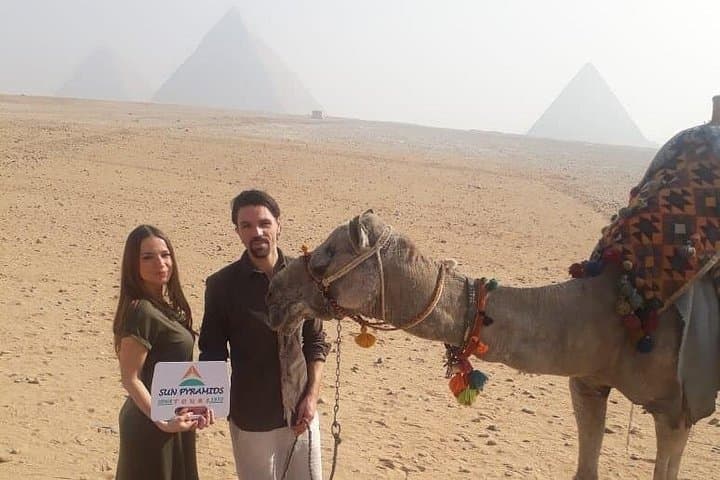
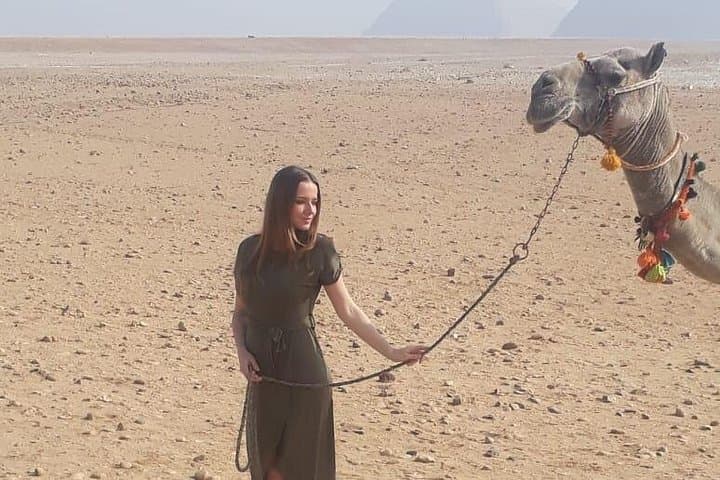
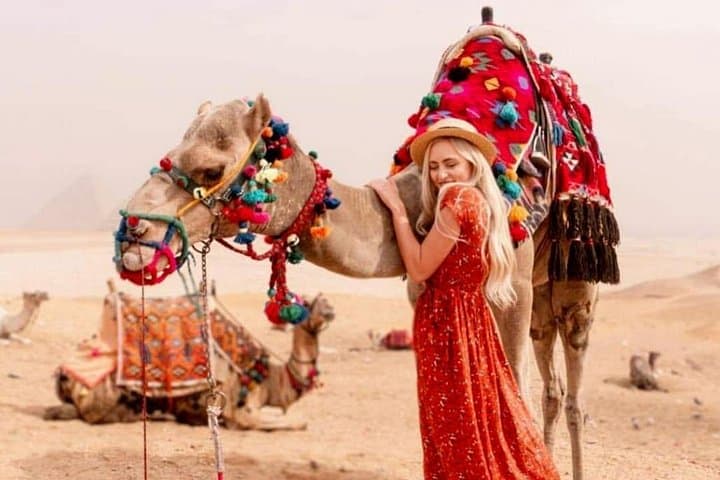
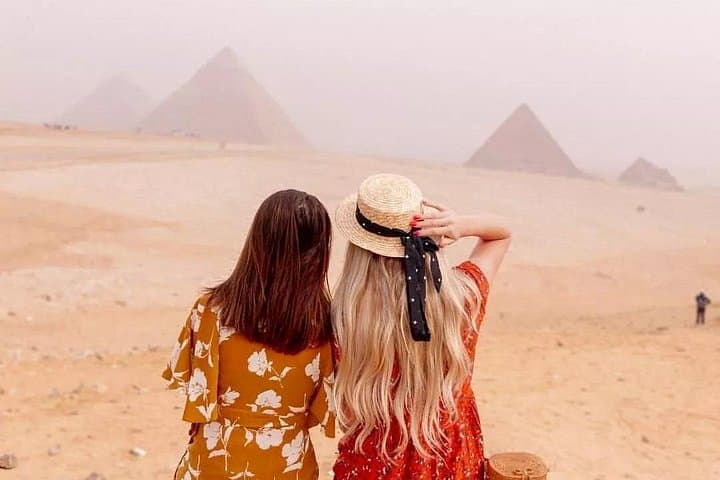
You step out of an air-conditioned car onto a wind-scoured limestone plateau and the three great pyramids loom like engineered mountains, their faces catching the glare of Egypt’s sun. Camels shift and low rumble of vendors set the rhythm as your guide leads you across sand-swept paths toward Khufu’s monumental tomb.
You step out of an air-conditioned car onto a wind-scoured limestone plateau and the three great pyramids loom like engineered mountains, their faces catching the glare of Egypt’s sun. Camels shift and low rumble of vendors set the rhythm as your guide leads you across sand-swept paths toward Khufu’s monumental tomb.
The Giza Plateau is both archaeological record and living landscape: the pyramids date to the Fourth Dynasty (around 2560–2500 BCE), built of locally quarried limestone and facing centuries of wind and human traffic. Geologically the site sits on erosion-resistant Eocene limestones; the plateau’s stony shoulder gives way to the Nile floodplain below. Nearby, the Great Sphinx and the Valley Temple speak to ancient funerary rituals while the Solar Boat Museum preserves a ritual vessel once buried beside Khufu.
After 20–30 minutes aboard a camel — a slow, swaying perspective that compresses desert into motion — the tour moves into the Egyptian Museum in central Cairo, home to Tutankhamun’s treasures and more than 120,000 artifacts that trace millennia of mastery in stone, gold and papyrus.
Practical side: expect uneven walking, strong sun and crowds. Wear comfortable closed-toe shoes for sand and stones, bring at least 1–2 liters of water, and carry small local currency for tips and purchases. Morning departures are cooler and offer better light for photos; museum sections can be busy, so plan for lines and take time to rest between outdoor and indoor segments. The route balances outdoor spectacle with curated history — a full day that pairs desert scale with museum detail.
