THE ADVENTURE COLLECTIVE® · Independent discovery and booking for outdoor travel

From Alexandria Port to the Giza Plateau in a single day: private transfer, guided access to the Great Pyramids and a visit to the Egyptian Museum in Cairo. Expect a long, history-filled day with desert walks, museum galleries and practical requirements like passport ID.
From Alexandria Port to the Giza Plateau in a single day: private transfer, guided access to the Great Pyramids and a visit to the Egyptian Museum in Cairo. Expect a long, history-filled day with desert walks, museum galleries and practical requirements like passport ID.
The morning light in Alexandria slips off the Mediterranean and, within hours, you trade salt air for the dry, ochre sweep of the Giza Plateau.
Verified experiences and guided adventures in the surrounding area.
Operated by Egyptian Felucca ride On the Nile · Giza, Giza Governorate
The morning light in Alexandria slips off the Mediterranean and, within hours, you trade salt air for the dry, ochre sweep of the Giza Plateau.
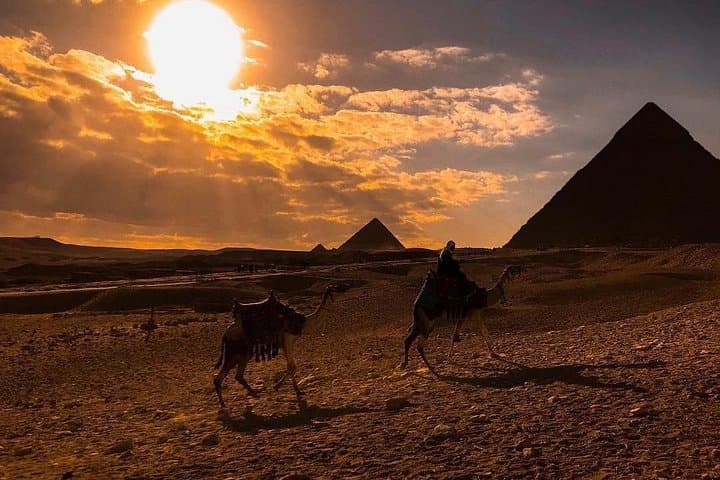
A private car collects travelers from Alexandria Port and makes the roughly 2.5-hour drive to Cairo, arriving where stone and sky dominate the horizon. At Giza, visitors circulate around Khufu, Khafre and Menkaure — the geometric certainty of their faces offset by wind-scoured edges, worker-built causeways and the close-up presence of the Sphinx.
The plateau is an Old Kingdom funerary landscape: valley temples, mortuary complexes and the remains of craftsmen’s settlements sit amid modern villages. Geologically, the pyramids rise from Eocene limestone beds that have been quarried and refitted for millennia, producing the compact, pale blocks that still hold their angles.
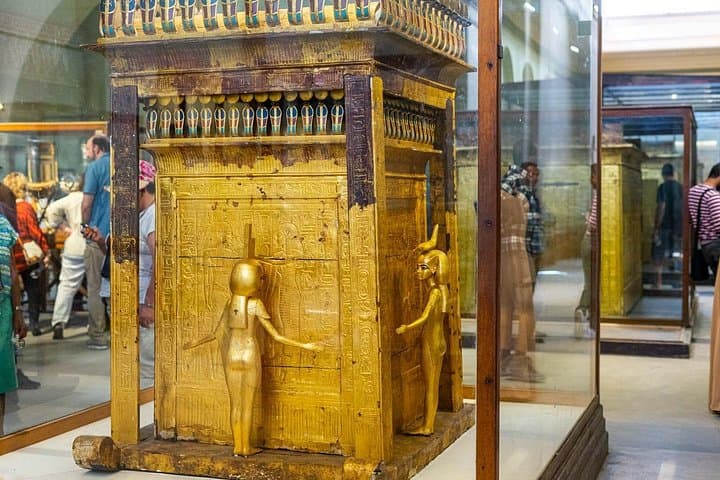
After the plateau, the tour moves into central Cairo to the Egyptian Museum, where cases of gilded funerary equipment — including objects from Tutankhamun’s tomb — give the day a museum-scale counterpoint to the open-air site.
Practical notes: expect a long day (10–12 hours) with significant time in and out of a vehicle and several hours on foot over uneven surfaces and sand. Sun protection, a roomy water bottle and sturdy shoes make the visit more comfortable. Passport details are required for booking; plan logistics around port pickup/drop-off times and allow extra time for security lines despite skip-the-line access. Respect ropes and signs: preservation depends on staying on designated paths.
Yes — the operator requires passport details and a photo copy to confirm the booking and for port pickup.
Basic entry fees are included for standard areas, but optional extras (e.g., internal pyramid access or special exhibitions) may cost more depending on the options chosen.
The private transfer is approximately 2.5 hours each way, depending on traffic; total trip time is about 10–12 hours.
Not recommended for travelers with serious spinal or mobility problems; surfaces at Giza are uneven and involve walking on sand and stone.
Egyptian Felucca ride On the Nile operates guided outdoor trips and adventures with an emphasis on safety, stewardship, and memorable experiences.


The morning light in Alexandria slips off the Mediterranean and, within hours, you trade salt air for the dry, ochre sweep of the Giza Plateau.
The morning light in Alexandria slips off the Mediterranean and, within hours, you trade salt air for the dry, ochre sweep of the Giza Plateau.
A private car collects travelers from Alexandria Port and makes the roughly 2.5-hour drive to Cairo, arriving where stone and sky dominate the horizon. At Giza, visitors circulate around Khufu, Khafre and Menkaure — the geometric certainty of their faces offset by wind-scoured edges, worker-built causeways and the close-up presence of the Sphinx.
The plateau is an Old Kingdom funerary landscape: valley temples, mortuary complexes and the remains of craftsmen’s settlements sit amid modern villages. Geologically, the pyramids rise from Eocene limestone beds that have been quarried and refitted for millennia, producing the compact, pale blocks that still hold their angles.
After the plateau, the tour moves into central Cairo to the Egyptian Museum, where cases of gilded funerary equipment — including objects from Tutankhamun’s tomb — give the day a museum-scale counterpoint to the open-air site.
Practical notes: expect a long day (10–12 hours) with significant time in and out of a vehicle and several hours on foot over uneven surfaces and sand. Sun protection, a roomy water bottle and sturdy shoes make the visit more comfortable. Passport details are required for booking; plan logistics around port pickup/drop-off times and allow extra time for security lines despite skip-the-line access. Respect ropes and signs: preservation depends on staying on designated paths.