THE ADVENTURE COLLECTIVE® · Independent discovery and booking for outdoor travel

A full-day shore excursion that moves from Alexandria’s port to the monumental Giza Plateau, the Step Pyramid at Saqqara, and the open-air remains of ancient Memphis. Expect close-up encounters with the Great Pyramid, the Sphinx, and centuries of funerary architecture in one long, well-paced day.
A full-day shore excursion that moves from Alexandria’s port to the monumental Giza Plateau, the Step Pyramid at Saqqara, and the open-air remains of ancient Memphis. Expect close-up encounters with the Great Pyramid, the Sphinx, and centuries of funerary architecture in one long, well-paced day.
You step off the cruise tender into the heat and motion of Alexandria’s port, the Mediterranean breeze already giving way to the drier air of the Nile valley as your vehicle threads east toward Giza.
Verified experiences and guided adventures in the surrounding area.
Operated by Emo Tours Egypt · Giza, Giza Governorate
You step off the cruise tender into the heat and motion of Alexandria’s port, the Mediterranean breeze already giving way to the drier air of the Nile valley as your vehicle threads east toward Giza.
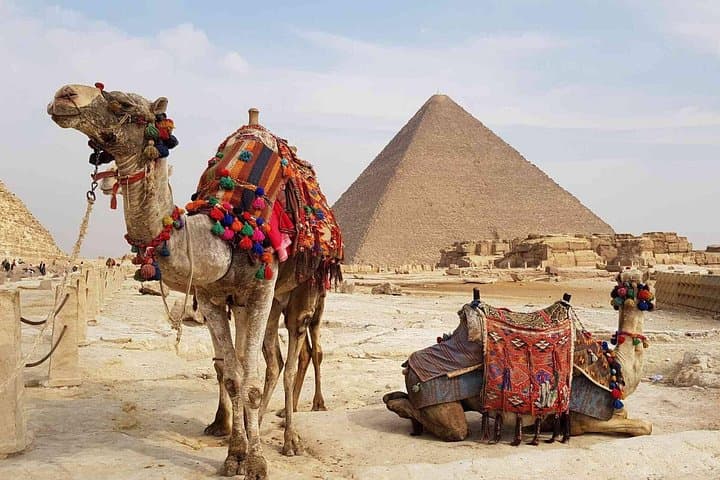
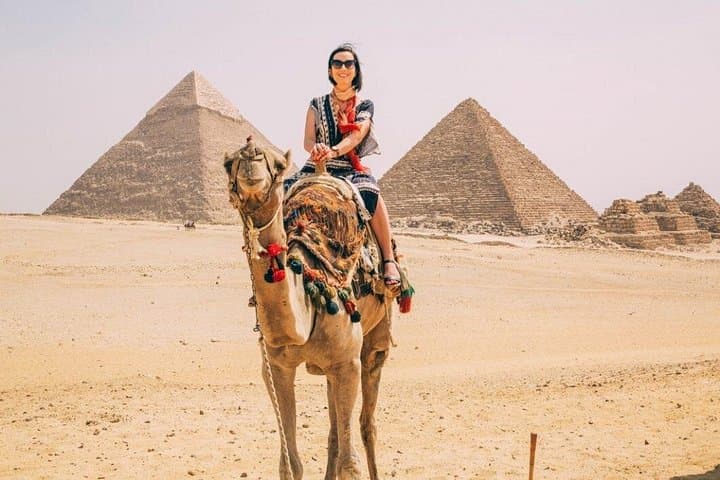
By mid-morning the limestone of the Giza Plateau rises from the dust—sun-bleached blocks stacked with geometric precision. The Great Pyramid’s faces catch light differently as you walk its base; the Sphinx sits half-buried in shadow, watching the modern city beyond. A short drive south brings you to Saqqara’s Step Pyramid, where the evolution from mastaba to stepped form is visible in weathered stone and carefully restored masonry.
These sites span millennia: Fourth Dynasty builders who quarried local limestone and set astronomical alignments; Memphis, once Egypt’s administrative heart, now an open-air museum dominated by an alabaster colossus of Ramesses II. The landscape itself is Pliocene limestone on top of older Nile silt—hard rock punctuating flat desert—so acoustics and sightlines here have shaped ritual and travel for centuries.
Practical guidance: it’s a long, full-day shore excursion—expect 10 hours including transfers. Carry shade, at least 1–2 liters of water, sturdy walking shoes for uneven steps and compacted sand, and a copy of your passport for bookings. Guides usually cover basic entry fees and a local lunch; be prepared for crowds and for brief itinerary adjustments due to traffic. Move deliberately between sites—pause at the panoramic viewpoints to read the stones and let the scale settle in. This trip balances cultural immersion with practical pacing, making ancient Egypt readable in a single, intense day.
Yes—the guide meets you inside Alexandria Port and transfers are included from port to all listed sites and back.
Entry fees for the sites listed are included as described, though upgrades (e.g., entering certain monuments) may require extra payment on site.
The tour involves walking on uneven surfaces and climbing short stair sections; it is not ideal for travelers with significant mobility issues or severe back/heart conditions.
A local Egyptian lunch is included; notify the operator of dietary restrictions when booking so they can attempt to accommodate them.
Emo Tours Egypt operates guided outdoor trips and adventures with an emphasis on safety, stewardship, and memorable experiences.


You step off the cruise tender into the heat and motion of Alexandria’s port, the Mediterranean breeze already giving way to the drier air of the Nile valley as your vehicle threads east toward Giza.
You step off the cruise tender into the heat and motion of Alexandria’s port, the Mediterranean breeze already giving way to the drier air of the Nile valley as your vehicle threads east toward Giza.
By mid-morning the limestone of the Giza Plateau rises from the dust—sun-bleached blocks stacked with geometric precision. The Great Pyramid’s faces catch light differently as you walk its base; the Sphinx sits half-buried in shadow, watching the modern city beyond. A short drive south brings you to Saqqara’s Step Pyramid, where the evolution from mastaba to stepped form is visible in weathered stone and carefully restored masonry.
These sites span millennia: Fourth Dynasty builders who quarried local limestone and set astronomical alignments; Memphis, once Egypt’s administrative heart, now an open-air museum dominated by an alabaster colossus of Ramesses II. The landscape itself is Pliocene limestone on top of older Nile silt—hard rock punctuating flat desert—so acoustics and sightlines here have shaped ritual and travel for centuries.
Practical guidance: it’s a long, full-day shore excursion—expect 10 hours including transfers. Carry shade, at least 1–2 liters of water, sturdy walking shoes for uneven steps and compacted sand, and a copy of your passport for bookings. Guides usually cover basic entry fees and a local lunch; be prepared for crowds and for brief itinerary adjustments due to traffic. Move deliberately between sites—pause at the panoramic viewpoints to read the stones and let the scale settle in. This trip balances cultural immersion with practical pacing, making ancient Egypt readable in a single, intense day.