THE ADVENTURE COLLECTIVE® · Independent discovery and booking for outdoor travel

Combine an expert-led visit to the Giza Pyramids with an adrenaline-charged ATV quad ride across the surrounding desert. This private, four-hour tour pairs archaeological insight with off-road thrills, ideal for travelers who want both culture and action in a single morning.
Combine an expert-led visit to the Giza Pyramids with an adrenaline-charged ATV quad ride across the surrounding desert. This private, four-hour tour pairs archaeological insight with off-road thrills, ideal for travelers who want both culture and action in a single morning.
A traveler steps out of a climate-controlled vehicle onto a wind-swept plateau and the Great Pyramid fills the horizon—stone faces aging like an accomplished athlete. The morning air is dry and bright; the desert around Giza dares visitors to trade the cool of the van for sun and sand. After a guided wander of the Giza Plateau, the day shifts gears: helmets on, engines rev, and an ATV ride threads across dunes and flat expanses where the city drops away.
Verified experiences and guided adventures in the surrounding area.
Operated by Camel Ride at Giza Pyramids · Giza, Cairo Governorate
A traveler steps out of a climate-controlled vehicle onto a wind-swept plateau and the Great Pyramid fills the horizon—stone faces aging like an accomplished athlete. The morning air is dry and bright; the desert around Giza dares visitors to trade the cool of the van for sun and sand. After a guided wander of the Giza Plateau, the day shifts gears: helmets on, engines rev, and an ATV ride threads across dunes and flat expanses where the city drops away.
The Giza Pyramids date to Egypt’s Fourth Dynasty (c. 2600–2500 BCE) and remain among the best-preserved royal tomb complexes in the world. Geologically the plateau is a limestone outcrop that provided building stone and a dramatic setting; culturally the area blends modern Cairo’s bustle with millennia-old funerary landscape. Local guides illuminate construction theories, burial rites, and the panoramic vantage points—especially the Panorama Point that frames all three major pyramids together.
Practical guidance is direct: expect roughly four hours total, including transfers. The pyramid visit involves level paved paths and uneven stone surfaces; bring sun protection and sturdy shoes for short climbs and photo spots. ATV segments run on compact sand and track—riders should be comfortable with throttle control, and follow staff briefings on speed and distance. Hydration is essential; bottled water is typically provided.
Timing matters: mornings are cooler and light is better for photos; afternoons can become harsh. Respect archaeological sites—climbing the pyramids is prohibited and can cause damage. Combining history and a desert ride delivers a compact, high-contrast day: ancient masonry and modern machines sharing the same horizon.
Interior entry is usually not included; visitors can buy additional tickets on site for allowed tombs when available.
No prior experience is required, but riders should be comfortable with basic throttle and braking; the operator provides a safety briefing.
Yes—private pickup and drop-off from central Cairo hotels is commonly included in this tour package.
Camel rides are typically available as an optional extra arranged on-site and are not included in the standard itinerary.
Camel Ride at Giza Pyramids operates guided outdoor trips and adventures with an emphasis on safety, stewardship, and memorable experiences.

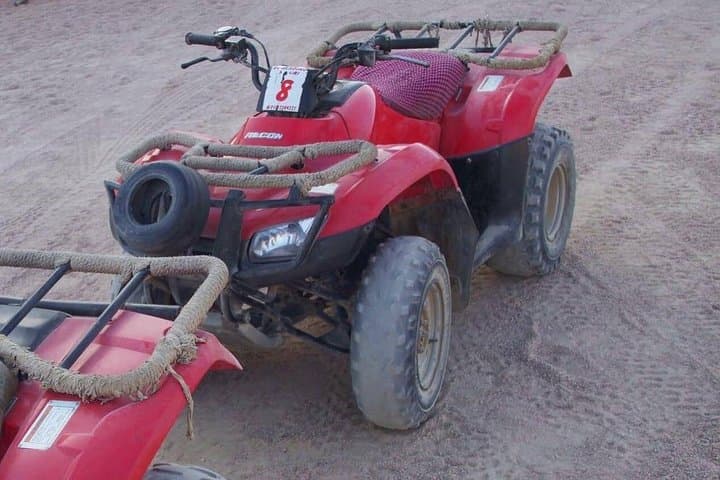
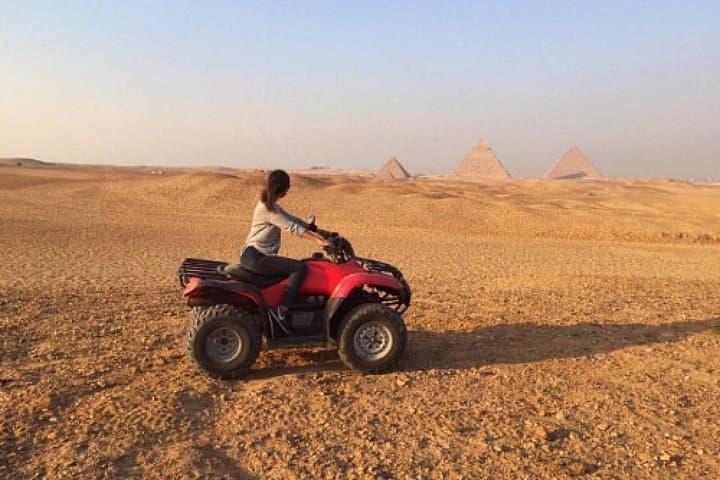

A traveler steps out of a climate-controlled vehicle onto a wind-swept plateau and the Great Pyramid fills the horizon—stone faces aging like an accomplished athlete. The morning air is dry and bright; the desert around Giza dares visitors to trade the cool of the van for sun and sand. After a guided wander of the Giza Plateau, the day shifts gears: helmets on, engines rev, and an ATV ride threads across dunes and flat expanses where the city drops away.
A traveler steps out of a climate-controlled vehicle onto a wind-swept plateau and the Great Pyramid fills the horizon—stone faces aging like an accomplished athlete. The morning air is dry and bright; the desert around Giza dares visitors to trade the cool of the van for sun and sand. After a guided wander of the Giza Plateau, the day shifts gears: helmets on, engines rev, and an ATV ride threads across dunes and flat expanses where the city drops away.
The Giza Pyramids date to Egypt’s Fourth Dynasty (c. 2600–2500 BCE) and remain among the best-preserved royal tomb complexes in the world. Geologically the plateau is a limestone outcrop that provided building stone and a dramatic setting; culturally the area blends modern Cairo’s bustle with millennia-old funerary landscape. Local guides illuminate construction theories, burial rites, and the panoramic vantage points—especially the Panorama Point that frames all three major pyramids together.
Practical guidance is direct: expect roughly four hours total, including transfers. The pyramid visit involves level paved paths and uneven stone surfaces; bring sun protection and sturdy shoes for short climbs and photo spots. ATV segments run on compact sand and track—riders should be comfortable with throttle control, and follow staff briefings on speed and distance. Hydration is essential; bottled water is typically provided.
Timing matters: mornings are cooler and light is better for photos; afternoons can become harsh. Respect archaeological sites—climbing the pyramids is prohibited and can cause damage. Combining history and a desert ride delivers a compact, high-contrast day: ancient masonry and modern machines sharing the same horizon.