THE ADVENTURE COLLECTIVE® · Independent discovery and booking for outdoor travel

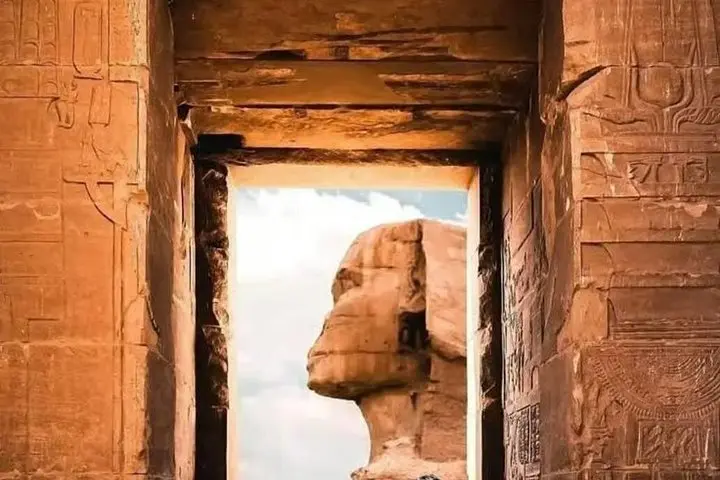
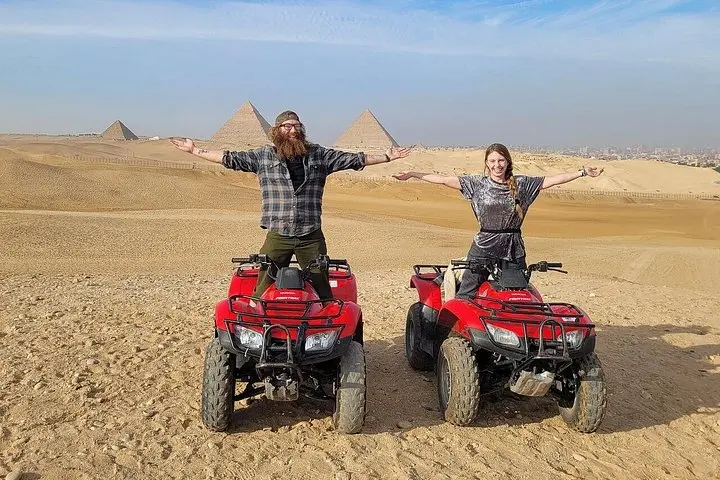
Ride across the sand with a one‑hour quad session, pause for a camel ride and a guided walk around the Great Pyramid and Sphinx. This half‑day combo pairs high‑speed desert tracks with the slow, storied pace of Egypt’s ancient monuments.
Ride across the sand with a one‑hour quad session, pause for a camel ride and a guided walk around the Great Pyramid and Sphinx. This half‑day combo pairs high‑speed desert tracks with the slow, storied pace of Egypt’s ancient monuments.
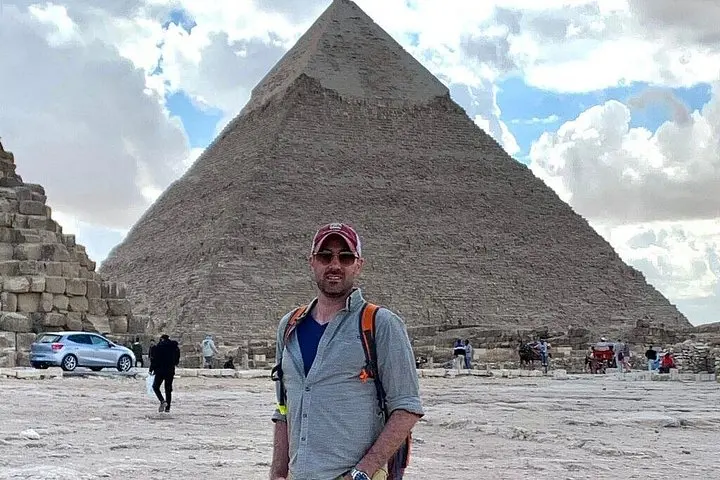
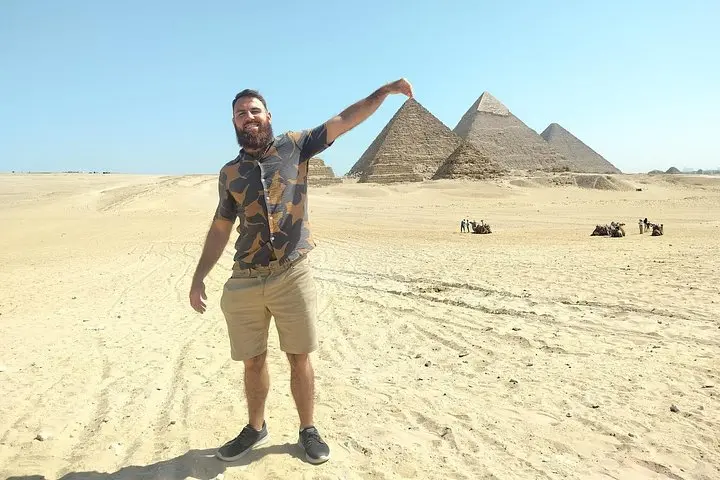
You step out of an air‑conditioned van into a sun‑baked corridor of sand. The Great Pyramid rises ahead like a weathered monarch; wind pulls loose grains across the dune as quad engines rumble and a camel exhales beside the trail. For five hours the desert alternates between broad, open flats and ridgelines that frame the three main pyramids and the Sphinx.
Verified experiences and guided adventures in the surrounding area.
Operated by Hola Egipto · Giza, Giza Governorate
You step out of an air‑conditioned van into a sun‑baked corridor of sand. The Great Pyramid rises ahead like a weathered monarch; wind pulls loose grains across the dune as quad engines rumble and a camel exhales beside the trail. For five hours the desert alternates between broad, open flats and ridgelines that frame the three main pyramids and the Sphinx.
The plateau here records millennia: cut limestone and mortared blocks placed by Old Kingdom engineers, the Sphinx gouged from calcarenite, and Bedouin routes that predate modern roads. Geologically, the area sits on Pleistocene and Holocene sands overlying limestone bedrock—hence the exposed cuts and erosion patterns you’ll see. Culturally, the site remains active: local guides share Egyptological context while camel handlers and desert guides keep long‑standing traditions alive.
Practical guidance: tours begin and end with hotel transfers in Cairo, run roughly five hours, and combine a guided walk around the Pyramid complex with a short camel ride and a supervised one‑hour quad bike session. Wear closed shoes, a hat, and layered sun protection; bring your passport copy for entry. Hydration and sunscreen are essential—heat intensifies on open sand. Quad riding requires basic balance and attention to the guide’s briefing; helmets are provided but confirm beforehand.
Expect photo stops, a moderate level of physical ease suitable for most travelers, and a steady rhythm between interpretive history and fast desert tracks. The desert will nudge you forward; the pyramids will hold you in place.
The guided quad segment lasts about one hour and takes place on marked desert tracks under instructor supervision.
No prior experience is necessary; instructors give a safety briefing and guide less confident riders, but basic balance and following instructions are required.
Helmets are typically provided by the operator—confirm at booking—and gloves or additional protection can be requested.
This tour lists wheelchair accessibility for transfers, but terrain around the pyramid complex and the quad activity are not fully wheelchair‑accessible; check with the operator for accommodations.
Hola Egipto operates guided outdoor trips and adventures with an emphasis on safety, stewardship, and memorable experiences.
You step out of an air‑conditioned van into a sun‑baked corridor of sand. The Great Pyramid rises ahead like a weathered monarch; wind pulls loose grains across the dune as quad engines rumble and a camel exhales beside the trail. For five hours the desert alternates between broad, open flats and ridgelines that frame the three main pyramids and the Sphinx.
You step out of an air‑conditioned van into a sun‑baked corridor of sand. The Great Pyramid rises ahead like a weathered monarch; wind pulls loose grains across the dune as quad engines rumble and a camel exhales beside the trail. For five hours the desert alternates between broad, open flats and ridgelines that frame the three main pyramids and the Sphinx.
The plateau here records millennia: cut limestone and mortared blocks placed by Old Kingdom engineers, the Sphinx gouged from calcarenite, and Bedouin routes that predate modern roads. Geologically, the area sits on Pleistocene and Holocene sands overlying limestone bedrock—hence the exposed cuts and erosion patterns you’ll see. Culturally, the site remains active: local guides share Egyptological context while camel handlers and desert guides keep long‑standing traditions alive.
Practical guidance: tours begin and end with hotel transfers in Cairo, run roughly five hours, and combine a guided walk around the Pyramid complex with a short camel ride and a supervised one‑hour quad bike session. Wear closed shoes, a hat, and layered sun protection; bring your passport copy for entry. Hydration and sunscreen are essential—heat intensifies on open sand. Quad riding requires basic balance and attention to the guide’s briefing; helmets are provided but confirm beforehand.
Expect photo stops, a moderate level of physical ease suitable for most travelers, and a steady rhythm between interpretive history and fast desert tracks. The desert will nudge you forward; the pyramids will hold you in place.