THE ADVENTURE COLLECTIVE® · Independent discovery and booking for outdoor travel

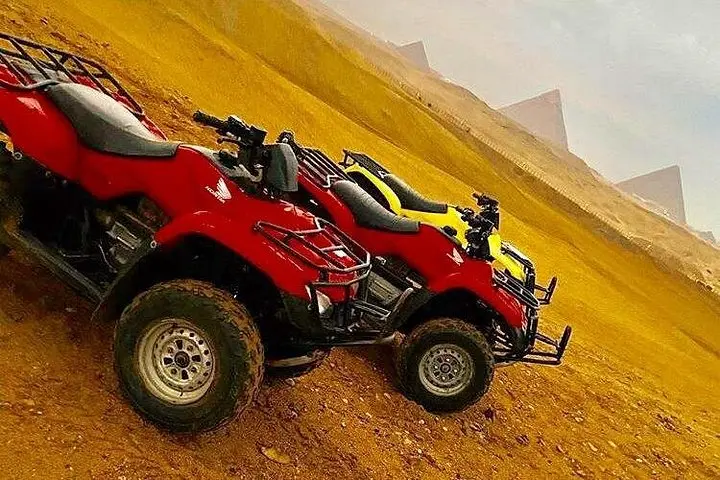
Ride a quad around the Giza Plateau with close-up views of the Great Pyramid, Khafre and Menkaure. This guided ATV safari pairs high-desert driving with timed sunrise or sunset light for standout photos.
Ride a quad around the Giza Plateau with close-up views of the Great Pyramid, Khafre and Menkaure. This guided ATV safari pairs high-desert driving with timed sunrise or sunset light for standout photos.
The engine kicks to life and the desert answers — a narrow ribbon of sand runs toward the silhouette of three pyramids, wind pushing grit across the plateau as the quad bites into the loose surface. Ride out and the Great Pyramid of Khufu dominates the skyline, Chephren’s shadow sits close by, and the mauve light of sunrise or the orange smear of sunset makes the limestone glow.
Verified experiences and guided adventures in the surrounding area.
Operated by Guide Of Egypt Tours · Giza, Giza Governorate
The engine kicks to life and the desert answers — a narrow ribbon of sand runs toward the silhouette of three pyramids, wind pushing grit across the plateau as the quad bites into the loose surface. Ride out and the Great Pyramid of Khufu dominates the skyline, Chephren’s shadow sits close by, and the mauve light of sunrise or the orange smear of sunset makes the limestone glow.
The Giza Plateau is both archaeology and geology: wind-polished sandstone and bedrock underlay the man-made cores of pyramids built in the Fourth Dynasty, roughly 4,500 years ago. This is where pharaonic funerary architecture meets the living culture of Cairo and the desert communities whose families have guided travelers for decades.
Expect open dunes, compacted service tracks, and brief stretches of rocky ground. Guides usually include pickups from Cairo or Giza, helmets, bottled water and a photography assist — but practice basic throttle control before pushing speed. Timing matters: mornings and late afternoons offer cooler temperatures and cleaner light for photos; midday throws up more dust and glare.
Practical notes: wear closed-toe shoes, eye protection, and a lightweight layer for windy snaps; bring sun protection and at least one liter of water per person. Keep to instructed routes to protect archaeological areas and fragile desert soils. For first-timers the experience is immediate and tactile: the desert dares you forward, the pyramids watch, and every turn delivers a new angle on one of history’s largest outdoor stages.
No prior experience is required; guides provide brief instruction and supervise. Basic coordination and comfort with throttle and braking are helpful.
Most tours include private pickup from hotels in Cairo or Giza; check surcharge policies for certain districts and airport hotels.
Guides typically supply helmets and bottled water; bring your own eye protection if you prefer specific fit or higher-grade goggles.
Rides offer panoramic viewpoints of Khufu, Khafre and Menkaure from the plateau and adjacent desert tracks, but vehicles are restricted from driving onto protected archaeological areas.
Guide Of Egypt Tours operates guided outdoor trips and adventures with an emphasis on safety, stewardship, and memorable experiences.

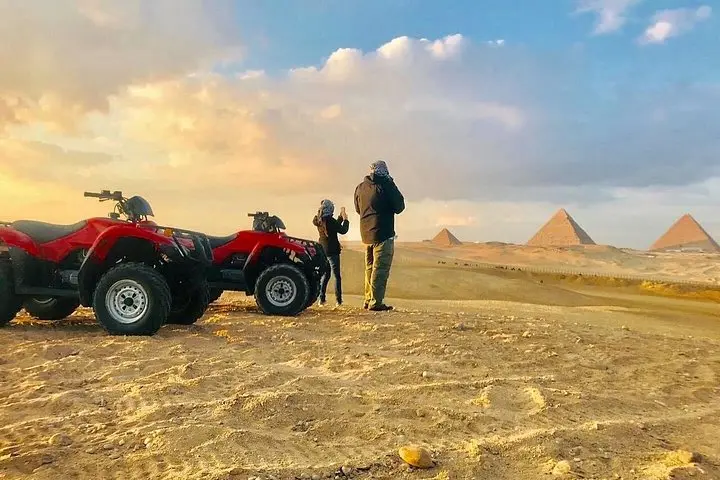
The engine kicks to life and the desert answers — a narrow ribbon of sand runs toward the silhouette of three pyramids, wind pushing grit across the plateau as the quad bites into the loose surface. Ride out and the Great Pyramid of Khufu dominates the skyline, Chephren’s shadow sits close by, and the mauve light of sunrise or the orange smear of sunset makes the limestone glow.
The engine kicks to life and the desert answers — a narrow ribbon of sand runs toward the silhouette of three pyramids, wind pushing grit across the plateau as the quad bites into the loose surface. Ride out and the Great Pyramid of Khufu dominates the skyline, Chephren’s shadow sits close by, and the mauve light of sunrise or the orange smear of sunset makes the limestone glow.
The Giza Plateau is both archaeology and geology: wind-polished sandstone and bedrock underlay the man-made cores of pyramids built in the Fourth Dynasty, roughly 4,500 years ago. This is where pharaonic funerary architecture meets the living culture of Cairo and the desert communities whose families have guided travelers for decades.
Expect open dunes, compacted service tracks, and brief stretches of rocky ground. Guides usually include pickups from Cairo or Giza, helmets, bottled water and a photography assist — but practice basic throttle control before pushing speed. Timing matters: mornings and late afternoons offer cooler temperatures and cleaner light for photos; midday throws up more dust and glare.
Practical notes: wear closed-toe shoes, eye protection, and a lightweight layer for windy snaps; bring sun protection and at least one liter of water per person. Keep to instructed routes to protect archaeological areas and fragile desert soils. For first-timers the experience is immediate and tactile: the desert dares you forward, the pyramids watch, and every turn delivers a new angle on one of history’s largest outdoor stages.