THE ADVENTURE COLLECTIVE® · Independent discovery and booking for outdoor travel

Spend a private day across the Giza Plateau: stand beneath the Great Pyramid, frame the Sphinx, explore the Grand Egyptian Museum, and add an ATV dash across desert sands for a modern rush beside ancient stone.
Spend a private day across the Giza Plateau: stand beneath the Great Pyramid, frame the Sphinx, explore the Grand Egyptian Museum, and add an ATV dash across desert sands for a modern rush beside ancient stone.
You arrive at the rim of the Giza Plateau as wind-skinned sand shifts underfoot and the three pyramids cut sharp silhouettes against Cairo’s haze. The day moves like a well-paced expedition: close-up time at the Great Pyramid, a panorama stop for action photos, a quiet circle around Menkaure, and the Sphinx facing the rising city.
Verified experiences and guided adventures in the surrounding area.
Operated by Tut Egypt Tours · Giza, Giza Governorate
You arrive at the rim of the Giza Plateau as wind-skinned sand shifts underfoot and the three pyramids cut sharp silhouettes against Cairo’s haze. The day moves like a well-paced expedition: close-up time at the Great Pyramid, a panorama stop for action photos, a quiet circle around Menkaure, and the Sphinx facing the rising city.
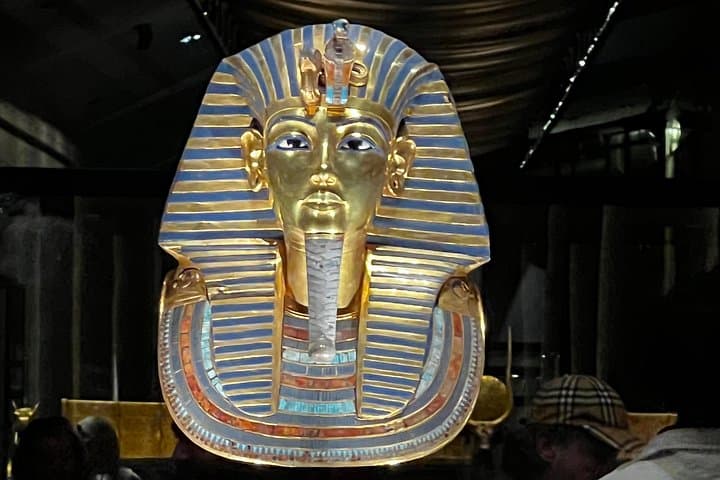
This route threads 4,500 years of engineering and ritual. Built in the Old Kingdom, the pyramids were royal tombs created with millions of cut stones; the Sphinx, carved from bedrock, still guards its secrets. Nearby, the Grand Egyptian Museum (GEM) houses over 100,000 artifacts — the most comprehensive modern presentation of Tutankhamun’s treasures and the tools of ancient craft and belief.
Geologically the plateau is a limestone promontory; wind and sand sculpt the surfaces you walk. Culturally the area hums with vendors, camel handlers, and guides who link myth and masonry with straightforward historical facts.
Practical guidance: this private tour runs roughly 6–8 hours with hotel pickup in Cairo or Giza. Expect walking on uneven, sandy ground and short climbs up sandy slopes; wear closed-toe shoes and sun protection. Museum time includes climate-controlled galleries — ideal for mid-day respite. Optional ATV or camel add-ons change pacing and require basic balance and attention to vehicle briefings.
Timing matters: early morning or late afternoon light is best for photos and cooler temperatures. Hydrate, bring layers for wind and dust, and leave extra memory on your camera — the viewpoints reward patience and a steady shutter.
Yes—this private tour includes air-conditioned hotel pickup and drop-off; confirm your exact pickup point at booking.
Entry is included if you selected the option that contains admissions; otherwise admission can be added—confirm when booking.
Access inside pyramids is restricted and sometimes limited by time or conservation; ask your guide in advance and note additional tickets or restrictions may apply.
Some parts of the route and the museum are wheelchair accessible, but sandy areas and ATV/camel options are not suitable for wheelchair users—discuss requirements when booking.
Tut Egypt Tours operates guided outdoor trips and adventures with an emphasis on safety, stewardship, and memorable experiences.



You arrive at the rim of the Giza Plateau as wind-skinned sand shifts underfoot and the three pyramids cut sharp silhouettes against Cairo’s haze. The day moves like a well-paced expedition: close-up time at the Great Pyramid, a panorama stop for action photos, a quiet circle around Menkaure, and the Sphinx facing the rising city.
You arrive at the rim of the Giza Plateau as wind-skinned sand shifts underfoot and the three pyramids cut sharp silhouettes against Cairo’s haze. The day moves like a well-paced expedition: close-up time at the Great Pyramid, a panorama stop for action photos, a quiet circle around Menkaure, and the Sphinx facing the rising city.
This route threads 4,500 years of engineering and ritual. Built in the Old Kingdom, the pyramids were royal tombs created with millions of cut stones; the Sphinx, carved from bedrock, still guards its secrets. Nearby, the Grand Egyptian Museum (GEM) houses over 100,000 artifacts — the most comprehensive modern presentation of Tutankhamun’s treasures and the tools of ancient craft and belief.
Geologically the plateau is a limestone promontory; wind and sand sculpt the surfaces you walk. Culturally the area hums with vendors, camel handlers, and guides who link myth and masonry with straightforward historical facts.
Practical guidance: this private tour runs roughly 6–8 hours with hotel pickup in Cairo or Giza. Expect walking on uneven, sandy ground and short climbs up sandy slopes; wear closed-toe shoes and sun protection. Museum time includes climate-controlled galleries — ideal for mid-day respite. Optional ATV or camel add-ons change pacing and require basic balance and attention to vehicle briefings.
Timing matters: early morning or late afternoon light is best for photos and cooler temperatures. Hydrate, bring layers for wind and dust, and leave extra memory on your camera — the viewpoints reward patience and a steady shutter.