THE ADVENTURE COLLECTIVE® · Independent discovery and booking for outdoor travel

Walk the Giza Plateau with an Egyptologist guide, photograph the Great Pyramid and Sphinx, enjoy a 30-minute camel ride, and finish with a complimentary downtown Nile walk and ice cream. This private 4–6 hour tour blends archaeological insight with practical logistics for a memorable day in Cairo and Giza.
Walk the Giza Plateau with an Egyptologist guide, photograph the Great Pyramid and Sphinx, enjoy a 30-minute camel ride, and finish with a complimentary downtown Nile walk and ice cream. This private 4–6 hour tour blends archaeological insight with practical logistics for a memorable day in Cairo and Giza.
You step onto the Giza Plateau and the desert opens like a stage: the Great Pyramid rises, its angled blocks catching sunlight while a warm wind nudges grains of sand across ancient stone. The Sphinx turns its weathered face toward you, lion body steady as the city hums beyond the horizon.
Verified experiences and guided adventures in the surrounding area.
Operated by Meres Ankh tours · Giza, Giza Governorate
You step onto the Giza Plateau and the desert opens like a stage: the Great Pyramid rises, its angled blocks catching sunlight while a warm wind nudges grains of sand across ancient stone. The Sphinx turns its weathered face toward you, lion body steady as the city hums beyond the horizon.
Built during Egypt’s Old Kingdom, the pyramids at Giza are colossal burial complexes of pharaohs Khufu, Khafre and Menkaure, cut from local limestone and capped originally with fine white casing. The plateau’s geology—soft limestone underlain by harder bedrock—allowed monumental construction and preserved tombs that still yield insights into funerary rites and royal power. Nearby, the Grand Egyptian Museum collects artifacts that reshape what we know about Tutankhamun and daily life along the Nile. Cairo’s street markets and the Nile Corniche speak to millennia of trade and the living culture that grew around these ancient centers.
Practically, expect a 4–6 hour private tour with an Egyptologist guide, short photo stops at the panoramic overlook, and a complimentary 30-minute camel ride option. Entry inside the pyramids requires a separate ticket; bring sun protection, comfortable closed shoes for uneven limestone pavements, and cash for tips or optional purchases. Midday heat can be intense—schedule early morning or late afternoon for softer light and cooler temperatures. The itinerary’s added downtown Nile walk with ice cream is an easy, low-key way to decompress after sand and stone. With planning and hydration, the Giza experience balances awe with clear logistics: ticket choices, modest dress, and transport that moves you comfortably between ancient stones and modern Cairo.
This private itinerary typically runs 4–6 hours depending on pickup location and time spent at each site.
Yes, but entry requires a separate ticket with limited availability; your guide can assist with purchase and timing.
The tour lists wheelchair accessibility for many areas, but access to some pyramid precincts and uneven surfaces may be limited—check with the operator in advance.
A 30-minute camel ride option is offered as part of the plateau visit, though operators vary and tipping is customary.
Meres Ankh tours operates guided outdoor trips and adventures with an emphasis on safety, stewardship, and memorable experiences.
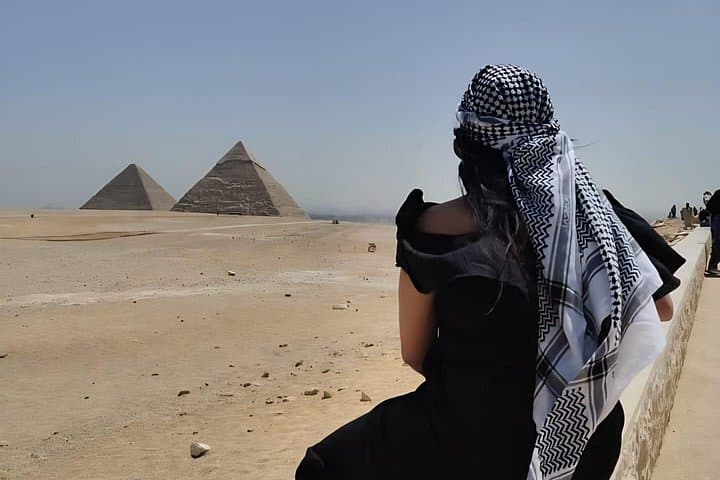
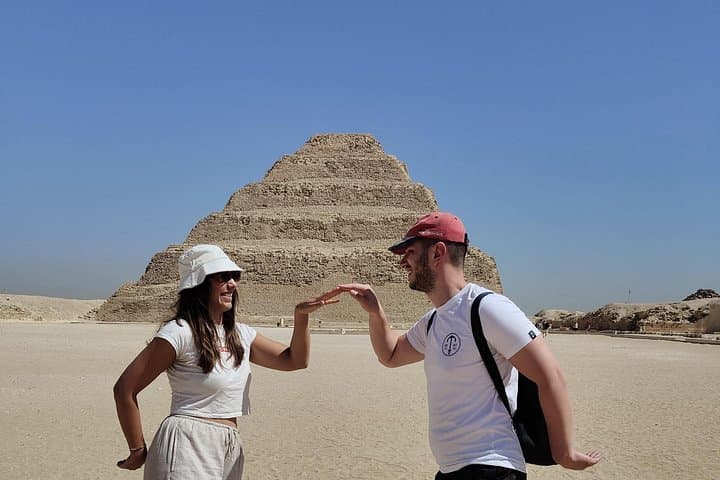
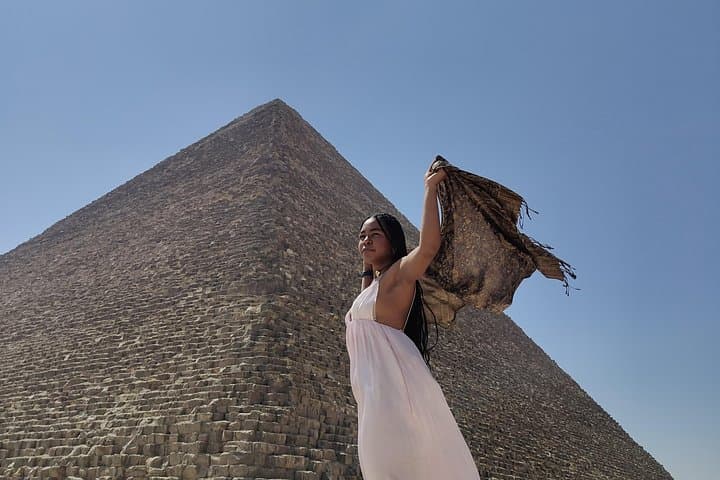
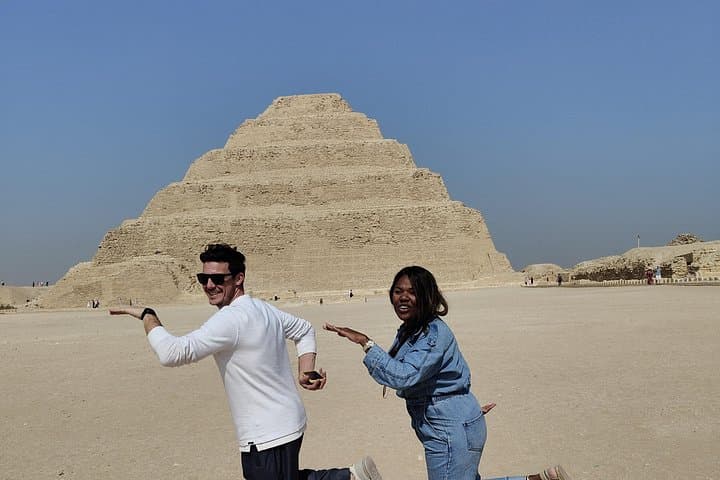
You step onto the Giza Plateau and the desert opens like a stage: the Great Pyramid rises, its angled blocks catching sunlight while a warm wind nudges grains of sand across ancient stone. The Sphinx turns its weathered face toward you, lion body steady as the city hums beyond the horizon.
You step onto the Giza Plateau and the desert opens like a stage: the Great Pyramid rises, its angled blocks catching sunlight while a warm wind nudges grains of sand across ancient stone. The Sphinx turns its weathered face toward you, lion body steady as the city hums beyond the horizon.
Built during Egypt’s Old Kingdom, the pyramids at Giza are colossal burial complexes of pharaohs Khufu, Khafre and Menkaure, cut from local limestone and capped originally with fine white casing. The plateau’s geology—soft limestone underlain by harder bedrock—allowed monumental construction and preserved tombs that still yield insights into funerary rites and royal power. Nearby, the Grand Egyptian Museum collects artifacts that reshape what we know about Tutankhamun and daily life along the Nile. Cairo’s street markets and the Nile Corniche speak to millennia of trade and the living culture that grew around these ancient centers.
Practically, expect a 4–6 hour private tour with an Egyptologist guide, short photo stops at the panoramic overlook, and a complimentary 30-minute camel ride option. Entry inside the pyramids requires a separate ticket; bring sun protection, comfortable closed shoes for uneven limestone pavements, and cash for tips or optional purchases. Midday heat can be intense—schedule early morning or late afternoon for softer light and cooler temperatures. The itinerary’s added downtown Nile walk with ice cream is an easy, low-key way to decompress after sand and stone. With planning and hydration, the Giza experience balances awe with clear logistics: ticket choices, modest dress, and transport that moves you comfortably between ancient stones and modern Cairo.