THE ADVENTURE COLLECTIVE® · Independent discovery and booking for outdoor travel

Spend a day tracing Egypt’s earliest capitals: explore Giza’s pyramids and Sphinx, stand inside the shadow of Saqqara’s Step Pyramid, and wander the open-air museum of Memphis. This private, guided tour includes lunch and hotel pickup for an efficient cultural deep-dive.
Spend a day tracing Egypt’s earliest capitals: explore Giza’s pyramids and Sphinx, stand inside the shadow of Saqqara’s Step Pyramid, and wander the open-air museum of Memphis. This private, guided tour includes lunch and hotel pickup for an efficient cultural deep-dive.
You step from an air-conditioned van into wind-swept limestone and basalt, the outline of the Great Pyramid sharpening against Cairo’s wide sky. Sand crunches underfoot as a private Egyptologist leads you across the Giza Plateau: the Great Pyramid’s massive casing stones still hint at ancient precision, Khafre’s peak rises a stone’s throw away, and the Sphinx fixes a weathered, watchful gaze toward the Nile.
Verified experiences and guided adventures in the surrounding area.
Operated by Egypt Via Travel · Giza, Cairo Governorate
You step from an air-conditioned van into wind-swept limestone and basalt, the outline of the Great Pyramid sharpening against Cairo’s wide sky. Sand crunches underfoot as a private Egyptologist leads you across the Giza Plateau: the Great Pyramid’s massive casing stones still hint at ancient precision, Khafre’s peak rises a stone’s throw away, and the Sphinx fixes a weathered, watchful gaze toward the Nile.
This route threads three major chapters of early Egyptian civilization. Saqqara’s Step Pyramid of Djoser (c. 27th century BCE) shows the architectural leap from mastaba tombs to monumental stone; Memphis, Egypt’s first capital, hosts colossal sculptures like the fallen Ramses II. Geology here is simple but stark—limestone bedrock capped with wind-transported sand—so views feel broad and exposed rather than forested.
Culture is immediate: guides unpack funerary practice, artisanal stonework, and how imperial power projected itself through tomb size. Local life presses close at the edges—street vendors, camel handlers, and small workshops that keep ancient techniques alive.
Practicalities: the private, 6–8 hour tour typically begins with hotel pickup around 9:00 AM in an air-conditioned vehicle and includes lunch. Entrance fees are often separate, so carry cash or card for tickets and tips. Wear sturdy walking shoes for uneven stone and steps, a sun hat, and bring at least 1–1.5 liters of water. Plan for strong sun and dusty conditions; mornings are cooler and best for photography. With accessible transport options and a specialist guide, this itinerary offers a dense, approachable day of Egypt’s oldest and most iconic sites.
No — the itinerary notes admission is not included, so expect to purchase site tickets on arrival unless your booking specifies otherwise.
Yes — the tour typically includes hotel pickup and drop-off in an air-conditioned vehicle; confirm your pickup point when booking.
Transportation and some areas are wheelchair accessible, but uneven surfaces at archaeological sites may limit full access—check specific needs with the operator.
Optional activities like camel rides or entry into pyramid interiors are sometimes offered on-site and often cost extra; interior access can be restricted for conservation reasons.
Egypt Via Travel operates guided outdoor trips and adventures with an emphasis on safety, stewardship, and memorable experiences.
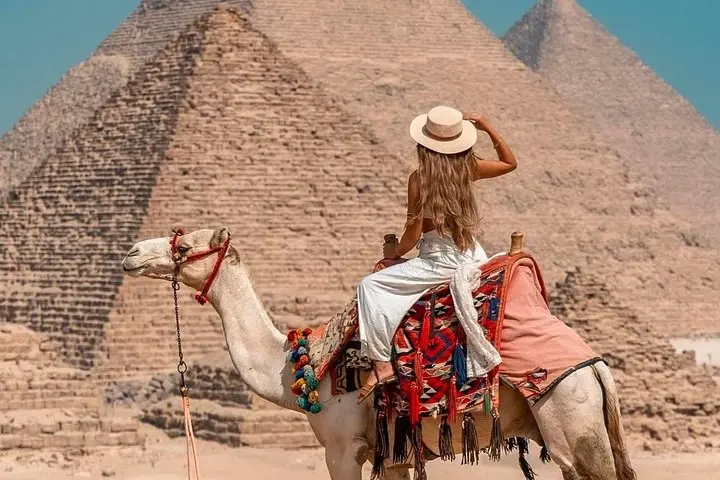

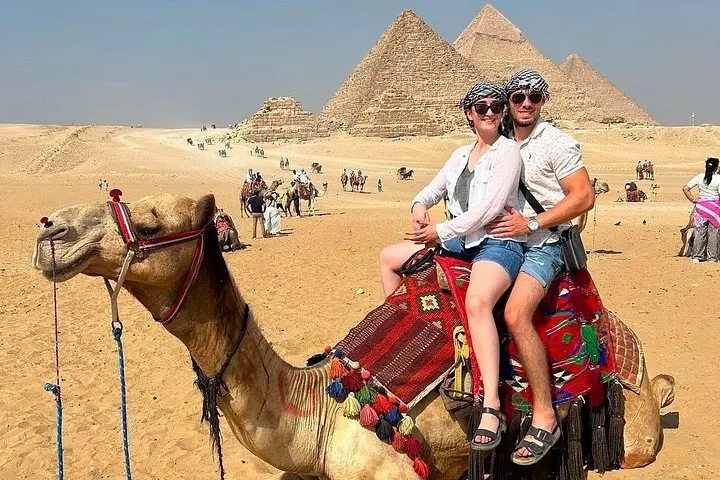
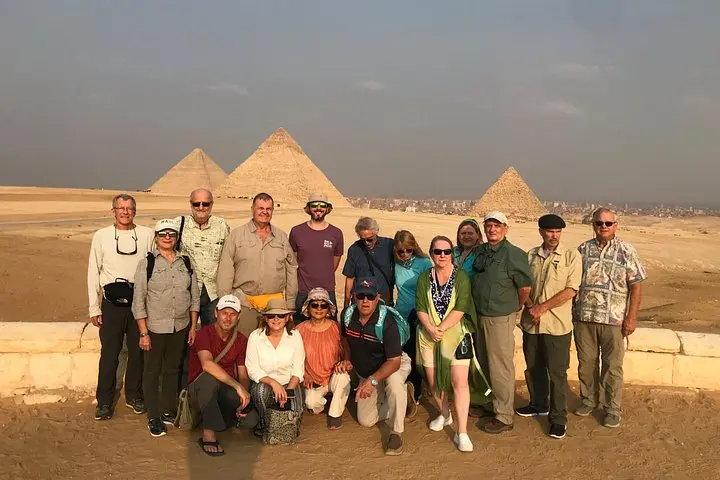
You step from an air-conditioned van into wind-swept limestone and basalt, the outline of the Great Pyramid sharpening against Cairo’s wide sky. Sand crunches underfoot as a private Egyptologist leads you across the Giza Plateau: the Great Pyramid’s massive casing stones still hint at ancient precision, Khafre’s peak rises a stone’s throw away, and the Sphinx fixes a weathered, watchful gaze toward the Nile.
You step from an air-conditioned van into wind-swept limestone and basalt, the outline of the Great Pyramid sharpening against Cairo’s wide sky. Sand crunches underfoot as a private Egyptologist leads you across the Giza Plateau: the Great Pyramid’s massive casing stones still hint at ancient precision, Khafre’s peak rises a stone’s throw away, and the Sphinx fixes a weathered, watchful gaze toward the Nile.
This route threads three major chapters of early Egyptian civilization. Saqqara’s Step Pyramid of Djoser (c. 27th century BCE) shows the architectural leap from mastaba tombs to monumental stone; Memphis, Egypt’s first capital, hosts colossal sculptures like the fallen Ramses II. Geology here is simple but stark—limestone bedrock capped with wind-transported sand—so views feel broad and exposed rather than forested.
Culture is immediate: guides unpack funerary practice, artisanal stonework, and how imperial power projected itself through tomb size. Local life presses close at the edges—street vendors, camel handlers, and small workshops that keep ancient techniques alive.
Practicalities: the private, 6–8 hour tour typically begins with hotel pickup around 9:00 AM in an air-conditioned vehicle and includes lunch. Entrance fees are often separate, so carry cash or card for tickets and tips. Wear sturdy walking shoes for uneven stone and steps, a sun hat, and bring at least 1–1.5 liters of water. Plan for strong sun and dusty conditions; mornings are cooler and best for photography. With accessible transport options and a specialist guide, this itinerary offers a dense, approachable day of Egypt’s oldest and most iconic sites.