THE ADVENTURE COLLECTIVE® · Independent discovery and booking for outdoor travel

Ride from the Vaud Riviera to the high country for Glacier 3000’s Peak Walk, a suspension bridge strung between two summits with a front-row view of Swiss icons. This private day tour blends high-alpine drama with Montreux’s lakeside ease, pairing big views with practical comfort.
Ride from the Vaud Riviera to the high country for Glacier 3000’s Peak Walk, a suspension bridge strung between two summits with a front-row view of Swiss icons. This private day tour blends high-alpine drama with Montreux’s lakeside ease, pairing big views with practical comfort.
The road leaves the Vaud Riviera and climbs toward the high country, where chalet roofs hunker under snow and larch forests thin into rock. Your driver eases through Les Diablerets—“the little devils”—and up to Col du Pillon, where the Glacier 3000 cable car lifts off with a clean swing. Alpine walls fall away, the valley becoming a model village as the cabin glides over cliffs and crevasses. In 15 minutes you’re delivered to Scex Rouge (approx. 2,971 m), the air crisp and insistent, the horizon crowded with celebrity summits: Mont Blanc, Matterhorn, Eiger, Mönch, Jungfrau. The mountains aren’t shy up here; they step forward and dare you to look longer.
Verified experiences and guided adventures in the surrounding area.
Operated by Swisstours Transport · Les Diablerets, Vaud
The road leaves the Vaud Riviera and climbs toward the high country, where chalet roofs hunker under snow and larch forests thin into rock. Your driver eases through Les Diablerets—“the little devils”—and up to Col du Pillon, where the Glacier 3000 cable car lifts off with a clean swing. Alpine walls fall away, the valley becoming a model village as the cabin glides over cliffs and crevasses. In 15 minutes you’re delivered to Scex Rouge (approx. 2,971 m), the air crisp and insistent, the horizon crowded with celebrity summits: Mont Blanc, Matterhorn, Eiger, Mönch, Jungfrau. The mountains aren’t shy up here; they step forward and dare you to look longer.
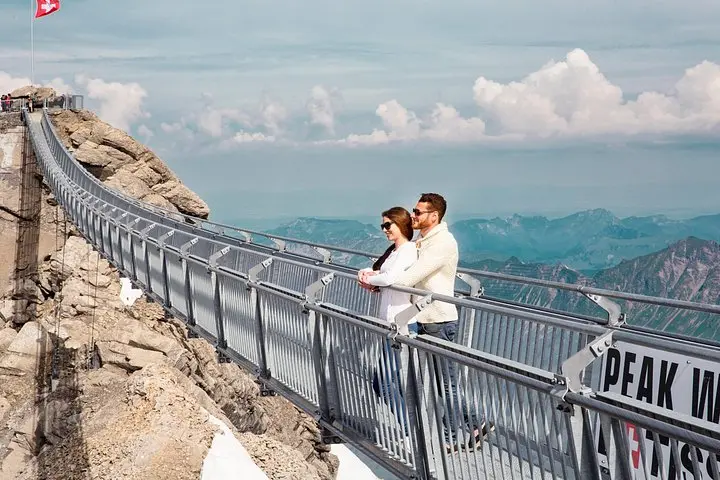
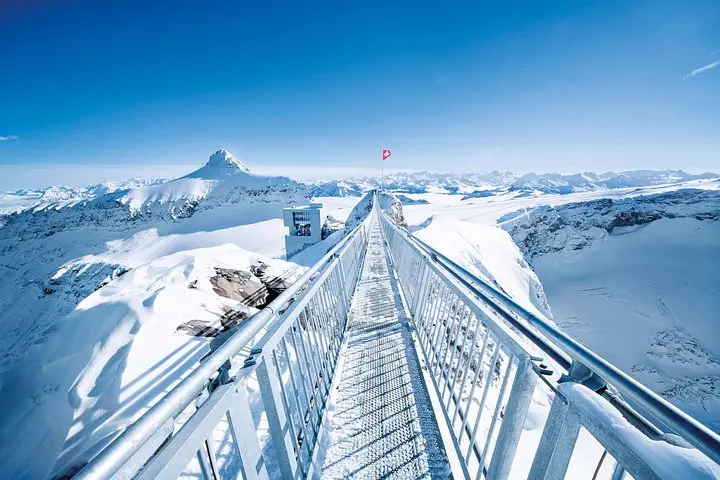
Most travelers come for the Peak Walk by Tissot, the world’s only suspension bridge linking two summits. At roughly 107 meters long and just over a half-meter wide in sections, it puts exposure on full display—steel cables hum when the wind prowls, and the glacier below breathes a cold updraft through the slats. Footing is secure, yet the void keeps you honest. Cross slowly, let the ridgelines line up for your lens, then linger on the far promontory where peaks shoulder one another toward Italy and France.
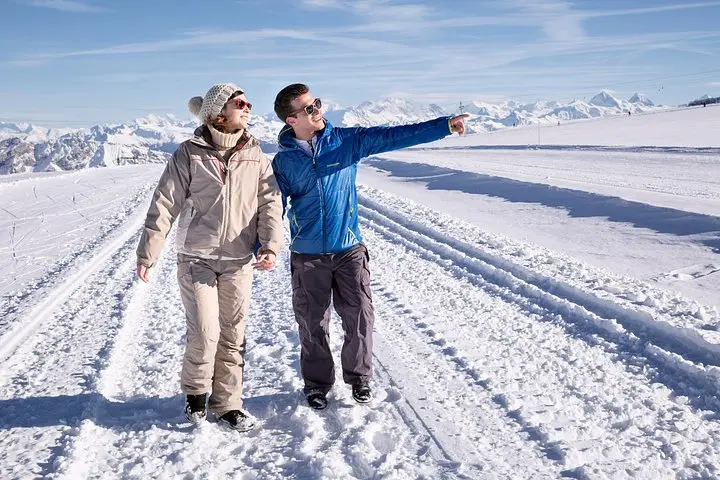
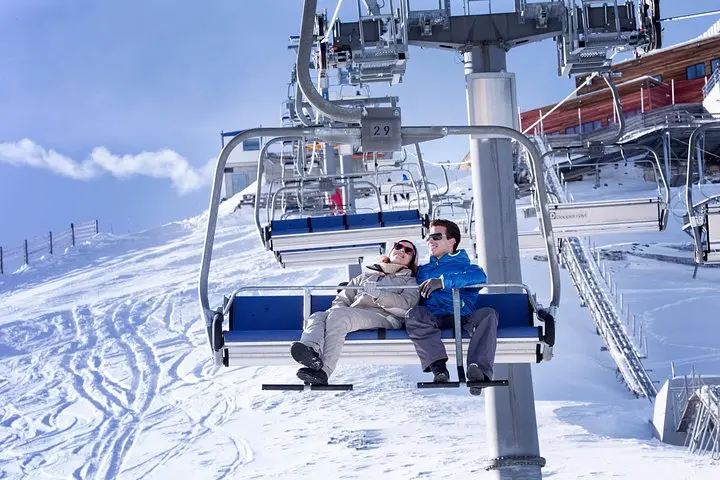
There’s more than the bridge. When conditions allow, the gentle Glacier Walk (about 3 km round-trip; 60–90 minutes; minimal elevation change) leads across the ice to Refuge l’Espace near the Quille du Diable, a natural rock tower that holds court above the raw Val Derborence. In summer, the Alpine Coaster (weather-dependent) loops broad grins into the day. In shoulder seasons, the Ice Express chair drops you closer to the snowfields for short, scenic strolls. Surfaces can be hard-packed, with patches of wind-scoured ice, so expect variable traction and occasional steps.
This private tour balances high-alpine drama with lakeside charm. After the summit, your guide returns you to Montreux, where palm fronds flirt with the promenade and the Chillon Castle profile sits clean against Lake Geneva. The mild microclimate softens the landing after altitude; cafés run long into afternoon light.
Planning is simple but matters at 3,000 meters. Weather changes fast, and the bridge can close for wind or storms. Dress in layers, wear sturdy shoes with grip, and bring sunglasses—the glacier throws light back at you all day. Hydrate early and pace yourself; at this elevation, even easy walkways ask a little more from your lungs. Start early for clearer views and lighter crowds, and keep a flexible mindset—the Alps write the final draft of every itinerary. What you get in return is unfiltered access to big-mountain scenery without committing to a full alpine ascent: a day where the lift does the work, and the landscape does the talking.
Access to the Peak Walk is included with the Glacier 3000 summit ticket; some tour options bundle the cable car and bridge while others require purchasing the lift ticket on site—confirm your selection when booking.
The bridge is about 107 meters long and professionally engineered with strict weather protocols. It closes during high winds or storms for safety.
Yes. The cable car is accessible and walking distances can be short, but the bridge is not stroller-friendly and exposure may feel intense. Handholding and warm layers help.
Even in summer, expect 0–10°C (32–50°F) with wind chill. Winter conditions are colder; dress in layers and bring a hat and gloves.
Some visitors notice quicker breathing or mild dizziness at ~3,000 m. Hydrate, move slowly, and rest if needed; symptoms usually ease with a short break.
Operations adjust quickly. The cable car may still run, but the Peak Walk and certain activities can close. Your driver-guide can pivot the schedule, including extra time in Montreux if needed.
Swisstours Transport operates guided outdoor trips and adventures with an emphasis on safety, stewardship, and memorable experiences.
The road leaves the Vaud Riviera and climbs toward the high country, where chalet roofs hunker under snow and larch forests thin into rock. Your driver eases through Les Diablerets—“the little devils”—and up to Col du Pillon, where the Glacier 3000 cable car lifts off with a clean swing. Alpine walls fall away, the valley becoming a model village as the cabin glides over cliffs and crevasses. In 15 minutes you’re delivered to Scex Rouge (approx. 2,971 m), the air crisp and insistent, the horizon crowded with celebrity summits: Mont Blanc, Matterhorn, Eiger, Mönch, Jungfrau. The mountains aren’t shy up here; they step forward and dare you to look longer.
The road leaves the Vaud Riviera and climbs toward the high country, where chalet roofs hunker under snow and larch forests thin into rock. Your driver eases through Les Diablerets—“the little devils”—and up to Col du Pillon, where the Glacier 3000 cable car lifts off with a clean swing. Alpine walls fall away, the valley becoming a model village as the cabin glides over cliffs and crevasses. In 15 minutes you’re delivered to Scex Rouge (approx. 2,971 m), the air crisp and insistent, the horizon crowded with celebrity summits: Mont Blanc, Matterhorn, Eiger, Mönch, Jungfrau. The mountains aren’t shy up here; they step forward and dare you to look longer.
Most travelers come for the Peak Walk by Tissot, the world’s only suspension bridge linking two summits. At roughly 107 meters long and just over a half-meter wide in sections, it puts exposure on full display—steel cables hum when the wind prowls, and the glacier below breathes a cold updraft through the slats. Footing is secure, yet the void keeps you honest. Cross slowly, let the ridgelines line up for your lens, then linger on the far promontory where peaks shoulder one another toward Italy and France.
There’s more than the bridge. When conditions allow, the gentle Glacier Walk (about 3 km round-trip; 60–90 minutes; minimal elevation change) leads across the ice to Refuge l’Espace near the Quille du Diable, a natural rock tower that holds court above the raw Val Derborence. In summer, the Alpine Coaster (weather-dependent) loops broad grins into the day. In shoulder seasons, the Ice Express chair drops you closer to the snowfields for short, scenic strolls. Surfaces can be hard-packed, with patches of wind-scoured ice, so expect variable traction and occasional steps.
This private tour balances high-alpine drama with lakeside charm. After the summit, your guide returns you to Montreux, where palm fronds flirt with the promenade and the Chillon Castle profile sits clean against Lake Geneva. The mild microclimate softens the landing after altitude; cafés run long into afternoon light.
Planning is simple but matters at 3,000 meters. Weather changes fast, and the bridge can close for wind or storms. Dress in layers, wear sturdy shoes with grip, and bring sunglasses—the glacier throws light back at you all day. Hydrate early and pace yourself; at this elevation, even easy walkways ask a little more from your lungs. Start early for clearer views and lighter crowds, and keep a flexible mindset—the Alps write the final draft of every itinerary. What you get in return is unfiltered access to big-mountain scenery without committing to a full alpine ascent: a day where the lift does the work, and the landscape does the talking.