THE ADVENTURE COLLECTIVE® · Independent discovery and booking for outdoor travel

Step onto Vatnajökull’s blue ice for a guided 3-hour hike from Skaftafell. This beginner-friendly trek pairs hands-on crampon instruction with dramatic ice formations and compact natural-history lessons.
Step onto Vatnajökull’s blue ice for a guided 3-hour hike from Skaftafell. This beginner-friendly trek pairs hands-on crampon instruction with dramatic ice formations and compact natural-history lessons.
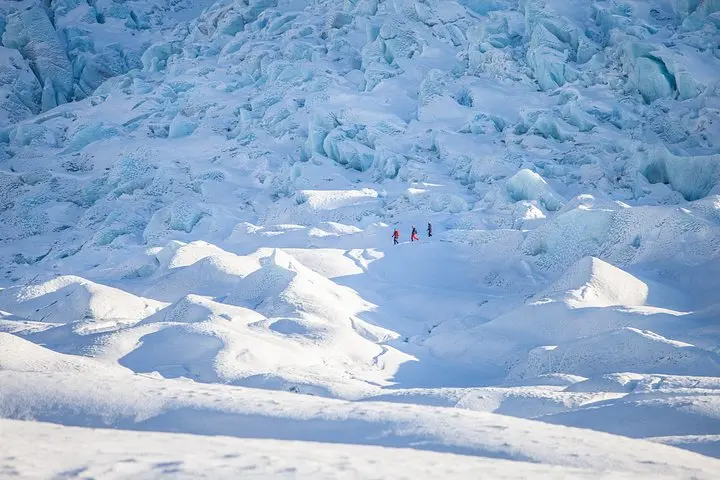
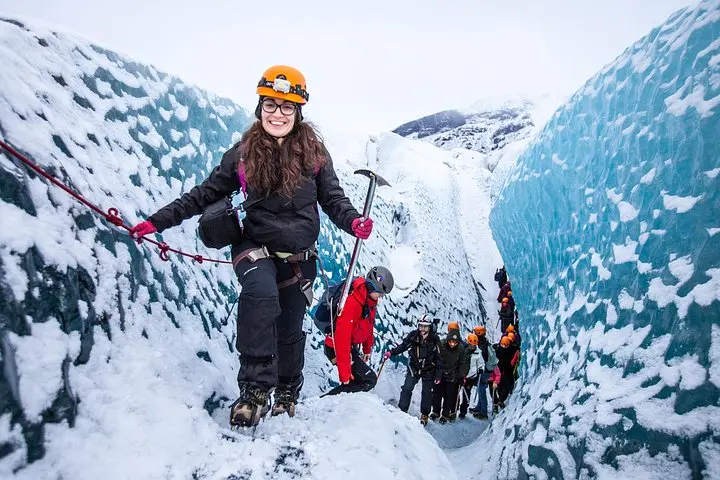
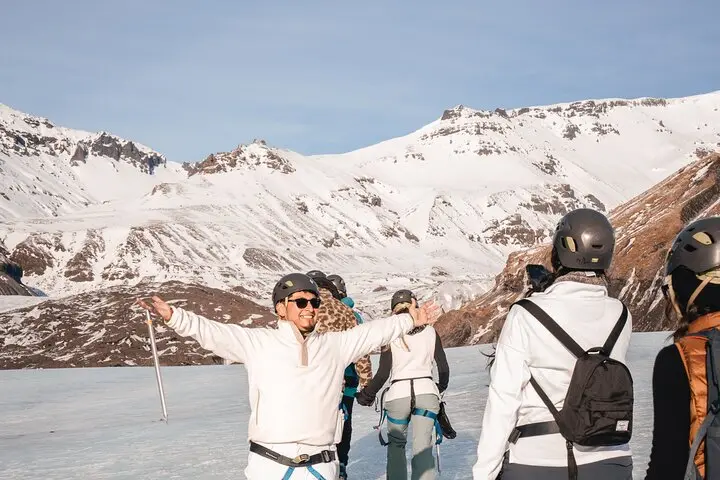
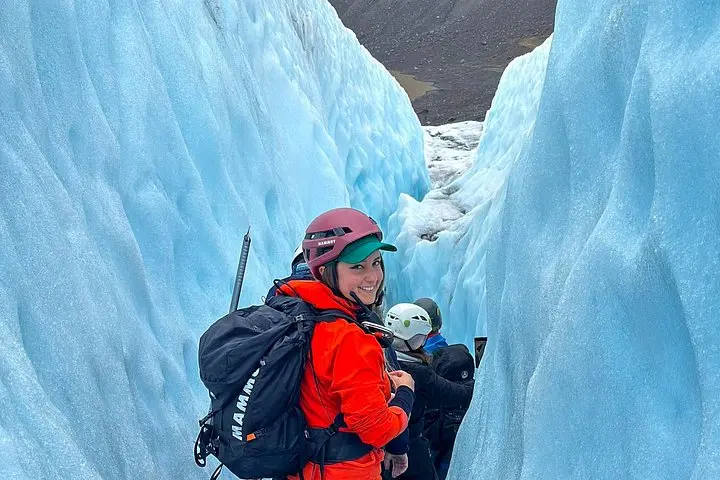
The wind off Vatnajökull bites with the kind of clarity only Iceland can deliver — cold, sharp, honest. At the parking lot near Fosshotel Glacier Lagoon you’ll meet guides in bright shells and helmets, the small group clustering around like expedition ants. Within an hour you’re at the glacier’s edge: a landscape of impossible blue, serrated ridges, and crevasses that seem to inhale fog and light. The guides fit crampons, hand out ice axes, and walk you through the basics; then the ice opens beneath your feet and the glacier starts to move you forward.
Verified experiences and guided adventures in the surrounding area.
Operated by Guide to Iceland · Skaftafell, South Iceland
The wind off Vatnajökull bites with the kind of clarity only Iceland can deliver — cold, sharp, honest. At the parking lot near Fosshotel Glacier Lagoon you’ll meet guides in bright shells and helmets, the small group clustering around like expedition ants. Within an hour you’re at the glacier’s edge: a landscape of impossible blue, serrated ridges, and crevasses that seem to inhale fog and light. The guides fit crampons, hand out ice axes, and walk you through the basics; then the ice opens beneath your feet and the glacier starts to move you forward.
Skaftafell sits on the southern flank of Vatnajökull, Europe’s largest ice cap, a remnant of the last Ice Age and a living, breathing force in Icelandic geology. Meltwater has carved out canyons and fed black-sand plains below. The blue hues you’ll see aren’t paint but density — ice that has been compressed over centuries, squeezing air bubbles out and allowing light to scatter in that cinematic blue. Historically, the glacier shaped local farming and travel routes; today it draws scientists and travelers curious about climate and geology.
Your three-hour hike is part natural history class, part hands-on adventure. Guides point out sastrugi (wind-sculpted ridges), explain how crevasses form and migrate, and demonstrate safe movement across fractured ice. Culturally, the area is still threaded with old stories — turf farms and sagas tell of a people who learned to live with extremes. Modern sustainability is visible too: guided tours concentrate impact, leaving the fragile ice margins less disturbed than the free-for-all of unguided treks.
Practicalities are straightforward. The tour is suitable for beginners with a moderate fitness level; expect walking on uneven, slippery terrain for roughly 3 hours with minimal elevation change but steady footing required. Guides provide helmet, crampons, harness, and ice axe; you need waterproof boots and layered clothing. Weather can change fast — fog, wind, and sun all within the same morning—so plan for flexibility in timing.
Tips from guides: keep a steady cadence rather than long strides, use the ice axe for balance not climbing unless instructed, and hydrate before you go — the cold masks exertion. Photograph the deep blue ice in shadow to preserve color, but leave selfie sticks behind: space on the glacier can be tight. If your schedule allows, combine this hike with a visit to nearby Jökulsárlón glacial lagoon to witness icebergs that calved off the same ice sheet you’ll walk on. In three hours you’ll have not only walked on ice older than many nations, but also carried home a clearer sense of the forces that shape Iceland’s raw, changing landscape.
No. This tour is geared to beginners; guides teach crampon technique and safety procedures on-site.
Guides provide helmet, harness, crampons, and ice axe; guests should bring boots, warm clothing, and water.
Age limits may apply—check operator policy; children must be supervised and able to follow guide instructions.
Tours run in varied weather but may be rescheduled if conditions are unsafe; confirm cancellation policy when booking.
Moderate: there’s steady walking on uneven ice for up to three hours but no technical climbing; a basic fitness level is recommended.
Yes—small daypacks are fine; secure cameras on straps and avoid bulky gear that interferes with crampons or harnesses.
Guide to Iceland operates guided outdoor trips and adventures with an emphasis on safety, stewardship, and memorable experiences.
The wind off Vatnajökull bites with the kind of clarity only Iceland can deliver — cold, sharp, honest. At the parking lot near Fosshotel Glacier Lagoon you’ll meet guides in bright shells and helmets, the small group clustering around like expedition ants. Within an hour you’re at the glacier’s edge: a landscape of impossible blue, serrated ridges, and crevasses that seem to inhale fog and light. The guides fit crampons, hand out ice axes, and walk you through the basics; then the ice opens beneath your feet and the glacier starts to move you forward.
The wind off Vatnajökull bites with the kind of clarity only Iceland can deliver — cold, sharp, honest. At the parking lot near Fosshotel Glacier Lagoon you’ll meet guides in bright shells and helmets, the small group clustering around like expedition ants. Within an hour you’re at the glacier’s edge: a landscape of impossible blue, serrated ridges, and crevasses that seem to inhale fog and light. The guides fit crampons, hand out ice axes, and walk you through the basics; then the ice opens beneath your feet and the glacier starts to move you forward.
Skaftafell sits on the southern flank of Vatnajökull, Europe’s largest ice cap, a remnant of the last Ice Age and a living, breathing force in Icelandic geology. Meltwater has carved out canyons and fed black-sand plains below. The blue hues you’ll see aren’t paint but density — ice that has been compressed over centuries, squeezing air bubbles out and allowing light to scatter in that cinematic blue. Historically, the glacier shaped local farming and travel routes; today it draws scientists and travelers curious about climate and geology.
Your three-hour hike is part natural history class, part hands-on adventure. Guides point out sastrugi (wind-sculpted ridges), explain how crevasses form and migrate, and demonstrate safe movement across fractured ice. Culturally, the area is still threaded with old stories — turf farms and sagas tell of a people who learned to live with extremes. Modern sustainability is visible too: guided tours concentrate impact, leaving the fragile ice margins less disturbed than the free-for-all of unguided treks.
Practicalities are straightforward. The tour is suitable for beginners with a moderate fitness level; expect walking on uneven, slippery terrain for roughly 3 hours with minimal elevation change but steady footing required. Guides provide helmet, crampons, harness, and ice axe; you need waterproof boots and layered clothing. Weather can change fast — fog, wind, and sun all within the same morning—so plan for flexibility in timing.
Tips from guides: keep a steady cadence rather than long strides, use the ice axe for balance not climbing unless instructed, and hydrate before you go — the cold masks exertion. Photograph the deep blue ice in shadow to preserve color, but leave selfie sticks behind: space on the glacier can be tight. If your schedule allows, combine this hike with a visit to nearby Jökulsárlón glacial lagoon to witness icebergs that calved off the same ice sheet you’ll walk on. In three hours you’ll have not only walked on ice older than many nations, but also carried home a clearer sense of the forces that shape Iceland’s raw, changing landscape.