THE ADVENTURE COLLECTIVE® · Independent discovery and booking for outdoor travel

A seven-hour coach loop from Djúpivogur that links Vestrahorn, Jökulsárlón Glacier Lagoon, Diamond Beach and Eystrahorn. Expect dramatic coastal mountains, drifting icebergs and stark black-sand shores—ideal for photographers and first-time glacier watchers.
A seven-hour coach loop from Djúpivogur that links Vestrahorn, Jökulsárlón Glacier Lagoon, Diamond Beach and Eystrahorn. Expect dramatic coastal mountains, drifting icebergs and stark black-sand shores—ideal for photographers and first-time glacier watchers.
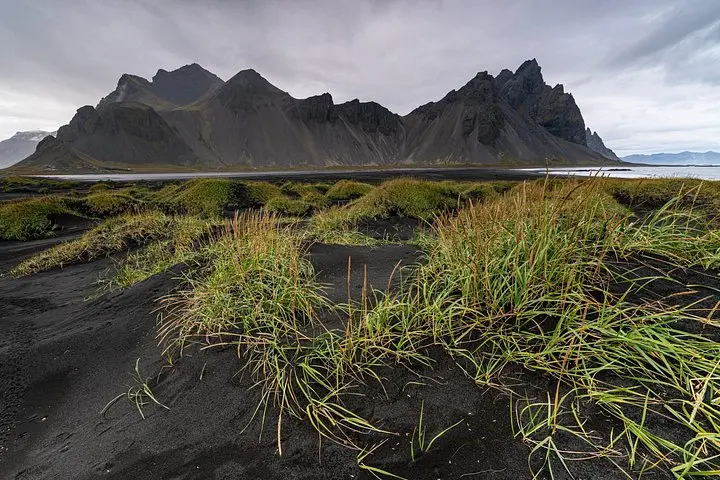
A low sun slices across black sand as your coach crests the coastal ridge west of Djúpivogur. Salt and stone meet here: Vestrahorn’s serrated peaks push directly out of the shore, and tidal flats mirror sky in shallow pools. The landscape feels purposeful—wind-sculpted ridges and ice moving toward the sea.
Verified experiences and guided adventures in the surrounding area.
Operated by Tanni Travel · Djúpivogur, Austurland
A low sun slices across black sand as your coach crests the coastal ridge west of Djúpivogur. Salt and stone meet here: Vestrahorn’s serrated peaks push directly out of the shore, and tidal flats mirror sky in shallow pools. The landscape feels purposeful—wind-sculpted ridges and ice moving toward the sea.
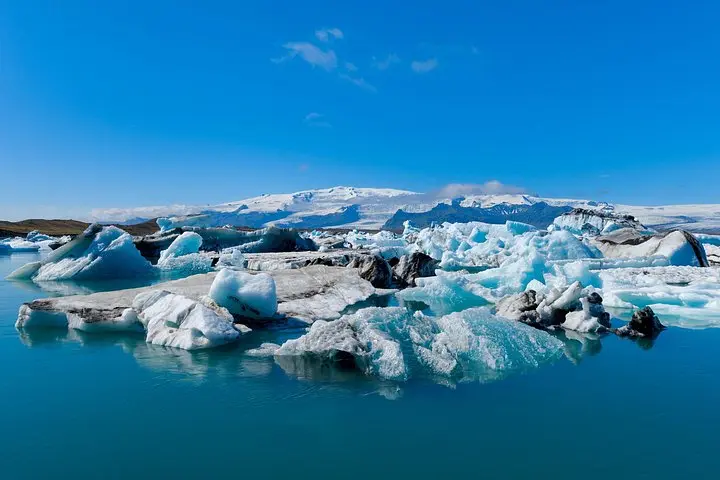
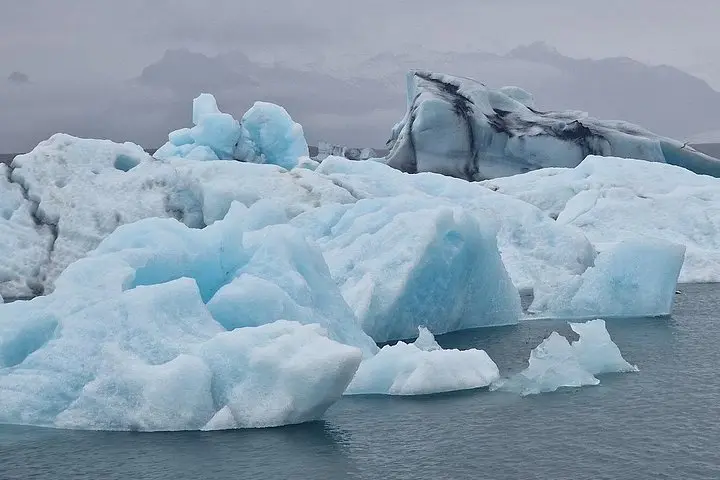
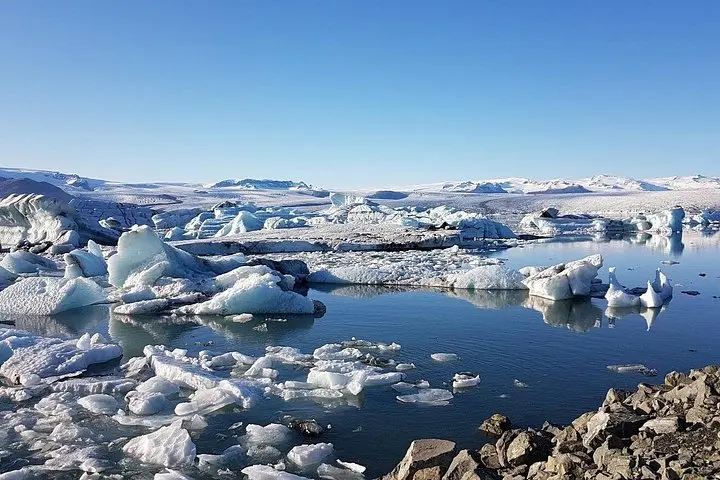
This full-day route threads together Southeast Iceland’s geological highlights. Jökulsárlón formed where Breiðamerkurjökull glacier calves into a lagoon, leaving icebergs that drift slowly toward the Atlantic. Diamond Beach, directly opposite, scatters crystal-blue ice on black volcanic sand; nearby Eystrahorn and Vestrahorn reveal the region’s volcanic history and the steep cliffs shaped by glacial erosion and coastal weather.
Culturally, the coast reflects a working past: small fishing communities, low-lying stone walls and seasonal livelihoods that still mark local life. The glacier lagoon also records climate change—icebergs’ size and frequency vary with winter snows and summer melt.
Practical guidance: expect variable light and wind—bring waterproof layers, solid boots for wet sand and uneven shorelines, and a camera with a polarizing filter for contrast on ice. Timing matters: low tide at Stokksnes and calm mornings at Jökulsárlón give the cleanest reflections. Keep distance from unstable ice and heed guide instructions; currents in the lagoon and waves at the beach can be stronger than they appear.
This route is accessible for most visitors but rewards patience: watch the slow negotiation between sea and glacier, and let the landscape teach you its scale.
The tour runs about 7 hours (420 minutes) round-trip from Djúpivogur, with stops at each main viewpoint.
No—this tour visits the lagoon and beaches only; glacier travel requires specialized equipment and guided glacier hikes.
Yes—stops involve short, easy walks; however, the terrain at the beach and lagoon can be uneven and slippery.
Look for seals in the lagoon and various seabirds along the coast, especially in summer when terns and fulmars are active.
Tanni Travel operates guided outdoor trips and adventures with an emphasis on safety, stewardship, and memorable experiences.
A low sun slices across black sand as your coach crests the coastal ridge west of Djúpivogur. Salt and stone meet here: Vestrahorn’s serrated peaks push directly out of the shore, and tidal flats mirror sky in shallow pools. The landscape feels purposeful—wind-sculpted ridges and ice moving toward the sea.
A low sun slices across black sand as your coach crests the coastal ridge west of Djúpivogur. Salt and stone meet here: Vestrahorn’s serrated peaks push directly out of the shore, and tidal flats mirror sky in shallow pools. The landscape feels purposeful—wind-sculpted ridges and ice moving toward the sea.
This full-day route threads together Southeast Iceland’s geological highlights. Jökulsárlón formed where Breiðamerkurjökull glacier calves into a lagoon, leaving icebergs that drift slowly toward the Atlantic. Diamond Beach, directly opposite, scatters crystal-blue ice on black volcanic sand; nearby Eystrahorn and Vestrahorn reveal the region’s volcanic history and the steep cliffs shaped by glacial erosion and coastal weather.
Culturally, the coast reflects a working past: small fishing communities, low-lying stone walls and seasonal livelihoods that still mark local life. The glacier lagoon also records climate change—icebergs’ size and frequency vary with winter snows and summer melt.
Practical guidance: expect variable light and wind—bring waterproof layers, solid boots for wet sand and uneven shorelines, and a camera with a polarizing filter for contrast on ice. Timing matters: low tide at Stokksnes and calm mornings at Jökulsárlón give the cleanest reflections. Keep distance from unstable ice and heed guide instructions; currents in the lagoon and waves at the beach can be stronger than they appear.
This route is accessible for most visitors but rewards patience: watch the slow negotiation between sea and glacier, and let the landscape teach you its scale.