THE ADVENTURE COLLECTIVE® · Independent discovery and booking for outdoor travel

Sleep at a lakeside camp on Wilpattu’s southern boundary and join a private jeep safari across villu-studded plains where leopards, elephants and wading birds move with purpose. This accessible glamping option pairs short transfers with high wildlife payoff.
Sleep at a lakeside camp on Wilpattu’s southern boundary and join a private jeep safari across villu-studded plains where leopards, elephants and wading birds move with purpose. This accessible glamping option pairs short transfers with high wildlife payoff.
The dawn light slants over a shallow villu and the camp comes alive: tents breathe steam into the cold, lake water glares like a watchful eye, and the bush forest beyond stirs with movement. You sit with a cup of tea while guides ready the jeep; the park feels close enough to touch—wildlife often wanders into the camp from the reserve.
Verified experiences and guided adventures in the surrounding area.
Operated by Sri Lanka Day Tours · Puttalam, North Western Province
The dawn light slants over a shallow villu and the camp comes alive: tents breathe steam into the cold, lake water glares like a watchful eye, and the bush forest beyond stirs with movement. You sit with a cup of tea while guides ready the jeep; the park feels close enough to touch—wildlife often wanders into the camp from the reserve.
Wilpattu takes its name from the villus, the seasonal floodplain lakes that shape both terrain and animal pathways. Geologically, the park combines flat sandy plains, thorny scrub, and scattered rocky outcrops that give leopards places to laze and birds vantage points. The area has long been a hunting and pastoral landscape for local communities; more recently conservation and regulated safari operations have reintroduced visitors to its rhythms.
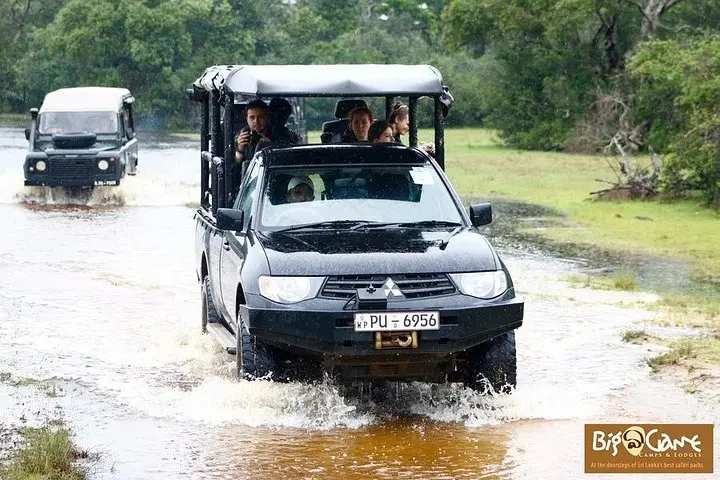
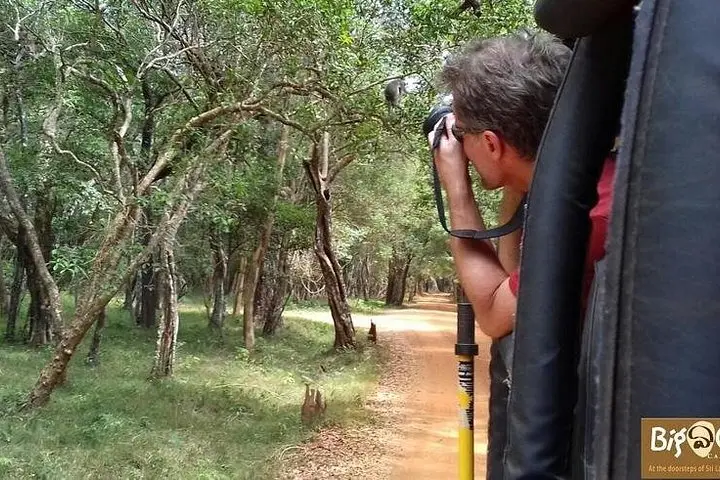
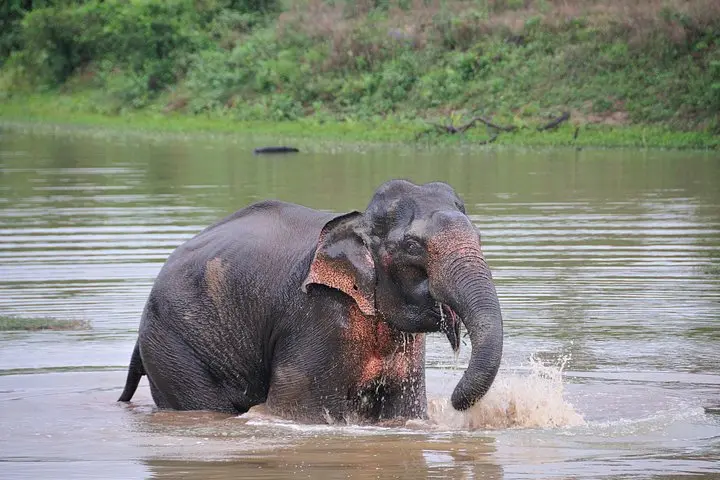
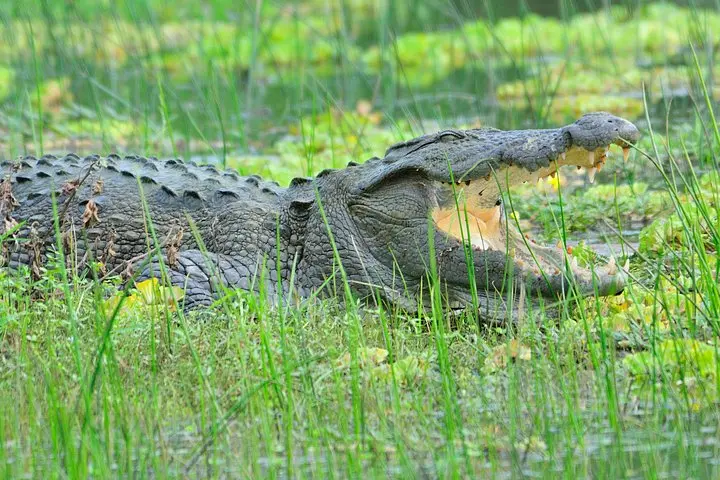
A private jeep drive here is short on transit—about 7 km from park entrance to camp—and focused on observation: elephants crossing, crocodiles sunning on lagoon edges, and flocks of whistling teals lifting as the vehicle approaches. Nature exerts a gentle pressure—the wind pushes dust into your boots and the water dares wading birds to probe deeper.
Practical planning: travel light but prepared. Expect periods of standing and short walks over uneven ground; a 4‑hour program typically combines camp orientation with a single safari loop. Bring layered clothing, sun protection, mosquito repellent, and binoculars. Timing matters—early morning and late afternoon drives are highest value for sightings and cooler temperatures. Respect guides’ instructions around sightings and camp boundaries; the experience is intimate because the camp sits on the park edge, not inside a fenced zoo. With modest preparation, this glamping-and-safari option delivers wildlife encounters without long overland transfers, making it ideal for travelers who want close, careful access to one of Sri Lanka’s most species-rich parks.
The camp sits on the park’s southern boundary adjoining a lake—wildlife frequently moves between the park and camp but the facility itself is outside the core protected zone.
This program is typically a 4‑hour experience that includes a private jeep drive; drive length on the park loop varies by sightings and road conditions.
Yes—operators list the activity as physically easy; most time is spent in a jeep with only short, optional walks around camp.
Common sightings include elephants, sambar deer, waterbirds, and crocodiles; leopards are present but sightings are less predictable and depend on timing and luck.
Sri Lanka Day Tours operates guided outdoor trips and adventures with an emphasis on safety, stewardship, and memorable experiences.
The dawn light slants over a shallow villu and the camp comes alive: tents breathe steam into the cold, lake water glares like a watchful eye, and the bush forest beyond stirs with movement. You sit with a cup of tea while guides ready the jeep; the park feels close enough to touch—wildlife often wanders into the camp from the reserve.
The dawn light slants over a shallow villu and the camp comes alive: tents breathe steam into the cold, lake water glares like a watchful eye, and the bush forest beyond stirs with movement. You sit with a cup of tea while guides ready the jeep; the park feels close enough to touch—wildlife often wanders into the camp from the reserve.
Wilpattu takes its name from the villus, the seasonal floodplain lakes that shape both terrain and animal pathways. Geologically, the park combines flat sandy plains, thorny scrub, and scattered rocky outcrops that give leopards places to laze and birds vantage points. The area has long been a hunting and pastoral landscape for local communities; more recently conservation and regulated safari operations have reintroduced visitors to its rhythms.
A private jeep drive here is short on transit—about 7 km from park entrance to camp—and focused on observation: elephants crossing, crocodiles sunning on lagoon edges, and flocks of whistling teals lifting as the vehicle approaches. Nature exerts a gentle pressure—the wind pushes dust into your boots and the water dares wading birds to probe deeper.
Practical planning: travel light but prepared. Expect periods of standing and short walks over uneven ground; a 4‑hour program typically combines camp orientation with a single safari loop. Bring layered clothing, sun protection, mosquito repellent, and binoculars. Timing matters—early morning and late afternoon drives are highest value for sightings and cooler temperatures. Respect guides’ instructions around sightings and camp boundaries; the experience is intimate because the camp sits on the park edge, not inside a fenced zoo. With modest preparation, this glamping-and-safari option delivers wildlife encounters without long overland transfers, making it ideal for travelers who want close, careful access to one of Sri Lanka’s most species-rich parks.