THE ADVENTURE COLLECTIVE® · Independent discovery and booking for outdoor travel

Cover Rethymno’s waterfront, Venetian alleys, and historic sights on a three‑hour Segway tour that balances training, local stories, and photo stops. Ideal for travelers who want to see more ground without the fatigue of walking.
Cover Rethymno’s waterfront, Venetian alleys, and historic sights on a three‑hour Segway tour that balances training, local stories, and photo stops. Ideal for travelers who want to see more ground without the fatigue of walking.
The sea breeze tugs at your jacket as you roll out from the waterfront opposite Rethymno Marina, Segway wheels humming against sun-warmed pavement. In three hours the tour threads the line where new meets old—harbor piers, Venetian stone, narrow alleys—and the town reveals itself in measured vignettes: a castle-crowned hill, a fountain that still draws curious hands, and the tall minaret of the Neratze Mosque turned conservatory.
Verified experiences and guided adventures in the surrounding area.
Operated by Segway Tour by Best Ride · Rethymno, Crete
The sea breeze tugs at your jacket as you roll out from the waterfront opposite Rethymno Marina, Segway wheels humming against sun-warmed pavement. In three hours the tour threads the line where new meets old—harbor piers, Venetian stone, narrow alleys—and the town reveals itself in measured vignettes: a castle-crowned hill, a fountain that still draws curious hands, and the tall minaret of the Neratze Mosque turned conservatory.
Rethymno's streets carry layers of history. Venetian merchants reshaped the harbor in the 16th century; Ottoman architects left minarets and baths; modern cafes now sit beneath arched loggias. Geologically Crete’s limestone shelves meet the Libyan Sea along this coast, producing low cliffs and a long sandy strand that frames the town’s waterfront. Culturally the Old Town is an active neighborhood—markets, workshops, and small chapels punctuate the route, and vendors still trade traditional raki and pastries.
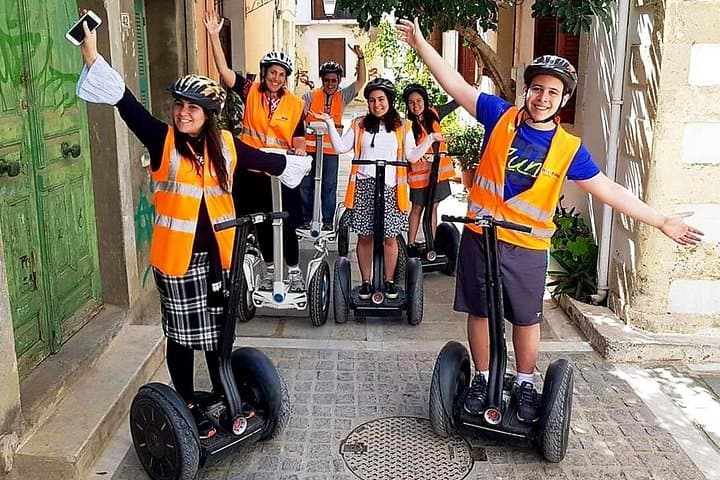
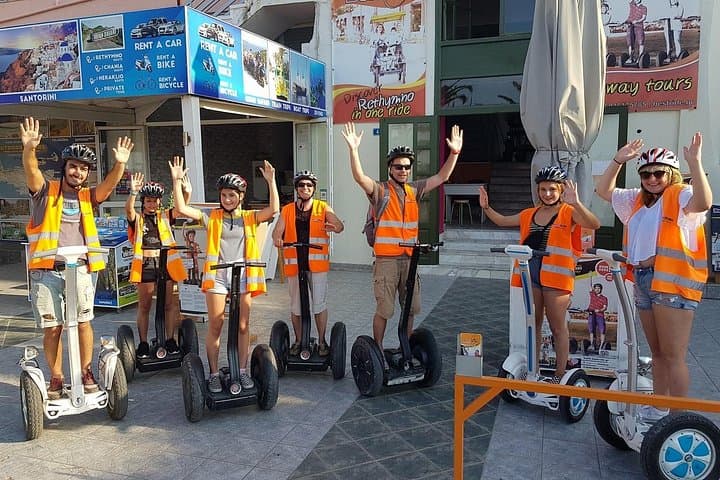
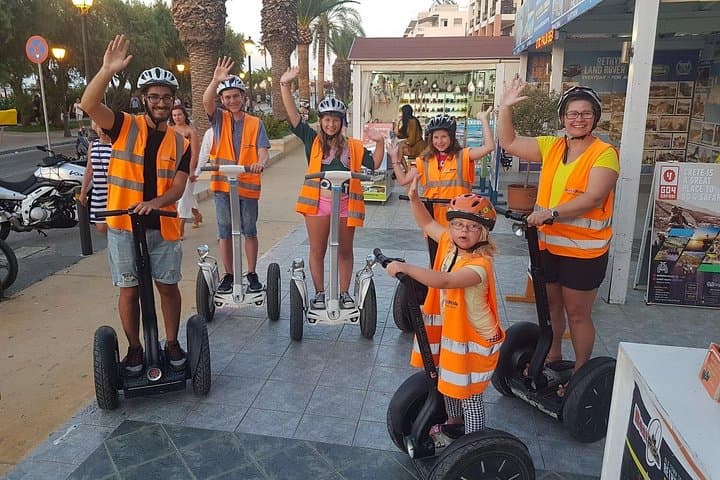
Practically, expect paved and cobbled surfaces, short steeper ramps near the Fortezza access, and pedestrian-heavy stretches that require a steady, slow pace. Guides provide helmets, reflective vests, and a brief training session; the route is designed for riders of basic balance and mobility. Bring sunscreen and a bottle of water, wear closed-toe shoes, and pick a morning or late-afternoon slot to avoid the hottest hours. For photographers, the Venetian harbor and the Rimondi Fountain repay early light. This is an approachable urban adventure—fast enough to cover ground, slow enough to notice the details that make Rethymno distinct.
No; tours start with a safety briefing and hands-on practice—basic balance is sufficient.
The operator notes accessibility options, but routes include cobbled sections; contact the provider to confirm specific needs.
Bring ID, sunscreen, a water bottle, closed-toe shoes, and a camera or phone for photos.
Yes, helmets and reflective vests are provided as part of the tour inclusions.
Segway Tour by Best Ride operates guided outdoor trips and adventures with an emphasis on safety, stewardship, and memorable experiences.

The sea breeze tugs at your jacket as you roll out from the waterfront opposite Rethymno Marina, Segway wheels humming against sun-warmed pavement. In three hours the tour threads the line where new meets old—harbor piers, Venetian stone, narrow alleys—and the town reveals itself in measured vignettes: a castle-crowned hill, a fountain that still draws curious hands, and the tall minaret of the Neratze Mosque turned conservatory.
The sea breeze tugs at your jacket as you roll out from the waterfront opposite Rethymno Marina, Segway wheels humming against sun-warmed pavement. In three hours the tour threads the line where new meets old—harbor piers, Venetian stone, narrow alleys—and the town reveals itself in measured vignettes: a castle-crowned hill, a fountain that still draws curious hands, and the tall minaret of the Neratze Mosque turned conservatory.
Rethymno's streets carry layers of history. Venetian merchants reshaped the harbor in the 16th century; Ottoman architects left minarets and baths; modern cafes now sit beneath arched loggias. Geologically Crete’s limestone shelves meet the Libyan Sea along this coast, producing low cliffs and a long sandy strand that frames the town’s waterfront. Culturally the Old Town is an active neighborhood—markets, workshops, and small chapels punctuate the route, and vendors still trade traditional raki and pastries.
Practically, expect paved and cobbled surfaces, short steeper ramps near the Fortezza access, and pedestrian-heavy stretches that require a steady, slow pace. Guides provide helmets, reflective vests, and a brief training session; the route is designed for riders of basic balance and mobility. Bring sunscreen and a bottle of water, wear closed-toe shoes, and pick a morning or late-afternoon slot to avoid the hottest hours. For photographers, the Venetian harbor and the Rimondi Fountain repay early light. This is an approachable urban adventure—fast enough to cover ground, slow enough to notice the details that make Rethymno distinct.