THE ADVENTURE COLLECTIVE® · Independent discovery and booking for outdoor travel

Cover more ground—and more history—on a guided Segway tour that links Pest’s grand boulevards with Buda’s hillside viewpoints. Expect hands‑on instruction, iconic stops like Parliament and Buda Castle, and practical tips for riding around a bustling European capital.
Cover more ground—and more history—on a guided Segway tour that links Pest’s grand boulevards with Buda’s hillside viewpoints. Expect hands‑on instruction, iconic stops like Parliament and Buda Castle, and practical tips for riding around a bustling European capital.
The first push forward is little more than a confident tilt of the hips. Within minutes the Segway absorbs the city’s rhythm: the Danube yawns wide to your right, trams click on iron rails, and the Parliament’s neo‑Gothic facade tilts into view like a carved ship on the riverbank.
Verified experiences and guided adventures in the surrounding area.
Operated by ABC Segway Tours Budapest · Budapest, Budapest
The first push forward is little more than a confident tilt of the hips. Within minutes the Segway absorbs the city’s rhythm: the Danube yawns wide to your right, trams click on iron rails, and the Parliament’s neo‑Gothic facade tilts into view like a carved ship on the riverbank.
This is not sightseeing on foot; it’s a city shaped by motion. Guides give 10–20 minutes of hands‑on training, then lead small groups across flat Pest boulevards and up brisk inclines into Buda’s limestone shoulders. Over a 1–4 hour route you’ll pass Kossuth Lajos Square, cruise alongside the Danube, cross the Chain Bridge, and climb to vantage points at Fisherman’s Bastion and Gellért Hill—each stop a chapter of Budapest’s late‑19th‑century boom that followed the 1873 unification of Buda, Óbuda, and Pest.
Geology and history meet on the ride. The Danube carves a broad valley; Buda’s hills are older rock—limestone and dolomite folded into lookout terraces—while Pest spreads on flat, alluvial ground where boulevards and markets grew during the Austro‑Hungarian era. Architecture alternates: baroque and Art Nouveau facades give way to Stalinist blocks and the ornamented bulk of the Parliament. Local culture is present in small things—the steam drifting from nearby thermal baths, vendors at the Central Market Hall, the scent of chimney coffee and paprika from corner cafés.
Practicalities anchor the experience. Typical distances: expect roughly 5–7 km covered in a 1‑hour express tour and 10–14 km on a 3‑hour itinerary; cumulative elevation gain is modest—about 50–150 m depending on how high the group climbs to viewpoints. Surfaces vary: smooth asphalt in the city center, cobbles on historic streets, and occasional tram tracks to watch for. Guides handle route logistics and tell stories, but riders should be alert to pedestrians and traffic.
Plan around weather—Budapest can bake in summer and turn brisk in winter. Helmets and raincoats are provided; wear sturdy closed‑toe shoes and bring a refillable water bottle. If you have spinal, heart, or pregnancy concerns, skip the Segway. Children need to be at least 35 kg and 8 years old.
For photographers, aim for early morning or late afternoon when the river lights up and the city cools. Take the ride slowly across the Chain Bridge for uninterrupted shots of the Parliament, then stop at Fisherman’s Bastion for broad, layered panoramas. Above all, let the machine do the work—Budapest’s grit and grandeur unfold faster than walking but slow enough to appreciate the details.
Children must be at least 8 years old and weigh at least 35 kg; guides will confirm suitability during training.
Tours run in all weather; operators provide raincoats. Severe conditions may prompt rescheduling—check the local forecast and operator policy.
Meet at the operator’s central start point near Kossuth Lajos Square/Parliament; exact meeting instructions are provided on booking confirmation.
No; the operator advises against participation for people with spinal, heart, or pregnancy concerns.
Yes—helmets and rain protection are included as part of the tour package.
Guides can schedule short stops at cafés or markets on longer tours, but bring small change for quick purchases.
ABC Segway Tours Budapest operates guided outdoor trips and adventures with an emphasis on safety, stewardship, and memorable experiences.
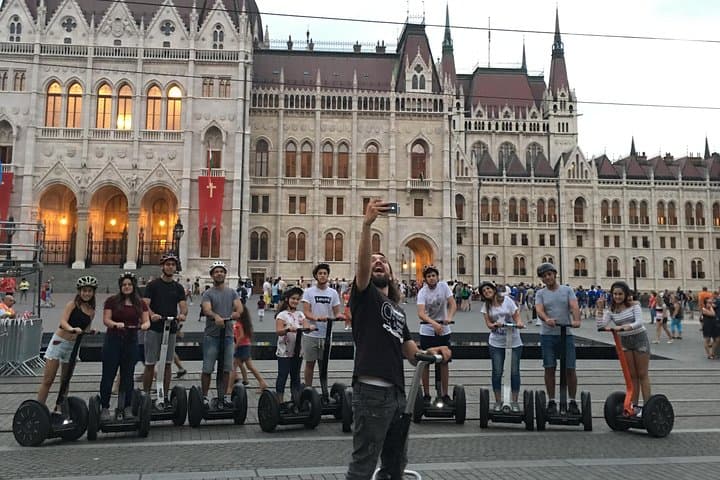
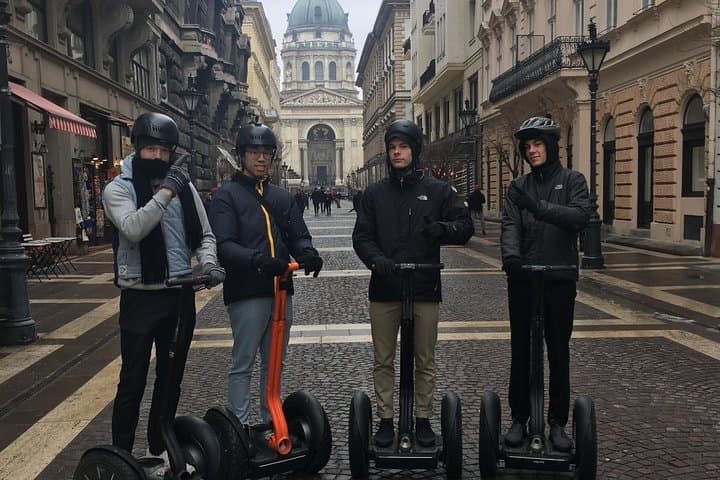
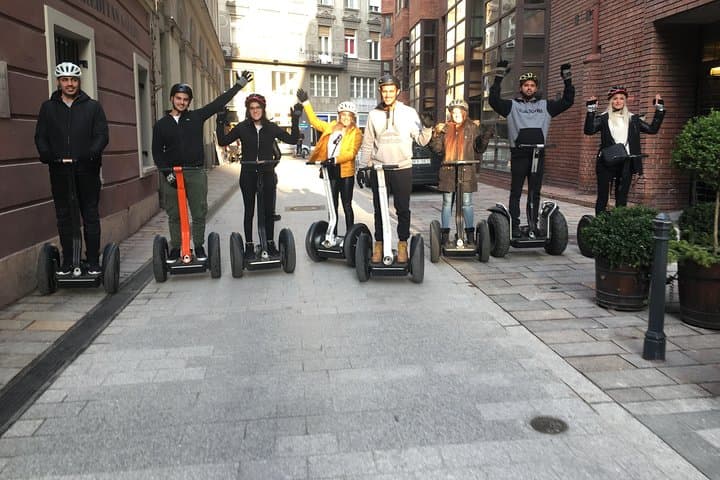
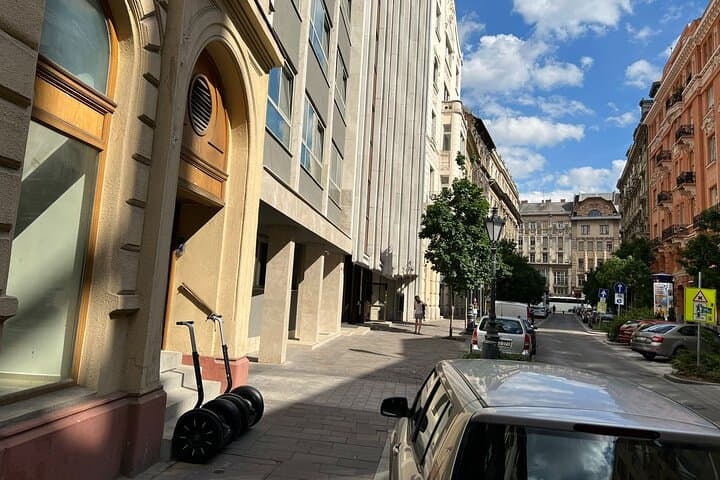
The first push forward is little more than a confident tilt of the hips. Within minutes the Segway absorbs the city’s rhythm: the Danube yawns wide to your right, trams click on iron rails, and the Parliament’s neo‑Gothic facade tilts into view like a carved ship on the riverbank.
The first push forward is little more than a confident tilt of the hips. Within minutes the Segway absorbs the city’s rhythm: the Danube yawns wide to your right, trams click on iron rails, and the Parliament’s neo‑Gothic facade tilts into view like a carved ship on the riverbank.
This is not sightseeing on foot; it’s a city shaped by motion. Guides give 10–20 minutes of hands‑on training, then lead small groups across flat Pest boulevards and up brisk inclines into Buda’s limestone shoulders. Over a 1–4 hour route you’ll pass Kossuth Lajos Square, cruise alongside the Danube, cross the Chain Bridge, and climb to vantage points at Fisherman’s Bastion and Gellért Hill—each stop a chapter of Budapest’s late‑19th‑century boom that followed the 1873 unification of Buda, Óbuda, and Pest.
Geology and history meet on the ride. The Danube carves a broad valley; Buda’s hills are older rock—limestone and dolomite folded into lookout terraces—while Pest spreads on flat, alluvial ground where boulevards and markets grew during the Austro‑Hungarian era. Architecture alternates: baroque and Art Nouveau facades give way to Stalinist blocks and the ornamented bulk of the Parliament. Local culture is present in small things—the steam drifting from nearby thermal baths, vendors at the Central Market Hall, the scent of chimney coffee and paprika from corner cafés.
Practicalities anchor the experience. Typical distances: expect roughly 5–7 km covered in a 1‑hour express tour and 10–14 km on a 3‑hour itinerary; cumulative elevation gain is modest—about 50–150 m depending on how high the group climbs to viewpoints. Surfaces vary: smooth asphalt in the city center, cobbles on historic streets, and occasional tram tracks to watch for. Guides handle route logistics and tell stories, but riders should be alert to pedestrians and traffic.
Plan around weather—Budapest can bake in summer and turn brisk in winter. Helmets and raincoats are provided; wear sturdy closed‑toe shoes and bring a refillable water bottle. If you have spinal, heart, or pregnancy concerns, skip the Segway. Children need to be at least 35 kg and 8 years old.
For photographers, aim for early morning or late afternoon when the river lights up and the city cools. Take the ride slowly across the Chain Bridge for uninterrupted shots of the Parliament, then stop at Fisherman’s Bastion for broad, layered panoramas. Above all, let the machine do the work—Budapest’s grit and grandeur unfold faster than walking but slow enough to appreciate the details.