THE ADVENTURE COLLECTIVE® · Independent discovery and booking for outdoor travel

Board The Hurricane II in Gloucester for a 4-hour run to Stellwagen Bank, where concentrated food sources draw humpbacks, minkes, and dolphins. Fast transit, onboard naturalists, and multi-level viewing make this a practical, high-value whale watching experience.
Board The Hurricane II in Gloucester for a 4-hour run to Stellwagen Bank, where concentrated food sources draw humpbacks, minkes, and dolphins. Fast transit, onboard naturalists, and multi-level viewing make this a practical, high-value whale watching experience.
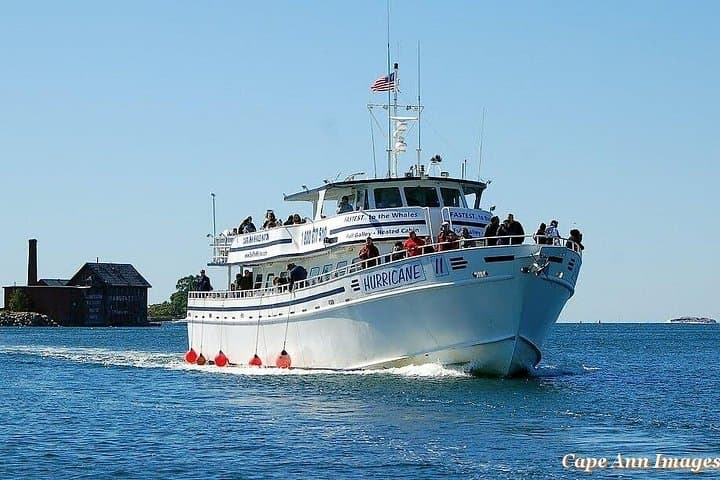
Fog and salt meet on the pier as passengers file aboard The Hurricane II, a 115-foot fast whale-watching vessel that slices toward the blue-gray swell of Stellwagen Bank. From Gloucester’s working harbor, the boat has one job: get guests to the feeding grounds quickly and keep them there, decked out with railings on multiple levels and a heated cabin when the Atlantic weather turns sharp.
Verified experiences and guided adventures in the surrounding area.
Operated by Cape Ann Whale Watch · Gloucester, Massachusetts
Fog and salt meet on the pier as passengers file aboard The Hurricane II, a 115-foot fast whale-watching vessel that slices toward the blue-gray swell of Stellwagen Bank. From Gloucester’s working harbor, the boat has one job: get guests to the feeding grounds quickly and keep them there, decked out with railings on multiple levels and a heated cabin when the Atlantic weather turns sharp.
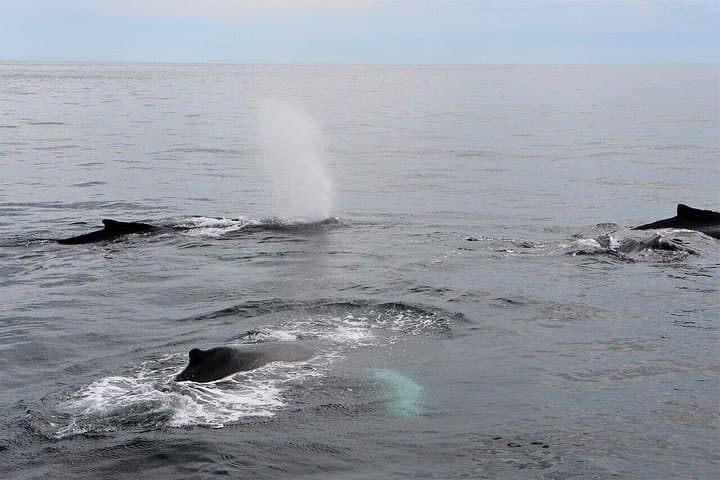
Stellwagen Bank is a shallow submarine plateau where currents concentrate plankton and baitfish, drawing humpbacks, minkes, and occasionally rarer megafauna. The fishing history of Gloucester—cod longlines and fishing schooners—still hums in town culture; whale watching is a contemporary chapter in that maritime story. Geologically, the bank is a glacial remnant; oceanography, not shorelines, rules the spectacle here.
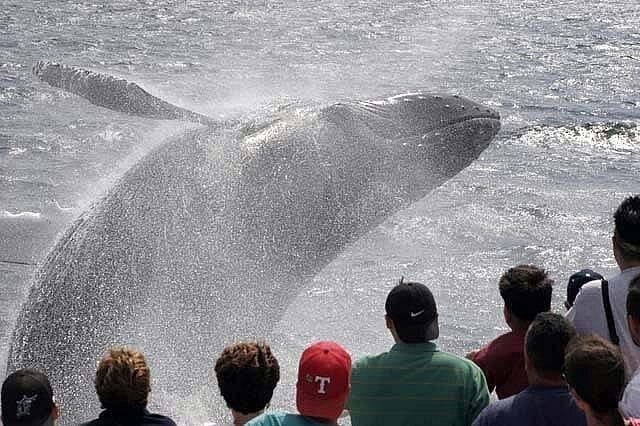
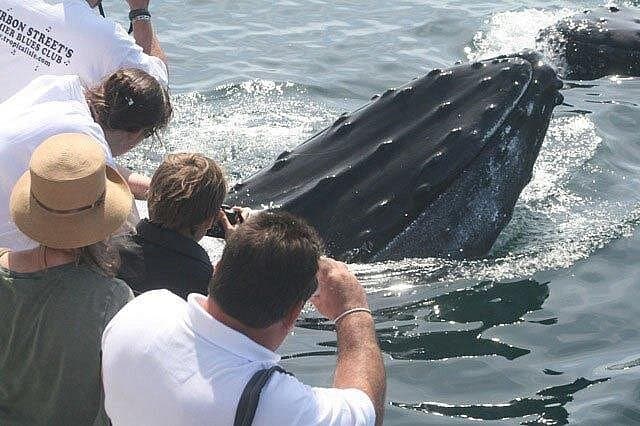
Onboard, naturalists point out blows and flukes while binoculars move like a choreography. The sea can be playful—Atlantic white-sided dolphins surfing the bow—or sudden, the wake of a breaching humpback interrupting a quiet morning.
Practical guidance: check-in 45 minutes early at the ticket office, dress in layers and windproof outerwear, and bring waterproof shoes—the decks can be wet. Seasickness medication or wristbands are advised for anyone sensitive to motion; the ride to Stellwagen can take up to 90 minutes depending on whale locations. Bring a camera with a telephoto lens and a charged battery; glass is often better than phone zoom at distance.
This is a four-hour expedition into open water where patience rewards observers with living, moving proof of why Massachusetts remains one of the world’s premier whale-viewing coasts.
Transit time varies with whale locations but typically ranges from 60 to 90 minutes each way; total trip time is about four hours.
Operators advertise high sighting rates and experienced naturalists, but wildlife is never 100% guaranteed; check cancellation policies for weather-related changes.
Yes—The Hurricane II offers indoor seating and a heated galley; however, passengers should be able to move safely on stairs and stand on moving decks.
Yes—the vessel has a full galley and a cash/card bar serving hot meals, snacks and beverages for purchase.
Cape Ann Whale Watch operates guided outdoor trips and adventures with an emphasis on safety, stewardship, and memorable experiences.
Fog and salt meet on the pier as passengers file aboard The Hurricane II, a 115-foot fast whale-watching vessel that slices toward the blue-gray swell of Stellwagen Bank. From Gloucester’s working harbor, the boat has one job: get guests to the feeding grounds quickly and keep them there, decked out with railings on multiple levels and a heated cabin when the Atlantic weather turns sharp.
Fog and salt meet on the pier as passengers file aboard The Hurricane II, a 115-foot fast whale-watching vessel that slices toward the blue-gray swell of Stellwagen Bank. From Gloucester’s working harbor, the boat has one job: get guests to the feeding grounds quickly and keep them there, decked out with railings on multiple levels and a heated cabin when the Atlantic weather turns sharp.
Stellwagen Bank is a shallow submarine plateau where currents concentrate plankton and baitfish, drawing humpbacks, minkes, and occasionally rarer megafauna. The fishing history of Gloucester—cod longlines and fishing schooners—still hums in town culture; whale watching is a contemporary chapter in that maritime story. Geologically, the bank is a glacial remnant; oceanography, not shorelines, rules the spectacle here.
Onboard, naturalists point out blows and flukes while binoculars move like a choreography. The sea can be playful—Atlantic white-sided dolphins surfing the bow—or sudden, the wake of a breaching humpback interrupting a quiet morning.
Practical guidance: check-in 45 minutes early at the ticket office, dress in layers and windproof outerwear, and bring waterproof shoes—the decks can be wet. Seasickness medication or wristbands are advised for anyone sensitive to motion; the ride to Stellwagen can take up to 90 minutes depending on whale locations. Bring a camera with a telephoto lens and a charged battery; glass is often better than phone zoom at distance.
This is a four-hour expedition into open water where patience rewards observers with living, moving proof of why Massachusetts remains one of the world’s premier whale-viewing coasts.