THE ADVENTURE COLLECTIVE® · Independent discovery and booking for outdoor travel

Drive inland from Goa for a seven-day sweep through Karnataka’s most striking archaeological sites—Belgaum, Bijapur, Hampi, Badami and Pattadakal. Expect ruined royal enclosures, cave temples hewn in red sandstone and broad river plains that shaped centuries of stonework.
Drive inland from Goa for a seven-day sweep through Karnataka’s most striking archaeological sites—Belgaum, Bijapur, Hampi, Badami and Pattadakal. Expect ruined royal enclosures, cave temples hewn in red sandstone and broad river plains that shaped centuries of stonework.
You start the drive as the Arabian Sea slips from your rearview—Goa’s humid air giving way to the dry, stony plains of northern Karnataka. Low hills roll into rocky outcrops; temple towers and broken pillars begin to punctuate the horizon. By dusk, the silhouette of Hampi’s bouldered landscape reads like the skeleton of a lost capital.
Verified experiences and guided adventures in the surrounding area.
Operated by Agora Voyages Pvt. Ltd. · Hampi, Karnataka
You start the drive as the Arabian Sea slips from your rearview—Goa’s humid air giving way to the dry, stony plains of northern Karnataka. Low hills roll into rocky outcrops; temple towers and broken pillars begin to punctuate the horizon. By dusk, the silhouette of Hampi’s bouldered landscape reads like the skeleton of a lost capital.
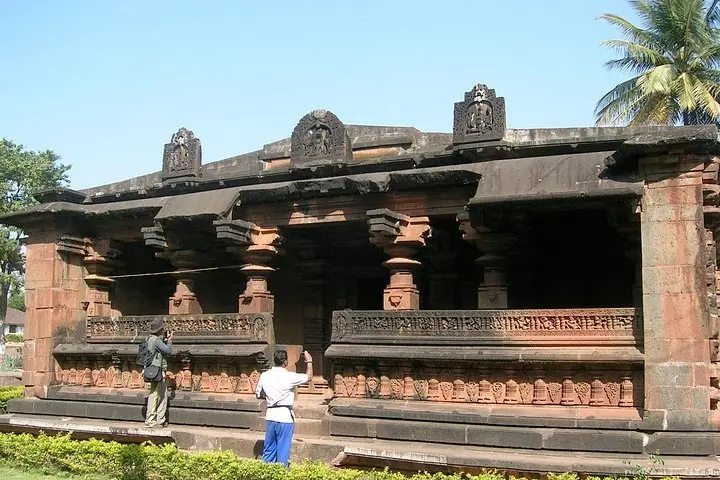
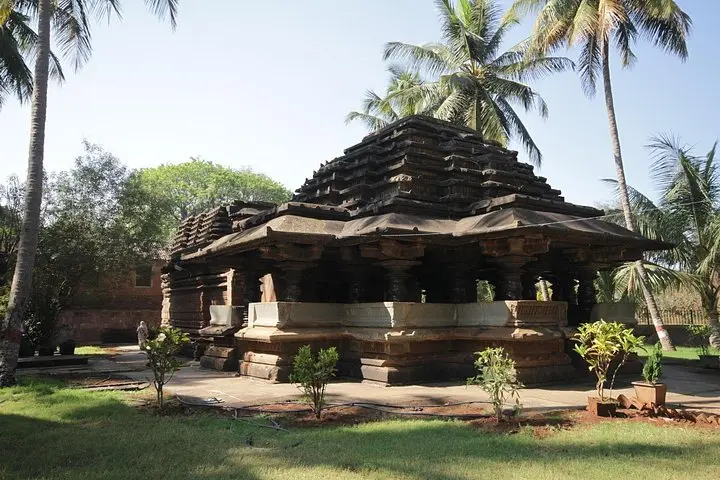
Karnataka's archaeological corridor stitches together Chalukyan and Vijayanagara eras, Adil Shahi palaces and cave temples carved directly into sandstone cliffs. Geologically, the region is dominated by Proterozoic- to Archaean-age granite and lateritic soils; boulders and riverine plains shaped how builders stacked temples, stepped tanks and fortifications. Culturally, expect a mix of Lingayat and Hindu temple traditions, Deccan Persianate courtcraft in Bijapur, and local Kannada-language hospitality in small towns.
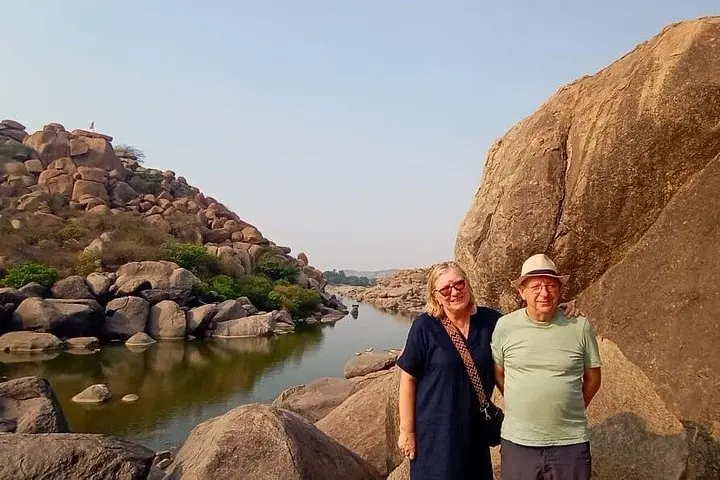
On the ground you’ll walk temple courtyards, climb the terraced approaches of forts, and stand beneath cavernous cave shrines where carvings have weathered but still speak of ancient patrons. Rivers like the Tungabhadra will tempt you to pause—currents that once fed bustling medieval markets now cut quiet floodplains.
Practical guidance: plan long driving stretches—some days are 4–5 hours on rural highways. Carry reusable water, sun protection and cash for smaller sites. Temples have modest dress expectations; sturdy shoes handle uneven stone and short hikes (Matanga Hill is a steep but short climb). Morning and late-afternoon light are best for photography and cooler exploring. Entrances to UNESCO sites require modest fees and local guides add historical depth; pace your days to include rest between major monuments.
Yes—it’s a vehicle-led, paced itinerary with short walks; accommodations and transfers are included, but plan for vehicle time and some stairs at monuments.
The tour notes monument entrances mentioned in the itinerary are included; verify specifics at booking for any optional sites.
English-speaking guides are provided for sightseeing days and local guides in regional languages (Kannada, Hindi) are common at individual sites.
Yes—pickup and drop-off options include Goa hotels or the airport, but confirm flight details and pickup point when booking.
Agora Voyages Pvt. Ltd. operates guided outdoor trips and adventures with an emphasis on safety, stewardship, and memorable experiences.
You start the drive as the Arabian Sea slips from your rearview—Goa’s humid air giving way to the dry, stony plains of northern Karnataka. Low hills roll into rocky outcrops; temple towers and broken pillars begin to punctuate the horizon. By dusk, the silhouette of Hampi’s bouldered landscape reads like the skeleton of a lost capital.
You start the drive as the Arabian Sea slips from your rearview—Goa’s humid air giving way to the dry, stony plains of northern Karnataka. Low hills roll into rocky outcrops; temple towers and broken pillars begin to punctuate the horizon. By dusk, the silhouette of Hampi’s bouldered landscape reads like the skeleton of a lost capital.
Karnataka's archaeological corridor stitches together Chalukyan and Vijayanagara eras, Adil Shahi palaces and cave temples carved directly into sandstone cliffs. Geologically, the region is dominated by Proterozoic- to Archaean-age granite and lateritic soils; boulders and riverine plains shaped how builders stacked temples, stepped tanks and fortifications. Culturally, expect a mix of Lingayat and Hindu temple traditions, Deccan Persianate courtcraft in Bijapur, and local Kannada-language hospitality in small towns.
On the ground you’ll walk temple courtyards, climb the terraced approaches of forts, and stand beneath cavernous cave shrines where carvings have weathered but still speak of ancient patrons. Rivers like the Tungabhadra will tempt you to pause—currents that once fed bustling medieval markets now cut quiet floodplains.
Practical guidance: plan long driving stretches—some days are 4–5 hours on rural highways. Carry reusable water, sun protection and cash for smaller sites. Temples have modest dress expectations; sturdy shoes handle uneven stone and short hikes (Matanga Hill is a steep but short climb). Morning and late-afternoon light are best for photography and cooler exploring. Entrances to UNESCO sites require modest fees and local guides add historical depth; pace your days to include rest between major monuments.