THE ADVENTURE COLLECTIVE® · Independent discovery and booking for outdoor travel

See the famed goats that climb argan trees and take in sweeping views from Kasbah Agadir Oufella on a compact half-day tour from Agadir. Perfect for photographers and travelers wanting a quick wildlife-and-culture outing.
See the famed goats that climb argan trees and take in sweeping views from Kasbah Agadir Oufella on a compact half-day tour from Agadir. Perfect for photographers and travelers wanting a quick wildlife-and-culture outing.
A low stone road climbs from Agadir's coastal plain and opens onto scrubbed slopes where goats pick and balance inside argan trees, their hooves finding purchase on branches that look too thin to hold them. The air carries a faint scent of salty Atlantic wind mixed with the nutty aroma of argan — a sensory shorthand for southern Morocco.
Verified experiences and guided adventures in the surrounding area.
Operated by Elite Agadir Tours · Agadir, Souss-Massa
A low stone road climbs from Agadir's coastal plain and opens onto scrubbed slopes where goats pick and balance inside argan trees, their hooves finding purchase on branches that look too thin to hold them. The air carries a faint scent of salty Atlantic wind mixed with the nutty aroma of argan — a sensory shorthand for southern Morocco.
This half-day excursion pairs a curious natural behavior with a short cultural climb. The goats feed on argan fruit in groves that sit atop ancient marine terraces carved by tectonic uplift and wave action; the trees themselves are endemic to southwestern Morocco and central to local livelihoods. A short drive higher places you at Kasbah Agadir Oufella, a ruined hillside fortress offering a clear line of sight over Agadir’s bay and the city rebuilt after the 1960 earthquake.
Along the way, local guides explain how argan oil is pressed by cooperative workshops and how centuries of trade shaped Agadir’s fishing and market culture. Expect photo stops, a brief argan cooperative visit, and a walk around the Kasbah viewpoint — accessible but stony underfoot.
Practical notes: light, closed shoes and sun protection are essential; the half-day runs about 2.5–3 hours with minimal elevation change but uneven terrain. Bring cash for small purchases at cooperatives, aim for late afternoon light for photos, and respect animals by observing rather than feeding them. The tour is family-friendly and wheelchair-accessible in parts, but some viewpoints require a short climb. With a short drive from central Agadir, this outing delivers a compact blend of wildlife, landscape and local craft — low effort, high character.
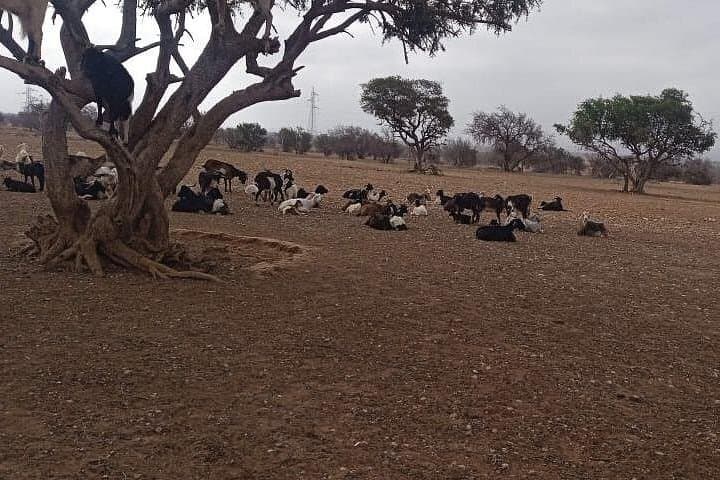
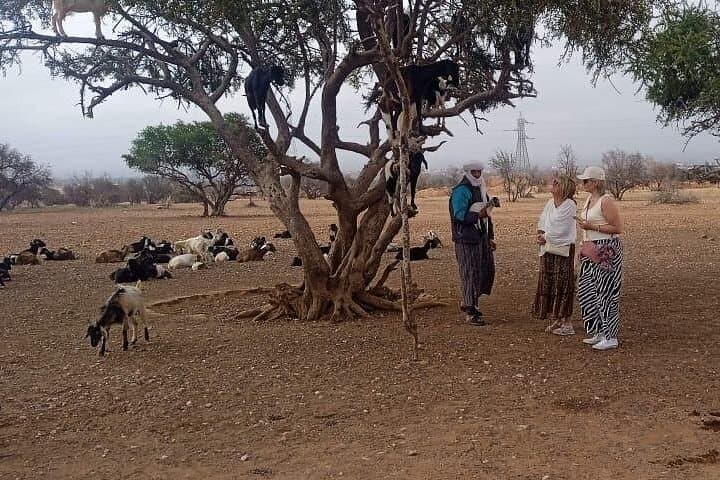
They are semi-wild; goats forage naturally in argan trees and local herders sometimes manage groups near roadsides.
The tour typically includes a stop at a cooperative where you can observe the argan oil pressing process; purchases are optional and usually paid in cash.
The main viewpoint is reachable with a short, uneven walk—manageable for most, but not fully flat; some areas have steps and loose rock.
The tour is family-friendly and offers accessible transport; however, some viewpoints require short walks that may not be wheelchair-accessible.
Elite Agadir Tours operates guided outdoor trips and adventures with an emphasis on safety, stewardship, and memorable experiences.
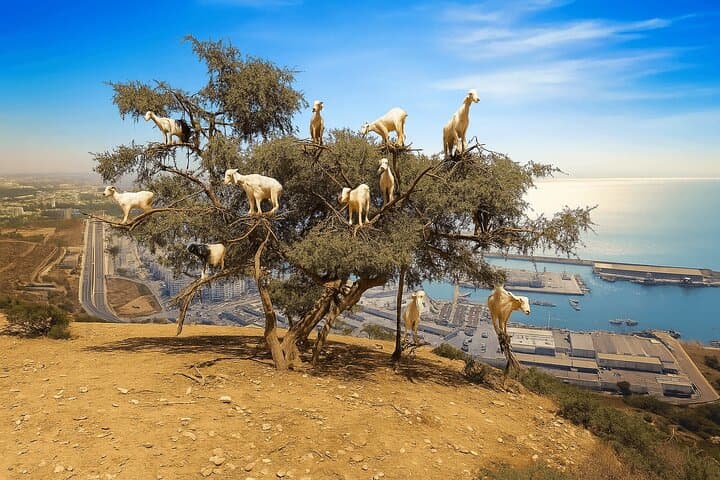
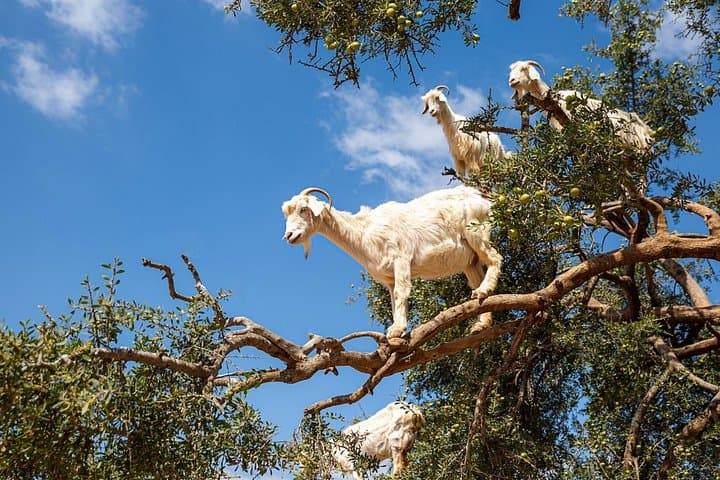
A low stone road climbs from Agadir's coastal plain and opens onto scrubbed slopes where goats pick and balance inside argan trees, their hooves finding purchase on branches that look too thin to hold them. The air carries a faint scent of salty Atlantic wind mixed with the nutty aroma of argan — a sensory shorthand for southern Morocco.
A low stone road climbs from Agadir's coastal plain and opens onto scrubbed slopes where goats pick and balance inside argan trees, their hooves finding purchase on branches that look too thin to hold them. The air carries a faint scent of salty Atlantic wind mixed with the nutty aroma of argan — a sensory shorthand for southern Morocco.
This half-day excursion pairs a curious natural behavior with a short cultural climb. The goats feed on argan fruit in groves that sit atop ancient marine terraces carved by tectonic uplift and wave action; the trees themselves are endemic to southwestern Morocco and central to local livelihoods. A short drive higher places you at Kasbah Agadir Oufella, a ruined hillside fortress offering a clear line of sight over Agadir’s bay and the city rebuilt after the 1960 earthquake.
Along the way, local guides explain how argan oil is pressed by cooperative workshops and how centuries of trade shaped Agadir’s fishing and market culture. Expect photo stops, a brief argan cooperative visit, and a walk around the Kasbah viewpoint — accessible but stony underfoot.
Practical notes: light, closed shoes and sun protection are essential; the half-day runs about 2.5–3 hours with minimal elevation change but uneven terrain. Bring cash for small purchases at cooperatives, aim for late afternoon light for photos, and respect animals by observing rather than feeding them. The tour is family-friendly and wheelchair-accessible in parts, but some viewpoints require a short climb. With a short drive from central Agadir, this outing delivers a compact blend of wildlife, landscape and local craft — low effort, high character.