THE ADVENTURE COLLECTIVE® · Independent discovery and booking for outdoor travel

Catch a morning flight from Istanbul to Şanlıurfa and spend the day among the T‑shaped pillars of Göbeklitepe—one of the oldest ritual sites on earth. This full‑day tour pairs fieldtime at the dig with museum context and a stop at the sacred Fish Lake.
Catch a morning flight from Istanbul to Şanlıurfa and spend the day among the T‑shaped pillars of Göbeklitepe—one of the oldest ritual sites on earth. This full‑day tour pairs fieldtime at the dig with museum context and a stop at the sacred Fish Lake.
Before dawn you leave Istanbul behind: the plane lifts over the Bosphorus and, hours later, the Anatolian plain opens beneath you—broad, sun-baked fields that push toward the limestone ridge where Göbeklitepe rises like a deliberate ruin.
Verified experiences and guided adventures in the surrounding area.
Operated by Funland Travel · Şanlıurfa, Şanlıurfa Province
Before dawn you leave Istanbul behind: the plane lifts over the Bosphorus and, hours later, the Anatolian plain opens beneath you—broad, sun-baked fields that push toward the limestone ridge where Göbeklitepe rises like a deliberate ruin.
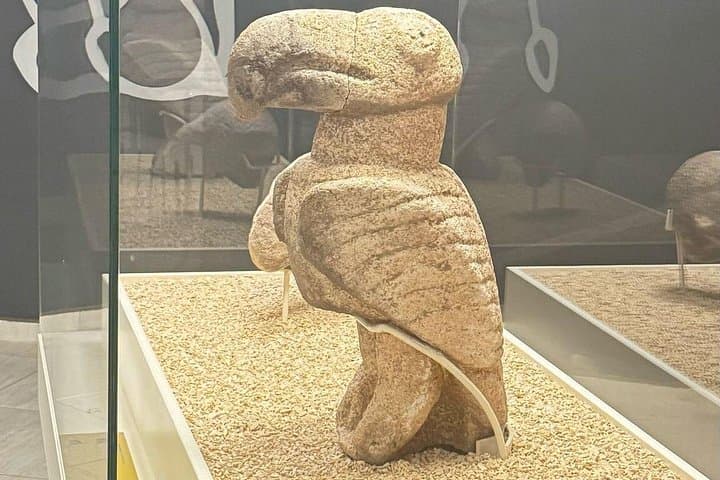
Walk into the site and the stones take over: T-shaped pillars, carved reliefs of animals and abstract symbols, arranged in circular enclosures. Archaeologists date the complex to the 10th millennium BCE, making it one of humanity’s earliest known ritual centers. Nearby Karahantepe and the Şanlıurfa Archaeology and Mosaic Museum place those pillars in context—local finds and mosaic fragments that trace a long, human story in this dry, bright landscape.
Culturally, Şanlıurfa is layered—an Islamic pilgrimage center with bazaars, mosques, and the famous Balıklıgöl (Fish Lake), where carp are protected for religious reasons. Geologically the region sits on uplifted Pleistocene terraces; exposure and erosion keep revealing new features but also make the sites fragile.
Practical details: this is a long day—expect an early pickup, a ~1.5-hour flight each way, and roughly 2–4 hours on-site at Göbeklitepe with walking on uneven, partly archaeological surfaces. Wear sturdy shoes, sun protection, and bring a refillable water bottle; a private guide and entrance are typically included, as is lunch.
Respect the ropes and pathways; the stones are both ancient and vulnerable. Time your visit to avoid mid-day heat, and leave room in your schedule to wander the museum and the old-city lanes in Şanlıurfa for a fuller sense of place.
Yes—this day tour typically includes round‑trip domestic flights, entrance fees to Göbeklitepe, a private guide, and lunch as listed in the itinerary.
Expect 1–3 hours of walking on mostly flat but uneven paths and short steps between viewpoints; comfortable shoes are recommended.
The tour is family‑friendly and listed as physically easy, but uneven surfaces and long travel days may be tiring for young children or those with significant mobility limitations.
This specific tour indicates instant confirmation and all‑sales‑final cancellation policy; changes or refunds are usually not available—confirm details with the operator before booking.
Funland Travel operates guided outdoor trips and adventures with an emphasis on safety, stewardship, and memorable experiences.



Before dawn you leave Istanbul behind: the plane lifts over the Bosphorus and, hours later, the Anatolian plain opens beneath you—broad, sun-baked fields that push toward the limestone ridge where Göbeklitepe rises like a deliberate ruin.
Before dawn you leave Istanbul behind: the plane lifts over the Bosphorus and, hours later, the Anatolian plain opens beneath you—broad, sun-baked fields that push toward the limestone ridge where Göbeklitepe rises like a deliberate ruin.
Walk into the site and the stones take over: T-shaped pillars, carved reliefs of animals and abstract symbols, arranged in circular enclosures. Archaeologists date the complex to the 10th millennium BCE, making it one of humanity’s earliest known ritual centers. Nearby Karahantepe and the Şanlıurfa Archaeology and Mosaic Museum place those pillars in context—local finds and mosaic fragments that trace a long, human story in this dry, bright landscape.
Culturally, Şanlıurfa is layered—an Islamic pilgrimage center with bazaars, mosques, and the famous Balıklıgöl (Fish Lake), where carp are protected for religious reasons. Geologically the region sits on uplifted Pleistocene terraces; exposure and erosion keep revealing new features but also make the sites fragile.
Practical details: this is a long day—expect an early pickup, a ~1.5-hour flight each way, and roughly 2–4 hours on-site at Göbeklitepe with walking on uneven, partly archaeological surfaces. Wear sturdy shoes, sun protection, and bring a refillable water bottle; a private guide and entrance are typically included, as is lunch.
Respect the ropes and pathways; the stones are both ancient and vulnerable. Time your visit to avoid mid-day heat, and leave room in your schedule to wander the museum and the old-city lanes in Şanlıurfa for a fuller sense of place.