THE ADVENTURE COLLECTIVE® · Independent discovery and booking for outdoor travel

Traverse Mongolia from Ulaanbaatar to the Flaming Cliffs, Khongoryn Els dunes and ancient Karakorum on a 15-day ger-camp tour. Expect long 4x4 drives, traditional meals, camel and horse options, and remote landscapes that combine paleontology, nomadic culture and wide-open desert.
Traverse Mongolia from Ulaanbaatar to the Flaming Cliffs, Khongoryn Els dunes and ancient Karakorum on a 15-day ger-camp tour. Expect long 4x4 drives, traditional meals, camel and horse options, and remote landscapes that combine paleontology, nomadic culture and wide-open desert.
At first light the steppe opens like a moving map: low ridgelines etch the horizon, wind pushes sand across bone-white rock, and the wooden lattice of a ger glows against a cobalt sky. Travelers wake to strong tea, the smell of mutton, and a guide briefing that will carry them by 4x4 across dunes, valleys, and the ruins of empires.
Verified experiences and guided adventures in the surrounding area.
Operated by Nomad Trail Mongolia · Ulaanbaatar, Ulaanbaatar
At first light the steppe opens like a moving map: low ridgelines etch the horizon, wind pushes sand across bone-white rock, and the wooden lattice of a ger glows against a cobalt sky. Travelers wake to strong tea, the smell of mutton, and a guide briefing that will carry them by 4x4 across dunes, valleys, and the ruins of empires.
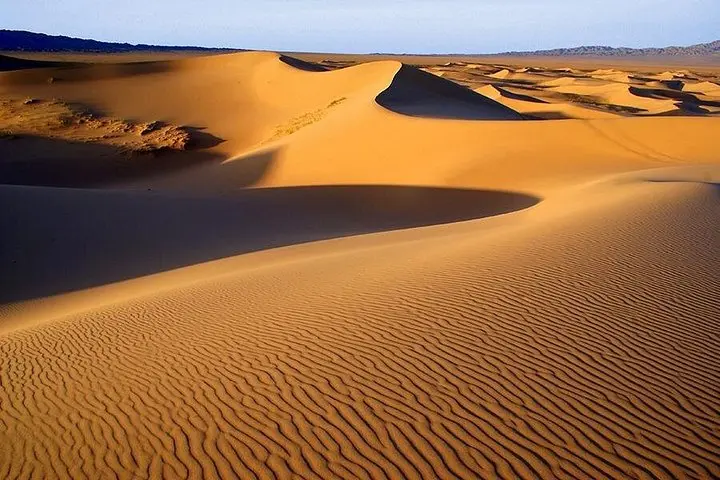
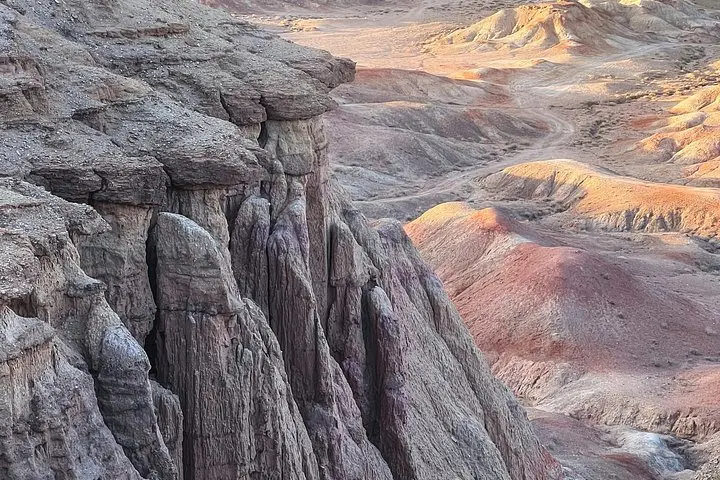
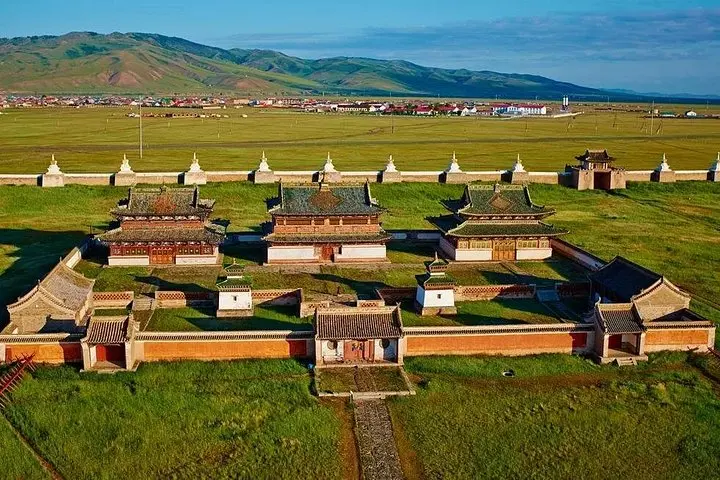
This route threads Mongolia’s major chapters: Ulaanbaatar’s Soviet-era squares and Buddhist temples; the Flaming Cliffs of Bayanzag where Roy Chapman Andrews uncovered dinosaur fossils; Khongoryn Els’ soaring sand ridges; and Karakorum, the 13th‑century capital near Erdene‑Zuu Monastery. Geologically the trip moves from desert dunes shaped by wind and shifting sediments to volcanic and river-carved valleys such as Orkhon and Yol, where glaciers once lingered. Culturally you’ll meet nomadic families, sleep in traditional gers, sample airag (fermented mare’s milk), and see local sports during a mini Naadam festival.
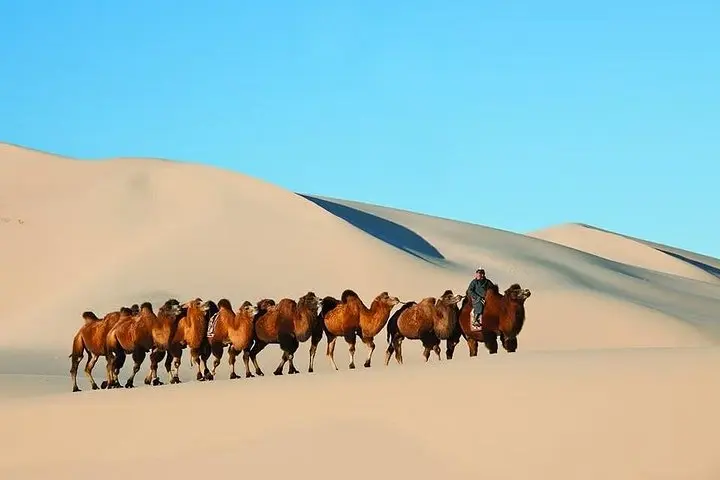
Practical note: expect long drives (several 4–5 hour stretches), rough tracks, and minimal cell coverage in the Gobi; itineraries balance activity—short hikes, optional horse or camel rides—and downtime at ger camps. Pack layered clothing for big diurnal swings, a sun hat, and a reliable water bottle; bring motion-sickness remedies for bumpy roads. Guides handle logistics, entrances, and most meals, but carry small cash for local crafts and tips. This tour suits adventurous travelers with moderate fitness who want an immersive mix of natural drama and historical depth across Mongolia’s most memorable landscapes.
Most nights are in family-run ger camps with basic but comfortable facilities—shared or simple private bathrooms are common; hot showers may be limited in very remote locations.
Horseback is optional and typically short rides for riders of average ability; long-distance riding is not required to complete the tour.
Moderate fitness is sufficient: expect short hikes (1–3 hours), climbing sand dunes, and active days with variable terrain; no technical climbing skills are needed.
Connectivity is reliable in Ulaanbaatar and some towns but patchy or non-existent in the Gobi; plan for offline maps and inform family of limited contact windows.
Nomad Trail Mongolia operates guided outdoor trips and adventures with an emphasis on safety, stewardship, and memorable experiences.
At first light the steppe opens like a moving map: low ridgelines etch the horizon, wind pushes sand across bone-white rock, and the wooden lattice of a ger glows against a cobalt sky. Travelers wake to strong tea, the smell of mutton, and a guide briefing that will carry them by 4x4 across dunes, valleys, and the ruins of empires.
At first light the steppe opens like a moving map: low ridgelines etch the horizon, wind pushes sand across bone-white rock, and the wooden lattice of a ger glows against a cobalt sky. Travelers wake to strong tea, the smell of mutton, and a guide briefing that will carry them by 4x4 across dunes, valleys, and the ruins of empires.
This route threads Mongolia’s major chapters: Ulaanbaatar’s Soviet-era squares and Buddhist temples; the Flaming Cliffs of Bayanzag where Roy Chapman Andrews uncovered dinosaur fossils; Khongoryn Els’ soaring sand ridges; and Karakorum, the 13th‑century capital near Erdene‑Zuu Monastery. Geologically the trip moves from desert dunes shaped by wind and shifting sediments to volcanic and river-carved valleys such as Orkhon and Yol, where glaciers once lingered. Culturally you’ll meet nomadic families, sleep in traditional gers, sample airag (fermented mare’s milk), and see local sports during a mini Naadam festival.
Practical note: expect long drives (several 4–5 hour stretches), rough tracks, and minimal cell coverage in the Gobi; itineraries balance activity—short hikes, optional horse or camel rides—and downtime at ger camps. Pack layered clothing for big diurnal swings, a sun hat, and a reliable water bottle; bring motion-sickness remedies for bumpy roads. Guides handle logistics, entrances, and most meals, but carry small cash for local crafts and tips. This tour suits adventurous travelers with moderate fitness who want an immersive mix of natural drama and historical depth across Mongolia’s most memorable landscapes.