THE ADVENTURE COLLECTIVE® · Independent discovery and booking for outdoor travel

Trade the city for star-swept desert and a centuries-old monastery where ritual, poetry, and wind-carved rock meet. This two-day Gobi pilgrimage combines guided meditation, visits to meditation caves used by Danzanravjaa, museum tours, and traditional ger lodging.
Trade the city for star-swept desert and a centuries-old monastery where ritual, poetry, and wind-carved rock meet. This two-day Gobi pilgrimage combines guided meditation, visits to meditation caves used by Danzanravjaa, museum tours, and traditional ger lodging.
A pale wind pushes across open desert as you approach Khamariin Khiid: the Gobi lays itself out in hard light, rocks and sculpted dunes directing the view toward a ring of white gers and prayer flags. You arrive by van to a small ger lodge, trade city noise for a sky that breathes stars, then step into a ritual rhythm—bell tones, whispered prayers, the hush of caves where Danzanravjaa once sat for 108 days.
Verified experiences and guided adventures in the surrounding area.
Operated by Wind of Freedom · Sainshand, Dornogovi Province
A pale wind pushes across open desert as you approach Khamariin Khiid: the Gobi lays itself out in hard light, rocks and sculpted dunes directing the view toward a ring of white gers and prayer flags. You arrive by van to a small ger lodge, trade city noise for a sky that breathes stars, then step into a ritual rhythm—bell tones, whispered prayers, the hush of caves where Danzanravjaa once sat for 108 days.
The site is a living chapter of 19th-century Mongolian Buddhism. Danzanravjaa, the monastery's founder, was a poet, scholar, and reformer who championed education and the arts; his museum preserves manuscripts and ceremonial robes. Geologically, the Dornogovi landscape is semi-arid—wind-carved sandstone, sparse steppe, and exposed bedrock that catches evening color and seems to answer the sound of a bell.
Culturally, expect hospitality: communal meals like jimbii khorkhog, conversations with lamas, and the option to participate in simple rituals. Walks are short but exposed—Khan Bayanzurkh Mountain offers a steady, well-marked ascent to a viewpoint where the desert seems to hold its breath.
Practical guidance: pack layers for wide temperature swings, sun protection, and at least 2 liters of water per person for daytime outings. Respect dress codes in temples—cover shoulders and remove hats when entering. Accommodation is traditional ger lodging; roads are mostly graded dirt, and travel includes a comfortable van transfer from Sainshand. Bring modest offerings if you wish to take part in ceremonies and leave no trace: the desert is fragile, and the monastery is a sacred, functioning site.
Khamariin Khiid sits a short van ride from Sainshand—typically under an hour depending on road conditions and the exact meeting point.
Yes. Guides usually explain and invite visitors to participate in simple, respectful ways; offerings are optional and appropriate to bring.
You’ll stay in traditional gers with shared facilities; private ger options are sometimes available—expect cozy, simple comforts rather than hotel luxuries.
No—this tour is rated easy. Expect brief walks, a moderate climb to the Mountain of Wishes, and mostly van transportation between sites.
Wind of Freedom operates guided outdoor trips and adventures with an emphasis on safety, stewardship, and memorable experiences.
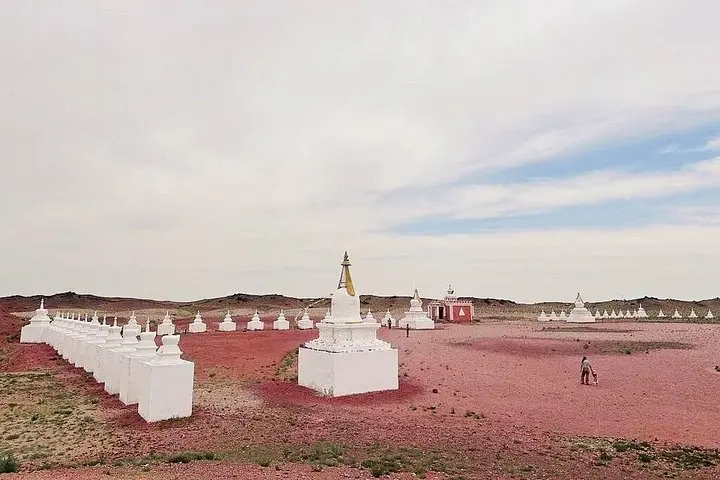
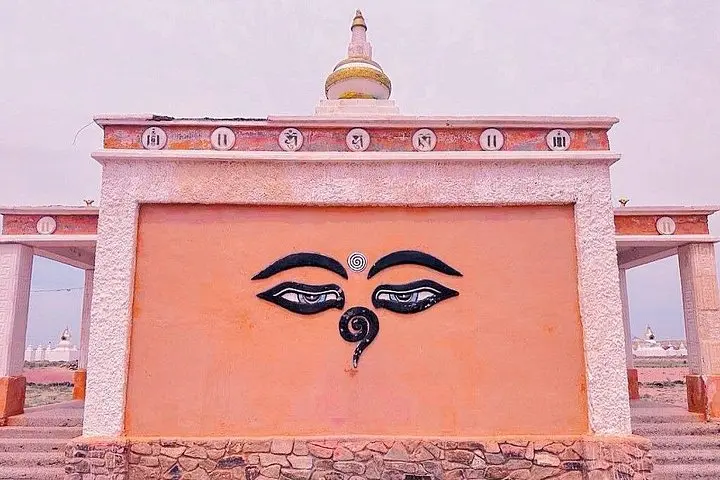
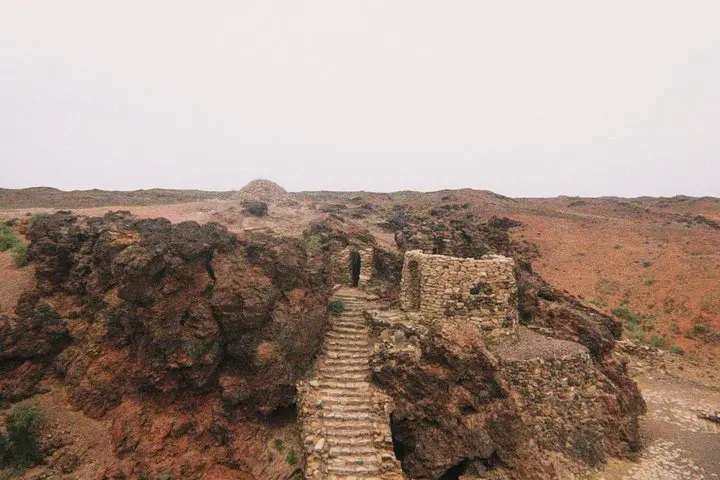
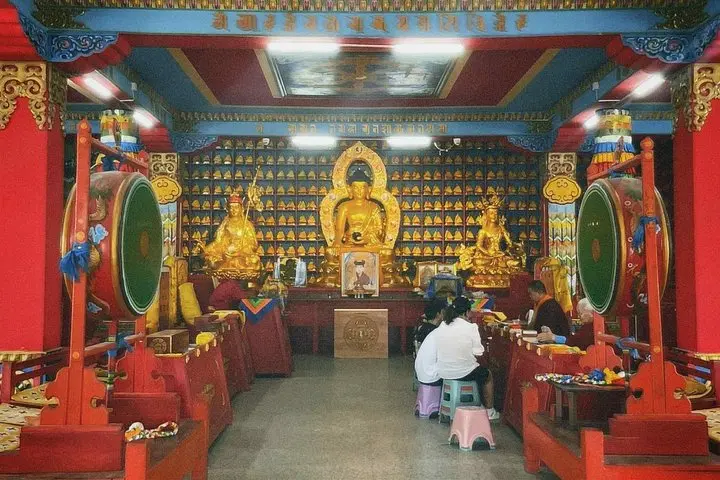
A pale wind pushes across open desert as you approach Khamariin Khiid: the Gobi lays itself out in hard light, rocks and sculpted dunes directing the view toward a ring of white gers and prayer flags. You arrive by van to a small ger lodge, trade city noise for a sky that breathes stars, then step into a ritual rhythm—bell tones, whispered prayers, the hush of caves where Danzanravjaa once sat for 108 days.
A pale wind pushes across open desert as you approach Khamariin Khiid: the Gobi lays itself out in hard light, rocks and sculpted dunes directing the view toward a ring of white gers and prayer flags. You arrive by van to a small ger lodge, trade city noise for a sky that breathes stars, then step into a ritual rhythm—bell tones, whispered prayers, the hush of caves where Danzanravjaa once sat for 108 days.
The site is a living chapter of 19th-century Mongolian Buddhism. Danzanravjaa, the monastery's founder, was a poet, scholar, and reformer who championed education and the arts; his museum preserves manuscripts and ceremonial robes. Geologically, the Dornogovi landscape is semi-arid—wind-carved sandstone, sparse steppe, and exposed bedrock that catches evening color and seems to answer the sound of a bell.
Culturally, expect hospitality: communal meals like jimbii khorkhog, conversations with lamas, and the option to participate in simple rituals. Walks are short but exposed—Khan Bayanzurkh Mountain offers a steady, well-marked ascent to a viewpoint where the desert seems to hold its breath.
Practical guidance: pack layers for wide temperature swings, sun protection, and at least 2 liters of water per person for daytime outings. Respect dress codes in temples—cover shoulders and remove hats when entering. Accommodation is traditional ger lodging; roads are mostly graded dirt, and travel includes a comfortable van transfer from Sainshand. Bring modest offerings if you wish to take part in ceremonies and leave no trace: the desert is fragile, and the monastery is a sacred, functioning site.