THE ADVENTURE COLLECTIVE® · Independent discovery and booking for outdoor travel

Spend a day beyond Baku’s skyline exploring Gobustan’s millennia-old petroglyphs, spitting mud volcanoes and the fire-worship sites of Absheron. This private, all‑tickets‑included tour blends geology, history and short walks into a compact eight‑hour loop.
Spend a day beyond Baku’s skyline exploring Gobustan’s millennia-old petroglyphs, spitting mud volcanoes and the fire-worship sites of Absheron. This private, all‑tickets‑included tour blends geology, history and short walks into a compact eight‑hour loop.
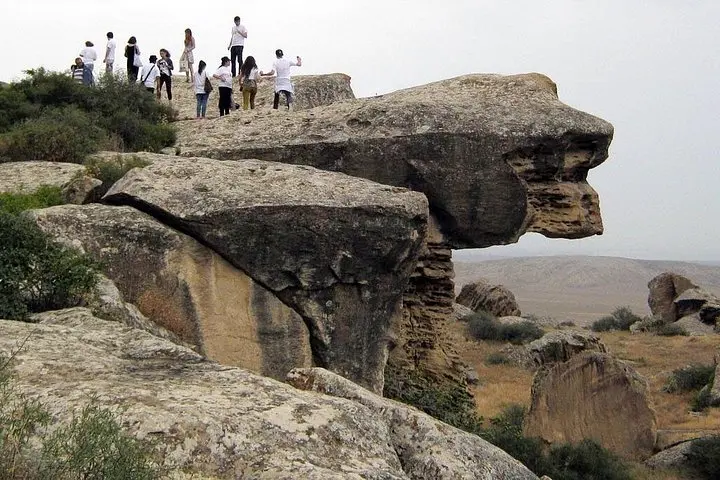
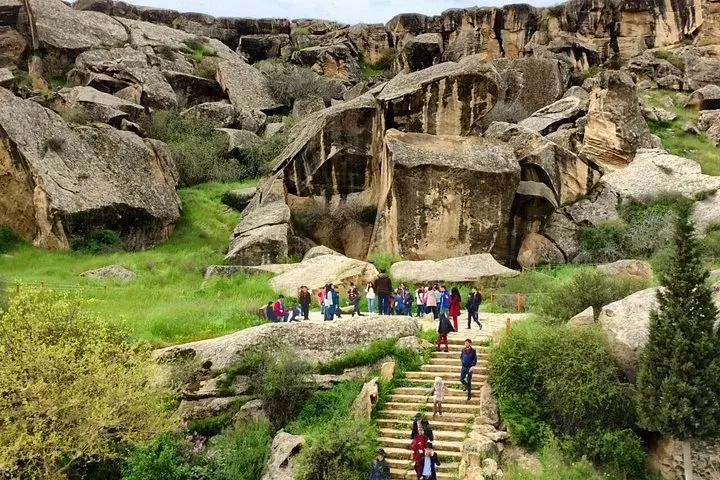
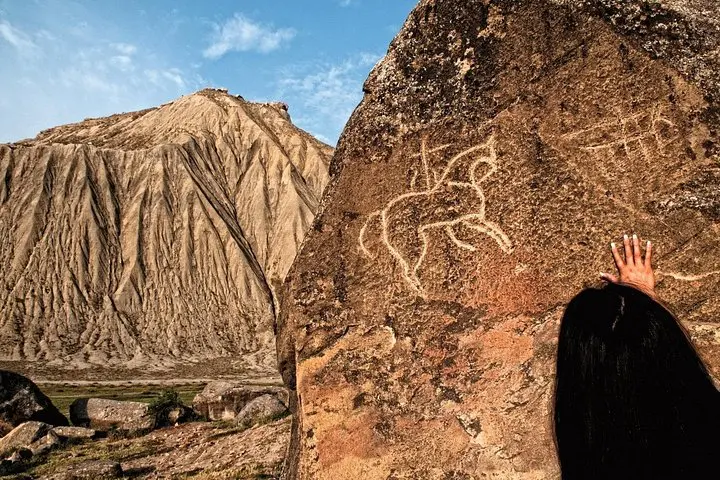
You board an air-conditioned minivan in Baku before sunrise and the city’s glass towers slide away behind you. Asphalt becomes scrubby steppe; low ridges sharpen against a pale sky. By the time the guide points to a scatter of dark petroglyphs on a limestone slab, you’ve already left the modern coast behind and stepped into a landscape that demands attention: wind-swept, dry, and stubbornly old. The rock faces at Gobustan don’t whisper history — they speak it with carvings of hunters, boats and ritual scenes that span 40,000 years.
Verified experiences and guided adventures in the surrounding area.
Operated by AZP Travel company · Gobustan, Gobustan District
You board an air-conditioned minivan in Baku before sunrise and the city’s glass towers slide away behind you. Asphalt becomes scrubby steppe; low ridges sharpen against a pale sky. By the time the guide points to a scatter of dark petroglyphs on a limestone slab, you’ve already left the modern coast behind and stepped into a landscape that demands attention: wind-swept, dry, and stubbornly old. The rock faces at Gobustan don’t whisper history — they speak it with carvings of hunters, boats and ritual scenes that span 40,000 years.
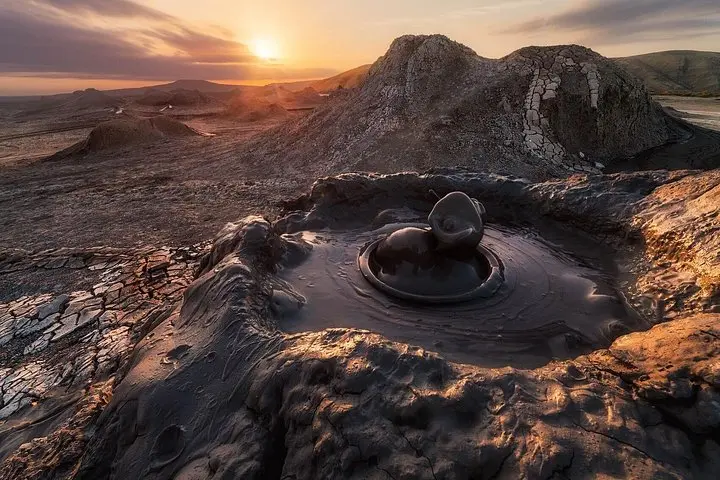
Gobustan Rock Art Cultural Landscape is a UNESCO site for good reason. The shallow grooves and cup marks map human life after the last Ice Age, when seas retreated and the shoreline shifted. Nearby, mud volcanoes cough and bloom: domes of gooey clay and mineral colors that the earth pushes up like proofs of subterranean pressure. The tour folds geology and culture together — a Soviet-era Lada takes you to the mud flats, Ateshgah Fire Temple offers a quiet museum of flame worship spanning Zoroastrian, Hindu and Sikh histories, and Yanardag (Burning Mountain) closes the day with a wall of natural gas flames licking an exposed scarp.
This loop through the Absheron Peninsula reads like a primer on Caucasus energy and belief. Marco Polo noted the region’s fires; in modern terms you’ll see how natural gas and human ritual intersect. The tour operator includes entry fees, round-trip pickup in Baku and onboard Wi‑Fi, and swaps vehicles as needed to reach remote points where standard cars can’t go.
Practical reality: it’s an 8‑hour day with roughly two hours of walking in short stints over uneven, rocky ground and compacted volcanic clay. Wear sturdy shoes with good grip; the mud domes can be slippery and the petroglyph slabs are fragile — don’t climb or touch. Bring at least 1–1.5 liters of water, sun protection and a lightweight jacket for wind. There are restroom stops and a buffet lunch mid-day, but cash can be handy for small purchases and tips. The Lada taxi up to the volcanoes is part of the experience; expect a bumpy, short ride.
Photography is rewarding: golden-hour light sculpts rock engravings and the flames at Yanardag are most dramatic after dusk. Respect the sites — stay on paths, follow your guide and leave artifacts alone. For travelers interested in geology, archaeology or the theatrical power of natural gas on the landscape, this private tour compresses a broad set of Absheron stories into one practical, revealing day.
The tour runs about 8 hours; it includes round‑trip pickup in Baku, entry fees for Gobustan, Ateshgah and Yanardag, a buffet lunch, an English-speaking guide and transport by minivan with a short Lada transfer to the mud volcanoes.
The tour is classified as physically easy but sites have uneven ground and some short climbs; contact the operator about specific mobility needs before booking.
Mud volcanoes are normally included, but may be excluded for weather or site access — the operator notes this in their additional info and will confirm on booking.
Photography for personal use is allowed; drones are often restricted at protected sites — check with your guide and local regulations before flying.
Yes — the itinerary includes time at the Gobustan museum complex and open‑air reserve with exhibits and informational displays.
A buffet lunch is provided; notify the operator of dietary restrictions when booking so they can accommodate where possible.
AZP Travel company operates guided outdoor trips and adventures with an emphasis on safety, stewardship, and memorable experiences.
You board an air-conditioned minivan in Baku before sunrise and the city’s glass towers slide away behind you. Asphalt becomes scrubby steppe; low ridges sharpen against a pale sky. By the time the guide points to a scatter of dark petroglyphs on a limestone slab, you’ve already left the modern coast behind and stepped into a landscape that demands attention: wind-swept, dry, and stubbornly old. The rock faces at Gobustan don’t whisper history — they speak it with carvings of hunters, boats and ritual scenes that span 40,000 years.
You board an air-conditioned minivan in Baku before sunrise and the city’s glass towers slide away behind you. Asphalt becomes scrubby steppe; low ridges sharpen against a pale sky. By the time the guide points to a scatter of dark petroglyphs on a limestone slab, you’ve already left the modern coast behind and stepped into a landscape that demands attention: wind-swept, dry, and stubbornly old. The rock faces at Gobustan don’t whisper history — they speak it with carvings of hunters, boats and ritual scenes that span 40,000 years.
Gobustan Rock Art Cultural Landscape is a UNESCO site for good reason. The shallow grooves and cup marks map human life after the last Ice Age, when seas retreated and the shoreline shifted. Nearby, mud volcanoes cough and bloom: domes of gooey clay and mineral colors that the earth pushes up like proofs of subterranean pressure. The tour folds geology and culture together — a Soviet-era Lada takes you to the mud flats, Ateshgah Fire Temple offers a quiet museum of flame worship spanning Zoroastrian, Hindu and Sikh histories, and Yanardag (Burning Mountain) closes the day with a wall of natural gas flames licking an exposed scarp.
This loop through the Absheron Peninsula reads like a primer on Caucasus energy and belief. Marco Polo noted the region’s fires; in modern terms you’ll see how natural gas and human ritual intersect. The tour operator includes entry fees, round-trip pickup in Baku and onboard Wi‑Fi, and swaps vehicles as needed to reach remote points where standard cars can’t go.
Practical reality: it’s an 8‑hour day with roughly two hours of walking in short stints over uneven, rocky ground and compacted volcanic clay. Wear sturdy shoes with good grip; the mud domes can be slippery and the petroglyph slabs are fragile — don’t climb or touch. Bring at least 1–1.5 liters of water, sun protection and a lightweight jacket for wind. There are restroom stops and a buffet lunch mid-day, but cash can be handy for small purchases and tips. The Lada taxi up to the volcanoes is part of the experience; expect a bumpy, short ride.
Photography is rewarding: golden-hour light sculpts rock engravings and the flames at Yanardag are most dramatic after dusk. Respect the sites — stay on paths, follow your guide and leave artifacts alone. For travelers interested in geology, archaeology or the theatrical power of natural gas on the landscape, this private tour compresses a broad set of Absheron stories into one practical, revealing day.