THE ADVENTURE COLLECTIVE® · Independent discovery and booking for outdoor travel

A six‑hour loop from Baku to UNESCO-listed Gobustan and its active mud volcanoes, this private tour pairs millennia-old rock art with dramatic geology. Expect short, uneven walks, strong light for photography, and a traditional Azerbaijani lunch en route.
A six‑hour loop from Baku to UNESCO-listed Gobustan and its active mud volcanoes, this private tour pairs millennia-old rock art with dramatic geology. Expect short, uneven walks, strong light for photography, and a traditional Azerbaijani lunch en route.
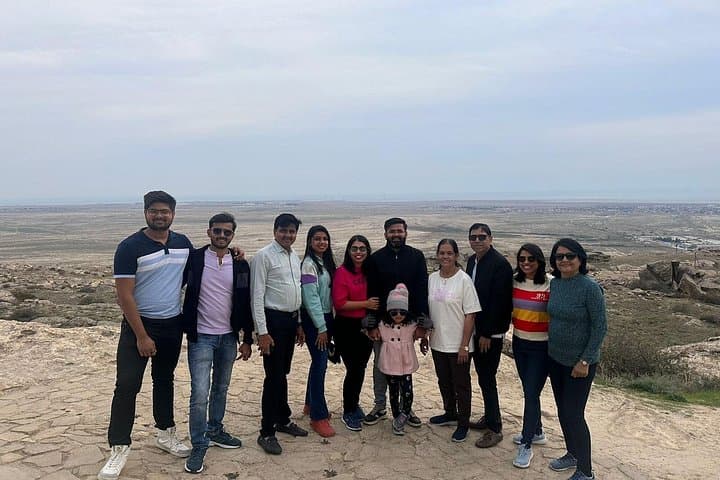
You leave Baku with the Caspian shrinking in the rearview and the highway folding open toward a dry, wind-sculpted country. After about 64 km of scrub and low hills, the landscape changes: fluted rock outcrops rise from a flat plain, their faces carved by hands that belonged to people 5,000–40,000 years ago. The first step onto the rock field is quiet work — the petroglyphs don’t shout; they record. Goat herds, hunters, boats and suns stare back from stone as if waiting for someone to read them again.
Verified experiences and guided adventures in the surrounding area.
Operated by Amazon Travel Club · Gobustan, Gobustan District
You leave Baku with the Caspian shrinking in the rearview and the highway folding open toward a dry, wind-sculpted country. After about 64 km of scrub and low hills, the landscape changes: fluted rock outcrops rise from a flat plain, their faces carved by hands that belonged to people 5,000–40,000 years ago. The first step onto the rock field is quiet work — the petroglyphs don’t shout; they record. Goat herds, hunters, boats and suns stare back from stone as if waiting for someone to read them again.
Gobustan Rock Art Cultural Landscape is a UNESCO site because it preserves more than 6,000 images that map early human life on the Absheron peninsula. The museum near the entrance frames the archaeology — Mesolithic tools, bone fragments, and context — then the open‑air exhibits force you to slow down to see how people once recorded movement and ritual. The geology here is plain but brutal: weathered volcanic tuff and ash layers, cliffs pocked by weather and salt, and the plain beyond that feeds into the mud volcano fields.
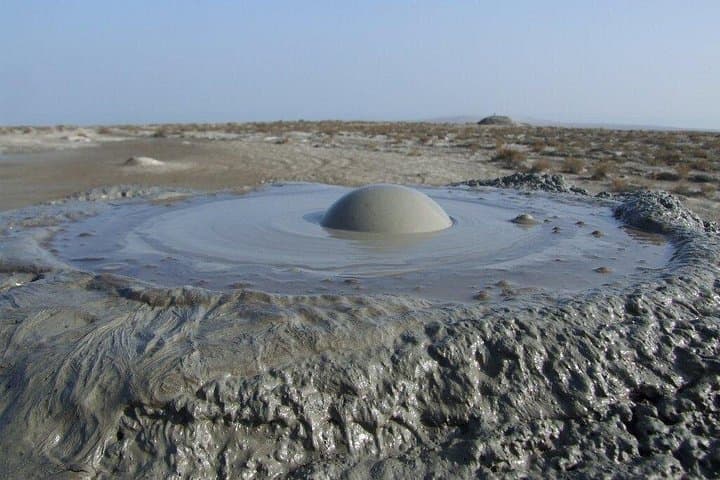
A short drive away, Azerbaijan’s famous mud volcanoes put on a different kind of show. With roughly 300 mud volcanoes in the country, these cone-shaped vents bubble and sputter with cold mud and gas; they are geological actors rather than hot lava-spewing giants. Close enough to feel the vibration underfoot, the mud domes occasionally hiss, the earth exhaling methane and mineral-rich slurry that photographers and geology buffs come to watch.
Culturally, the day pairs archaeology with modern Azerbaijani hospitality — expect a lunch of kebab and plov at a local restaurant, and the option to stop by Bibi-Heybat Mosque on the way back for a quieter, spiritual counterpoint.
Practicalities: the full loop is a roughly 6‑hour private tour, departing Baku mid-morning. Foot travel at Gobustan is short but over uneven rock — plan for 1–2 km of walking with minimal elevation gain but potentially slippery surfaces. At the mud volcanoes you’ll stand on loose, fine substrate; avoid the very edges of active vents. Bring sun protection, plenty of water, and shoes you don’t mind getting dusty. Morning light is best for petroglyph detail; late afternoon softens the volcanic cones for photography.
This tour fits a casual traveler who wants a concentrated, interpretive look at Azerbaijan’s deep past and peculiar geology without overnighting. For those who want more, ask guides about lesser-visited petroglyph panels and nearby coastal salt flats. Respect fragile rock art: no pens, no chalk, and keep a meter of distance from carvings — these images have survived millennia and depend on visitors to leave them undisturbed.
About 60–75 minutes each way (approximately 64 km), depending on traffic and your pickup point in Baku.
This tour’s itinerary lists admission as included for the Gobustan Museum and rock site—confirm at booking for any changes.
Yes; the tour is listed as physically easy and stroller-accessible for short distances, but parents should supervise near rock edges and mud fields.
Mud volcanoes are generally cold but can emit gases and have unstable margins—stay with the guide and avoid stepping on freshly erupted domes.
Comfortable, closed-toe shoes, sun protection, and a light layer for windy conditions; avoid white clothing that can be stained by mud or dust.
Yes—photography is encouraged, but do not touch or get close to petroglyph panels; use a zoom if needed to capture detail.
Amazon Travel Club operates guided outdoor trips and adventures with an emphasis on safety, stewardship, and memorable experiences.


You leave Baku with the Caspian shrinking in the rearview and the highway folding open toward a dry, wind-sculpted country. After about 64 km of scrub and low hills, the landscape changes: fluted rock outcrops rise from a flat plain, their faces carved by hands that belonged to people 5,000–40,000 years ago. The first step onto the rock field is quiet work — the petroglyphs don’t shout; they record. Goat herds, hunters, boats and suns stare back from stone as if waiting for someone to read them again.
You leave Baku with the Caspian shrinking in the rearview and the highway folding open toward a dry, wind-sculpted country. After about 64 km of scrub and low hills, the landscape changes: fluted rock outcrops rise from a flat plain, their faces carved by hands that belonged to people 5,000–40,000 years ago. The first step onto the rock field is quiet work — the petroglyphs don’t shout; they record. Goat herds, hunters, boats and suns stare back from stone as if waiting for someone to read them again.
Gobustan Rock Art Cultural Landscape is a UNESCO site because it preserves more than 6,000 images that map early human life on the Absheron peninsula. The museum near the entrance frames the archaeology — Mesolithic tools, bone fragments, and context — then the open‑air exhibits force you to slow down to see how people once recorded movement and ritual. The geology here is plain but brutal: weathered volcanic tuff and ash layers, cliffs pocked by weather and salt, and the plain beyond that feeds into the mud volcano fields.
A short drive away, Azerbaijan’s famous mud volcanoes put on a different kind of show. With roughly 300 mud volcanoes in the country, these cone-shaped vents bubble and sputter with cold mud and gas; they are geological actors rather than hot lava-spewing giants. Close enough to feel the vibration underfoot, the mud domes occasionally hiss, the earth exhaling methane and mineral-rich slurry that photographers and geology buffs come to watch.
Culturally, the day pairs archaeology with modern Azerbaijani hospitality — expect a lunch of kebab and plov at a local restaurant, and the option to stop by Bibi-Heybat Mosque on the way back for a quieter, spiritual counterpoint.
Practicalities: the full loop is a roughly 6‑hour private tour, departing Baku mid-morning. Foot travel at Gobustan is short but over uneven rock — plan for 1–2 km of walking with minimal elevation gain but potentially slippery surfaces. At the mud volcanoes you’ll stand on loose, fine substrate; avoid the very edges of active vents. Bring sun protection, plenty of water, and shoes you don’t mind getting dusty. Morning light is best for petroglyph detail; late afternoon softens the volcanic cones for photography.
This tour fits a casual traveler who wants a concentrated, interpretive look at Azerbaijan’s deep past and peculiar geology without overnighting. For those who want more, ask guides about lesser-visited petroglyph panels and nearby coastal salt flats. Respect fragile rock art: no pens, no chalk, and keep a meter of distance from carvings — these images have survived millennia and depend on visitors to leave them undisturbed.