THE ADVENTURE COLLECTIVE® · Independent discovery and booking for outdoor travel

Step beyond Baku to stand before 6,000 rock carvings and visit the odd, steaming domes of Azerbaijan’s mud volcanoes. This half-day private tour condenses deep time—prehistoric art and living geology—into a practical, memorable outing.
Step beyond Baku to stand before 6,000 rock carvings and visit the odd, steaming domes of Azerbaijan’s mud volcanoes. This half-day private tour condenses deep time—prehistoric art and living geology—into a practical, memorable outing.
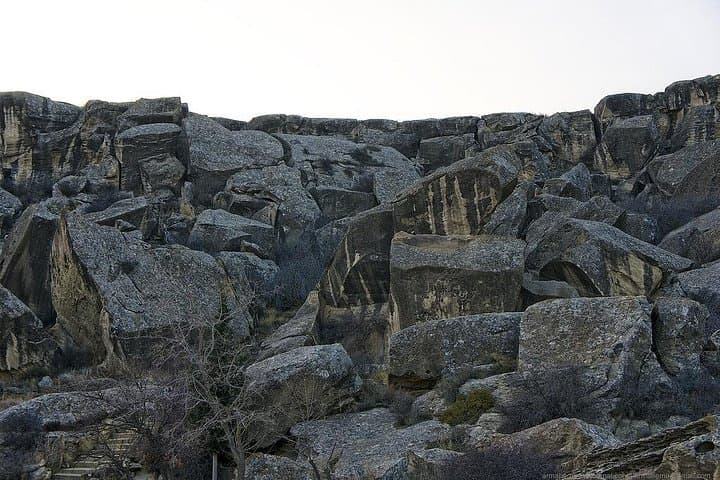
You arrive from Baku as the highway drops away and the land opens into a wind-scoured plain where stone and salt have been arguing for millennia. The air tastes faintly metallic; low stone hills cut into the horizon like the ribs of some buried creature. At the visitor center, a guide folds a map and leads you toward the carved cliffs of Gobustan, where human hands left their mark between 5,000 and 20,000 years ago.
Verified experiences and guided adventures in the surrounding area.
Operated by Cactus Travel Azerbaijan · Gobustan, Qobustan District
You arrive from Baku as the highway drops away and the land opens into a wind-scoured plain where stone and salt have been arguing for millennia. The air tastes faintly metallic; low stone hills cut into the horizon like the ribs of some buried creature. At the visitor center, a guide folds a map and leads you toward the carved cliffs of Gobustan, where human hands left their mark between 5,000 and 20,000 years ago.
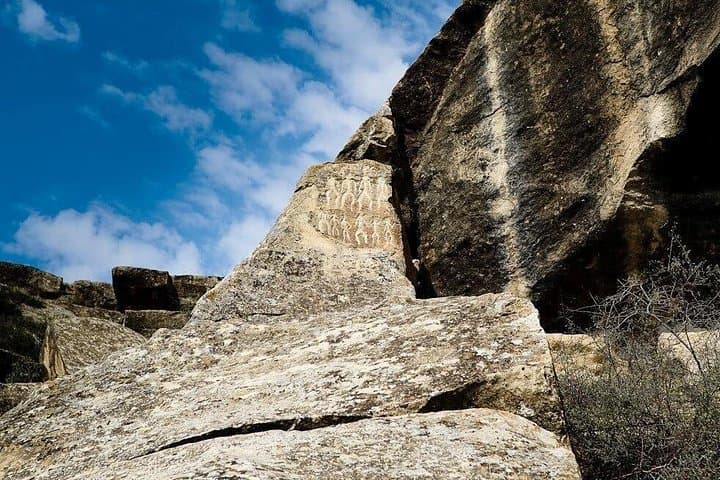
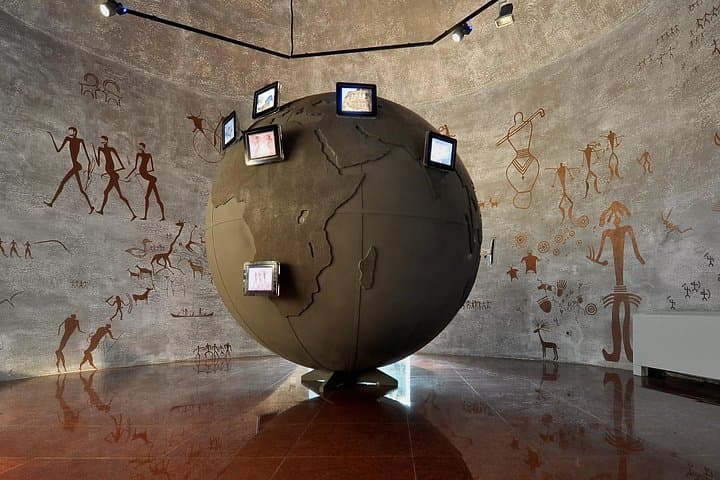
The petroglyph fields read like an ancient field notebook. Boats with armed oarsmen press across rock faces as if crossing a memory of a flooded coastline; hunters tilt spears at antelope and aurochs; dancers loop arms in patterns that feel startlingly immediate. The grooves are not just images but evidence: seasonal routes, ritual life, and a hint of climate change recorded in stone. UNESCO listed Gobustan for good reason — the site is one of the clearest windows into prehistoric Caucasian life.
Geology explains the second act of this day — the mud volcanoes. These are not the dramatic fire-and-ash eruptions of textbooks; they are slow, stubborn exhalations where pressurized gases and slurry of clay and oil-rich sediment push up through fissures and form pillows of cooling mud. Some steam and bubble, some cough up rounded, pancake-like domes, and a handful spatter like a miniature, slow-motion geothermal show. The Soviet-era jeeps used on the route remind you that this landscape has been read and re-read by different cultures and states, each leaving infrastructure and stories behind.
Culturally, the trip is a short lesson in Azerbaijani rural life: roadside teas, flatbreads warmed over open flames, and shepherds moving flocks across scrubland. Guides often point out sites little visited by larger tours — a cliff shelter with faint charcoal stains or an isolated mud dome used by locals for medicinal baths.
Practical side: this private half-day tour runs three to four hours from pickup in Baku. Paths around the petroglyphs are short but uneven; expect loose gravel and shallow climbs. At the mud volcanoes, footing can be sticky and the wind can turn the smell sharp — pack a light windproof layer and sturdy shoes.
Timing matters. Mornings are quieter and cooler; late afternoon brings better light for photographs but stronger winds. Carry water and sun protection, and leave no trace: the petroglyphs are irreplaceable. For anyone curious about human history and the slow machinery of the earth, this route stitches archaeology and geology into a tight, memorable half-day beyond Baku.
The reserve and mud volcanoes are roughly a 40–60 minute drive from central Baku depending on traffic and exact pickup location.
Admission to the Gobustan State Reserve may require a ticket; confirm with the tour operator ahead of time as some packages include entry and others do not.
Yes — the operator notes it’s suitable for all fitness levels; infants must sit on an adult’s lap in vehicles and infant seats are available.
Layered clothing, closed-toe shoes, sun protection, and a windproof layer are recommended; avoid sandals near mud volcanoes.
Walking is moderate and short-distance around display areas — expect several short scrambles and gravel paths rather than long hikes.
Most half-day tours include the main petroglyph areas and a visit to at least one mud volcano site, with short stops at additional domes if time allows.
Cactus Travel Azerbaijan operates guided outdoor trips and adventures with an emphasis on safety, stewardship, and memorable experiences.
You arrive from Baku as the highway drops away and the land opens into a wind-scoured plain where stone and salt have been arguing for millennia. The air tastes faintly metallic; low stone hills cut into the horizon like the ribs of some buried creature. At the visitor center, a guide folds a map and leads you toward the carved cliffs of Gobustan, where human hands left their mark between 5,000 and 20,000 years ago.
You arrive from Baku as the highway drops away and the land opens into a wind-scoured plain where stone and salt have been arguing for millennia. The air tastes faintly metallic; low stone hills cut into the horizon like the ribs of some buried creature. At the visitor center, a guide folds a map and leads you toward the carved cliffs of Gobustan, where human hands left their mark between 5,000 and 20,000 years ago.
The petroglyph fields read like an ancient field notebook. Boats with armed oarsmen press across rock faces as if crossing a memory of a flooded coastline; hunters tilt spears at antelope and aurochs; dancers loop arms in patterns that feel startlingly immediate. The grooves are not just images but evidence: seasonal routes, ritual life, and a hint of climate change recorded in stone. UNESCO listed Gobustan for good reason — the site is one of the clearest windows into prehistoric Caucasian life.
Geology explains the second act of this day — the mud volcanoes. These are not the dramatic fire-and-ash eruptions of textbooks; they are slow, stubborn exhalations where pressurized gases and slurry of clay and oil-rich sediment push up through fissures and form pillows of cooling mud. Some steam and bubble, some cough up rounded, pancake-like domes, and a handful spatter like a miniature, slow-motion geothermal show. The Soviet-era jeeps used on the route remind you that this landscape has been read and re-read by different cultures and states, each leaving infrastructure and stories behind.
Culturally, the trip is a short lesson in Azerbaijani rural life: roadside teas, flatbreads warmed over open flames, and shepherds moving flocks across scrubland. Guides often point out sites little visited by larger tours — a cliff shelter with faint charcoal stains or an isolated mud dome used by locals for medicinal baths.
Practical side: this private half-day tour runs three to four hours from pickup in Baku. Paths around the petroglyphs are short but uneven; expect loose gravel and shallow climbs. At the mud volcanoes, footing can be sticky and the wind can turn the smell sharp — pack a light windproof layer and sturdy shoes.
Timing matters. Mornings are quieter and cooler; late afternoon brings better light for photographs but stronger winds. Carry water and sun protection, and leave no trace: the petroglyphs are irreplaceable. For anyone curious about human history and the slow machinery of the earth, this route stitches archaeology and geology into a tight, memorable half-day beyond Baku.