
Gobustan & Mud Volcano Day Tour from Baku — Petroglyphs, Semi‑Desert Trails & Mud Spouts
Leave Baku behind for a 3–4 hour immersion in Gobustan’s wind‑scoured ravines—where thousands of petroglyphs meet slow‑burping mud volcanoes. This half‑day private tour pairs accessible walking with dramatic geology and a direct link to the region’s deep past.
An Adventure In Baku.
Leave Baku behind for a 3–4 hour immersion in Gobustan’s wind‑scoured ravines—where thousands of petroglyphs meet slow‑burping mud volcanoes. This half‑day private tour pairs accessible walking with dramatic geology and a direct link to the region’s deep past.
Read the full experience
You pull away from Baku’s coastal traffic and, within an hour, the city’s glass towers shrink against a horizon of dry gullies and wind-swept scrub. The bus eases into Gobustan’s plateau and the landscape—flat, pocked, and unexpectedly theatrical—opens like a map of ancient movements. Low rock outcrops pocked with petroglyphs rise from the semi‑desert; nearby, mud volcanoes keep time in slow, bubbling breaths.
You pull away from Baku’s coastal traffic and, within an hour, the city’s glass towers shrink against a horizon of dry gullies and wind-swept scrub. The bus eases into Gobustan’s plateau and the landscape—flat, pocked, and unexpectedly theatrical—opens like a map of ancient movements. Low rock outcrops pocked with petroglyphs rise from the semi‑desert; nearby, mud volcanoes keep time in slow, bubbling breaths.
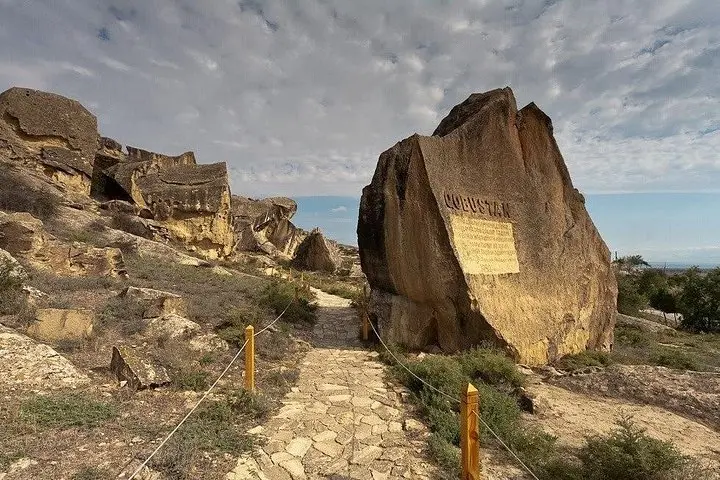
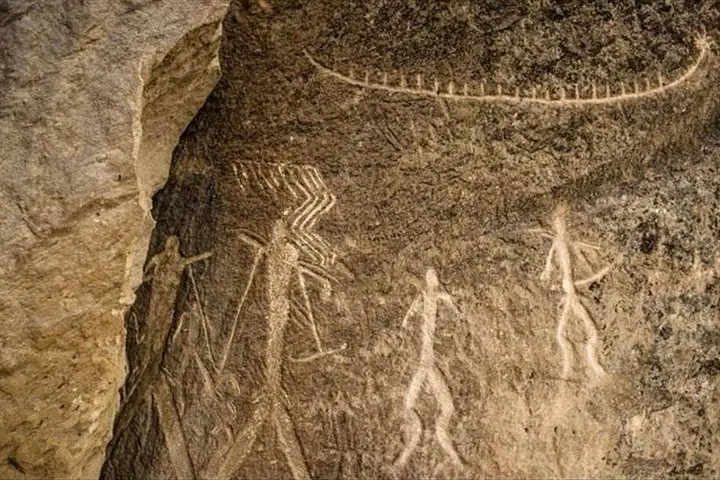
Gobustan sits roughly 60 km south of Baku on the southeastern spur of the Greater Caucasus. The site is a study in contrasts: shallow ravines and compacted clay underfoot, low ridges rising tens to a few hundred meters, and exposed bedrock carved by human hands across millennia. The petroglyph panels here record hunters, boats, and ritual scenes from the Upper Paleolithic through the Bronze Age—thousands of etched figures that turn a scrubby plain into an open‑air library of human movement.
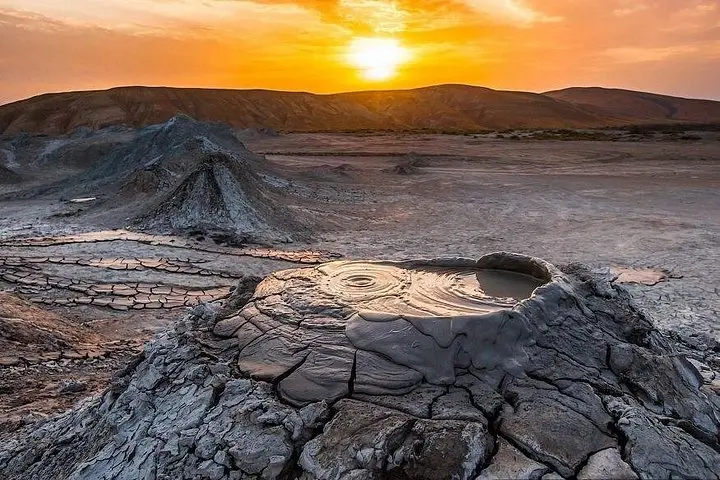
Geologically, the mud volcanoes are a different kind of storyteller. Azerbaijan hosts a disproportionate share of the world’s mud volcanoes; here they vent gas and sandy slurry in slow, theatrical eruptions that have shaped local drainage and made this land restless. The mud cools into sculptural lobes that contrast sharply with the sharp lines of carved rock.
Culturally, Gobustan has been a corridor—seasonal hunters, pastoralists, and later trading routes between interior highlands and the Caspian. The rock art shows both local life and long connections with the sea. Today, the site is protected and managed for visitors, but the traces of earlier lives remain startlingly immediate.
Practicalities: most tours run 3–4 hours from Baku, with light walking on uneven stone and compacted dirt. Expect cumulative elevation change under a few hundred meters; trails are short but rocky in places. Admission to specific panels is sometimes regulated, and many operators include hotel pickup; this private tour notes bottled water and air‑conditioned transport.
Bring sun protection, sturdy shoes, and a small daypack. Follow marked paths, don’t climb on panels, and keep cameras ready—the low, oblique light in late afternoon renders glyphs and mud domes with dramatic relief. Weather can be hot and dry in summer, windy in shoulder seasons; mud volcano activity is unpredictable but adds a kinetic element to the visit.
For a half‑day out of Baku, Gobustan delivers a rare double act: a human archive carved in stone and a living geology that keeps simmering beneath the surface. It’s an accessible, visceral way to read the region’s past and present in a single sweep of the eye.
Frequently asked questions
Gobustan is about 60 km south of Baku; this private tour typically lasts 3–4 hours including drive time and time at the petroglyphs and mud volcanoes.
Admission to specific sites is often not included—confirm with your operator; the tour listing notes bottled water and transport are included but not formal entry fees.
Tours sometimes allow touching cooled mud, but active vents and hot mud should not be handled—follow your guide’s instructions for safety.
The main visitor routes include uneven rock and steps; full accessibility is limited—contact the operator about customized transfers and assistance.
Early morning or late afternoon offers low, raking light that enhances petroglyph relief and mud domes—midday is harsh and flattens contrast.
Mud volcanoes can emit gas and suddenly change; stay behind barriers, follow the guide, and don’t enter active vents or approach large bubbles.
About This Experience
MyBakuTours operates guided outdoor trips and adventures with an emphasis on safety, stewardship, and memorable experiences.
Adventure tips
Recommended gear
- Sturdy hiking shoes: Provides traction on rocky petroglyph ledges and compacted dirt tracks.
- Sun protection (hat, SPF, sunglasses): The plain offers little shade—UV exposure can be significant even on cool days.
- Reusable water bottle (1–1.5L): Hydration is critical in the semi‑desert; tours may supply bottled water but carry your own.
- Light wind/rain jacket: Useful in shoulder seasons when wind or sudden showers can lower temperatures.
Photos of the experience
Related adventures & guides
Read the full experience
You pull away from Baku’s coastal traffic and, within an hour, the city’s glass towers shrink against a horizon of dry gullies and wind-swept scrub. The bus eases into Gobustan’s plateau and the landscape—flat, pocked, and unexpectedly theatrical—opens like a map of ancient movements. Low rock outcrops pocked with petroglyphs rise from the semi‑desert; nearby, mud volcanoes keep time in slow, bubbling breaths.
You pull away from Baku’s coastal traffic and, within an hour, the city’s glass towers shrink against a horizon of dry gullies and wind-swept scrub. The bus eases into Gobustan’s plateau and the landscape—flat, pocked, and unexpectedly theatrical—opens like a map of ancient movements. Low rock outcrops pocked with petroglyphs rise from the semi‑desert; nearby, mud volcanoes keep time in slow, bubbling breaths.
Gobustan sits roughly 60 km south of Baku on the southeastern spur of the Greater Caucasus. The site is a study in contrasts: shallow ravines and compacted clay underfoot, low ridges rising tens to a few hundred meters, and exposed bedrock carved by human hands across millennia. The petroglyph panels here record hunters, boats, and ritual scenes from the Upper Paleolithic through the Bronze Age—thousands of etched figures that turn a scrubby plain into an open‑air library of human movement.
Geologically, the mud volcanoes are a different kind of storyteller. Azerbaijan hosts a disproportionate share of the world’s mud volcanoes; here they vent gas and sandy slurry in slow, theatrical eruptions that have shaped local drainage and made this land restless. The mud cools into sculptural lobes that contrast sharply with the sharp lines of carved rock.
Culturally, Gobustan has been a corridor—seasonal hunters, pastoralists, and later trading routes between interior highlands and the Caspian. The rock art shows both local life and long connections with the sea. Today, the site is protected and managed for visitors, but the traces of earlier lives remain startlingly immediate.
Practicalities: most tours run 3–4 hours from Baku, with light walking on uneven stone and compacted dirt. Expect cumulative elevation change under a few hundred meters; trails are short but rocky in places. Admission to specific panels is sometimes regulated, and many operators include hotel pickup; this private tour notes bottled water and air‑conditioned transport.
Bring sun protection, sturdy shoes, and a small daypack. Follow marked paths, don’t climb on panels, and keep cameras ready—the low, oblique light in late afternoon renders glyphs and mud domes with dramatic relief. Weather can be hot and dry in summer, windy in shoulder seasons; mud volcano activity is unpredictable but adds a kinetic element to the visit.
For a half‑day out of Baku, Gobustan delivers a rare double act: a human archive carved in stone and a living geology that keeps simmering beneath the surface. It’s an accessible, visceral way to read the region’s past and present in a single sweep of the eye.
Make a day of it nearby.
Verified experiences and guided adventures in the surrounding area.