THE ADVENTURE COLLECTIVE® · Independent discovery and booking for outdoor travel

Drive an hour out of Baku to walk among Paleolithic petroglyphs, watch mud volcanoes bubble and stand before the perpetual flame of Yanardag. This eight-hour private tour stitches geology, ritual and oil history into one instructive day on the Absheron Peninsula.
Drive an hour out of Baku to walk among Paleolithic petroglyphs, watch mud volcanoes bubble and stand before the perpetual flame of Yanardag. This eight-hour private tour stitches geology, ritual and oil history into one instructive day on the Absheron Peninsula.
By the time the minivan slips out of Baku the city’s glass towers fade behind a low, bristling horizon of oil rigs and scrub. The road heads southwest across the Absheron Peninsula, and the air seems to change—thinner, dust-scented, touched with the faint sulfur of gas that has burned here for millennia.
Verified experiences and guided adventures in the surrounding area.
Operated by Absheron Travel Agency · Baku, Absheron District
By the time the minivan slips out of Baku the city’s glass towers fade behind a low, bristling horizon of oil rigs and scrub. The road heads southwest across the Absheron Peninsula, and the air seems to change—thinner, dust-scented, touched with the faint sulfur of gas that has burned here for millennia.
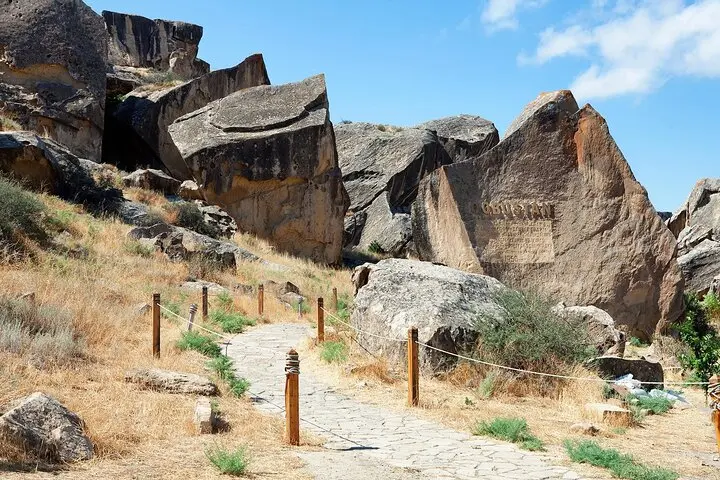
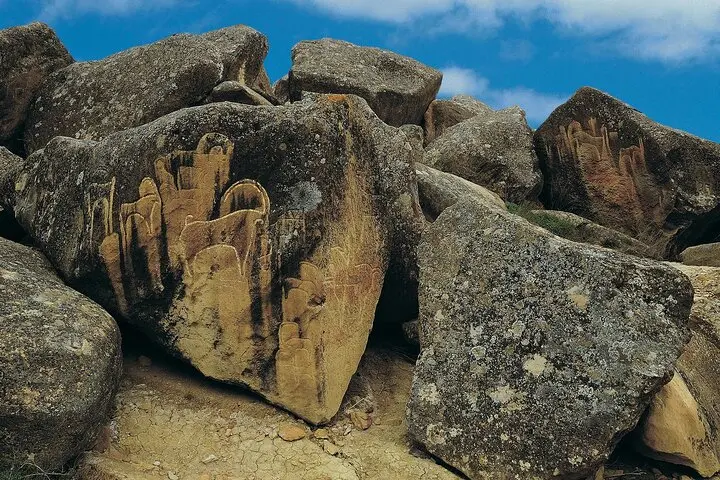
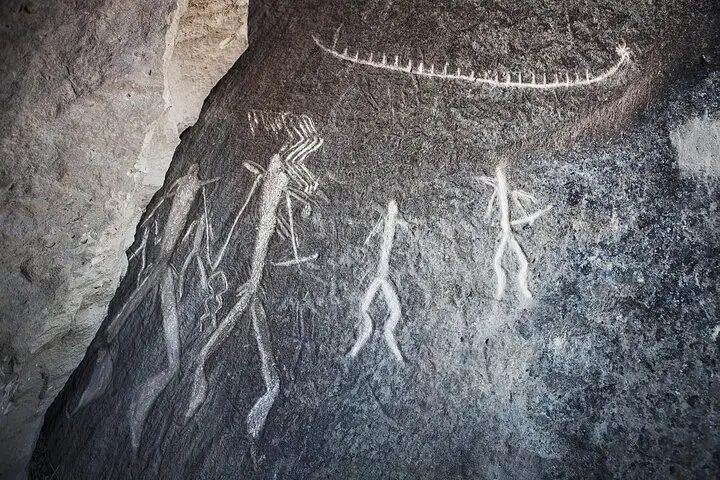
You reach Gobustan after roughly an hour to an hour and a half of driving (about 60–70 km). The reserve opens like an open-air gallery: slabs of weathered rock scored with petroglyphs, caravans of animals and human figures chiselled by hands thousands of years old. Nearby, mud volcanoes burp up slow, doughy bubbles—the planet making small gestures of unrest—and further east, Yanardag (Burning Mountain) lets a gas seam lick at the hillside in a steady, bright flame.
This loop of sites—Gobustan’s rock art and 3D museum, the mud volcano fields, Ateshgah Fire Temple, and Yanardag—maps both Azerbaijan’s geological backbone and its cultural history. Gobustan’s engravings date from the Upper Paleolithic to the Middle Ages, evidence of nomadic lifeways and early sea routes along the Caspian. Ateshgah captures later chapters: a site where Zoroastrian flame worship met Hindu and Sikh pilgrims drawn by natural gas seeps. The whole drive is framed by Azerbaijan’s oil story: early wells and the modern industry that reshaped the region.
Geology is the calendar here. Mud volcanoes are slow volcanos; cones can be meters high with soupy, salty slicks. Yanardag’s flame is a reminder that the Absheron Peninsula is a cap over active hydrocarbon channels. Wildlife is spare but present—raptors circle thermals above the steppe, and coastal waters host seabirds and, on rare occasion, signs of the Caspian’s marine life.
Practical edge: expect an 8-hour day with several short walks—most sites require 200–800 m of walking over uneven, dusty trails and low stone steps. Wear sturdy walking shoes, sun protection and bring a refillable water bottle; bottled water is typically provided on tour but extras are wise. The petroglyph panels are exposed—limit sunscreen transfer when photographing for better detail—and mud volcano fields can be slippery; keep a firm step away from fresh vents. Plan for early morning or late afternoon light for photos: the carvings and flame take on depth then.
This private, guided loop is a compact primer on Azerbaijan’s geology and rituals of fire: visceral, educational, and surprising for anyone who thinks of oil only as modern industry. For travelers based in Baku, the day gives a concentrated sense of why this coast was long called the “Land of Fire” and how geology and culture keep conversing across millennia.
The tour runs about 8 hours total; expect roughly 1–1.5 hours each way from central Baku to Gobustan depending on traffic.
Some sites have admission included per the itinerary (e.g., mud volcanoes), but check booking details—the guide will confirm which tickets are covered.
The operator notes stroller accessibility for transport, but many sites have uneven ground—young children should be carried at petroglyph panels and near volcano vents.
Yes—the tour offers pickup; confirm your exact pickup point when booking and expect a pickup 40 minutes before departure time.
There are basic facilities and a scheduled break for lunch in the itinerary; bring snacks if you prefer specific dietary choices.
Cancel for a full refund at least 24 hours before departure; the tour may be canceled for bad weather and will follow the provider’s policy.
Absheron Travel Agency operates guided outdoor trips and adventures with an emphasis on safety, stewardship, and memorable experiences.
By the time the minivan slips out of Baku the city’s glass towers fade behind a low, bristling horizon of oil rigs and scrub. The road heads southwest across the Absheron Peninsula, and the air seems to change—thinner, dust-scented, touched with the faint sulfur of gas that has burned here for millennia.
By the time the minivan slips out of Baku the city’s glass towers fade behind a low, bristling horizon of oil rigs and scrub. The road heads southwest across the Absheron Peninsula, and the air seems to change—thinner, dust-scented, touched with the faint sulfur of gas that has burned here for millennia.
You reach Gobustan after roughly an hour to an hour and a half of driving (about 60–70 km). The reserve opens like an open-air gallery: slabs of weathered rock scored with petroglyphs, caravans of animals and human figures chiselled by hands thousands of years old. Nearby, mud volcanoes burp up slow, doughy bubbles—the planet making small gestures of unrest—and further east, Yanardag (Burning Mountain) lets a gas seam lick at the hillside in a steady, bright flame.
This loop of sites—Gobustan’s rock art and 3D museum, the mud volcano fields, Ateshgah Fire Temple, and Yanardag—maps both Azerbaijan’s geological backbone and its cultural history. Gobustan’s engravings date from the Upper Paleolithic to the Middle Ages, evidence of nomadic lifeways and early sea routes along the Caspian. Ateshgah captures later chapters: a site where Zoroastrian flame worship met Hindu and Sikh pilgrims drawn by natural gas seeps. The whole drive is framed by Azerbaijan’s oil story: early wells and the modern industry that reshaped the region.
Geology is the calendar here. Mud volcanoes are slow volcanos; cones can be meters high with soupy, salty slicks. Yanardag’s flame is a reminder that the Absheron Peninsula is a cap over active hydrocarbon channels. Wildlife is spare but present—raptors circle thermals above the steppe, and coastal waters host seabirds and, on rare occasion, signs of the Caspian’s marine life.
Practical edge: expect an 8-hour day with several short walks—most sites require 200–800 m of walking over uneven, dusty trails and low stone steps. Wear sturdy walking shoes, sun protection and bring a refillable water bottle; bottled water is typically provided on tour but extras are wise. The petroglyph panels are exposed—limit sunscreen transfer when photographing for better detail—and mud volcano fields can be slippery; keep a firm step away from fresh vents. Plan for early morning or late afternoon light for photos: the carvings and flame take on depth then.
This private, guided loop is a compact primer on Azerbaijan’s geology and rituals of fire: visceral, educational, and surprising for anyone who thinks of oil only as modern industry. For travelers based in Baku, the day gives a concentrated sense of why this coast was long called the “Land of Fire” and how geology and culture keep conversing across millennia.