THE ADVENTURE COLLECTIVE® · Independent discovery and booking for outdoor travel

In a single day from Baku you can stand beside 40,000-year-old rock art, feel the rumble of mud volcanoes and watch natural gas burn at Yanar Dag. This private tour stitches geology, ritual and Soviet-era backroads into a memorable half-day adventure.
In a single day from Baku you can stand beside 40,000-year-old rock art, feel the rumble of mud volcanoes and watch natural gas burn at Yanar Dag. This private tour stitches geology, ritual and Soviet-era backroads into a memorable half-day adventure.
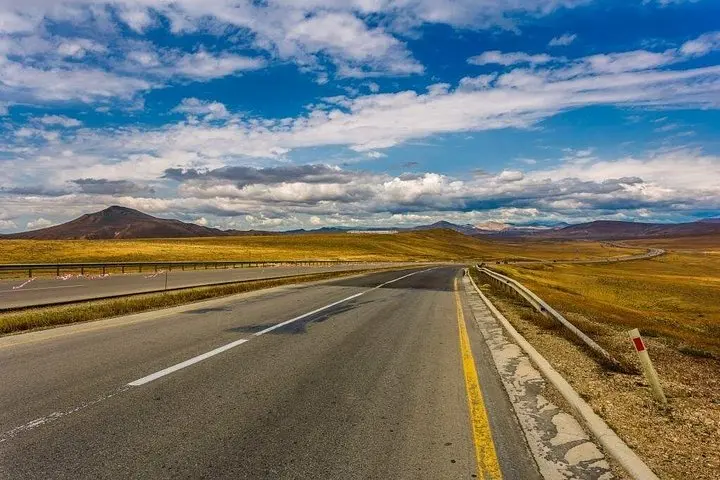
The van eases out of Baku before sunrise, the city’s glass towers shrinking behind you as the salt-bright Caspian hovers on the horizon. On this six- to seven-hour private loop, the landscape shifts fast—from scrubbed steppe to ragged limestone outcrops—until the first cluster of petroglyphs appears, etched deep into weathered rock by hands that arrived here millennia ago.
Verified experiences and guided adventures in the surrounding area.
Operated by Azerbaijanguide.az · Baku, Baku
The van eases out of Baku before sunrise, the city’s glass towers shrinking behind you as the salt-bright Caspian hovers on the horizon. On this six- to seven-hour private loop, the landscape shifts fast—from scrubbed steppe to ragged limestone outcrops—until the first cluster of petroglyphs appears, etched deep into weathered rock by hands that arrived here millennia ago.
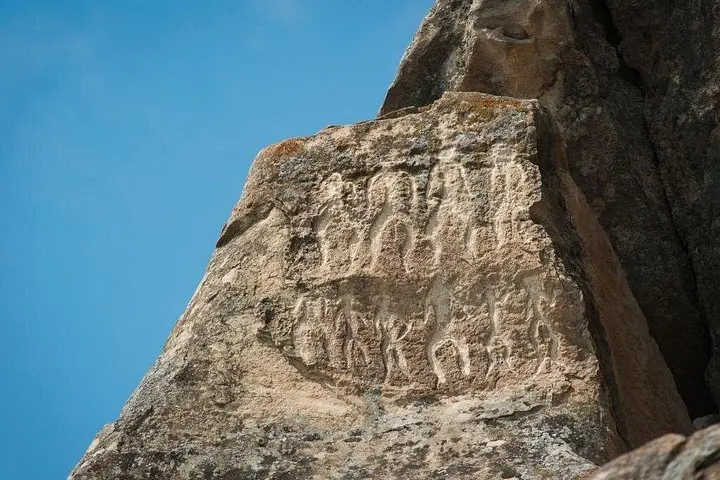
Gobustan National Park is where the tour opens its story. The open-air museum and adjacent national museum catalogue more than 6,000 rock carvings spanning 5,000–40,000 years: hunting scenes, boats, solar motifs and footprints. The plates of sandstone read like a chronological map of human movement after the last Ice Age, a place where rising sea levels and shifting trade routes remade everything.
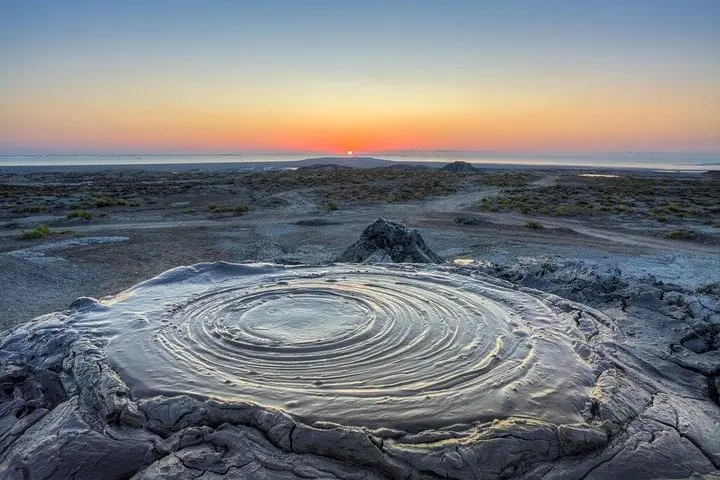
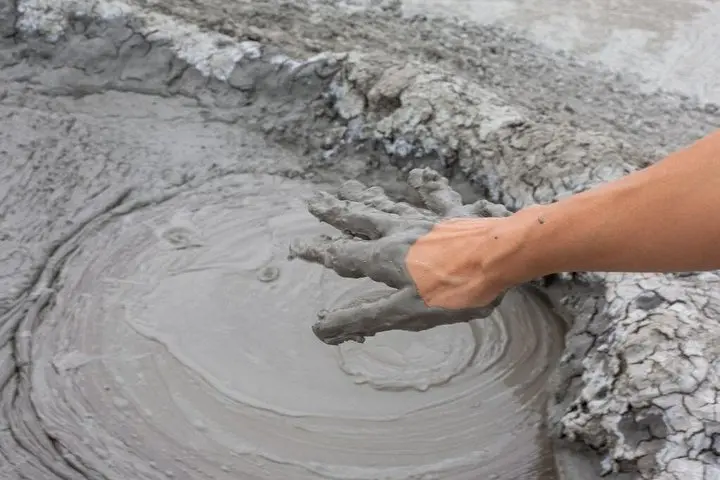
A short, bouncy drive away, the mud volcanoes demand a different kind of attention. These are not the molten spectacles of Hollywood—Azerbaijan’s mud cones belch cold, mineral-rich slurry and gas, bulging like living sculptures. The final stretch is famously rough: guides sometimes swap to Soviet-era Ladas for a rutted, safari-style approach that feels part field trip, part geological reconnaissance.
From the raw geology you move to something rendered by faith and flame. Ateshgah, the Fire Temple at Surakhani, records centuries of fire worship: Hindu and Zoroastrian pilgrims converged here to venerate natural gas seeps that once burned through the sandstone. The day closes at Yanar Dag, where natural gas still jets and burns along a low hillside—flames flicker up to three metres, an elemental reminder why Azerbaijan has long been called the Land of Fire.
Practical guide: the full loop runs about 6–7 hours with roughly 60 km between Baku and Gobustan. Expect uneven rock surfaces, loose gravel and short stair sections at sites; bring sturdy footwear and layered clothing to adapt from wind-exposed ridges to warm cab interiors. The tour provides private transport and a guide; admissions are generally not included, so carry local currency for entrance fees and refreshments.
Timing matters: an early start keeps heat manageable and gives the best light on the petroglyphs; late afternoon highlights Yanar Dag’s flames. Respect the archaeology—stay on marked paths, don’t touch engravings, and follow the guide’s direction around fragile features. For travelers seeking a compact, geology-and-culture–heavy day outside Baku, this private tour delivers an experiential sweep across Azerbaijan’s volcanic and ritual past with practical logistics handled so you can focus on the landscape.
Admission to the national museum and reserve sites is usually not included—bring local currency to pay at the gate.
Yes—private pickup from Baku hotels and the airport is offered; confirm your pickup point when booking.
Transport options are wheelchair accessible, but many outdoor areas have uneven ground and steps; full access may be limited.
Photography is permitted, but avoid using tripods on fragile surfaces and never touch or lean on rock art.
Yes—the road to some mud volcanoes is rough and may require a rugged vehicle or short transfers to smaller cars.
Meals are not typically included; bring snacks or plan to stop in Baku before or after the tour.
Azerbaijanguide.az operates guided outdoor trips and adventures with an emphasis on safety, stewardship, and memorable experiences.
The van eases out of Baku before sunrise, the city’s glass towers shrinking behind you as the salt-bright Caspian hovers on the horizon. On this six- to seven-hour private loop, the landscape shifts fast—from scrubbed steppe to ragged limestone outcrops—until the first cluster of petroglyphs appears, etched deep into weathered rock by hands that arrived here millennia ago.
The van eases out of Baku before sunrise, the city’s glass towers shrinking behind you as the salt-bright Caspian hovers on the horizon. On this six- to seven-hour private loop, the landscape shifts fast—from scrubbed steppe to ragged limestone outcrops—until the first cluster of petroglyphs appears, etched deep into weathered rock by hands that arrived here millennia ago.
Gobustan National Park is where the tour opens its story. The open-air museum and adjacent national museum catalogue more than 6,000 rock carvings spanning 5,000–40,000 years: hunting scenes, boats, solar motifs and footprints. The plates of sandstone read like a chronological map of human movement after the last Ice Age, a place where rising sea levels and shifting trade routes remade everything.
A short, bouncy drive away, the mud volcanoes demand a different kind of attention. These are not the molten spectacles of Hollywood—Azerbaijan’s mud cones belch cold, mineral-rich slurry and gas, bulging like living sculptures. The final stretch is famously rough: guides sometimes swap to Soviet-era Ladas for a rutted, safari-style approach that feels part field trip, part geological reconnaissance.
From the raw geology you move to something rendered by faith and flame. Ateshgah, the Fire Temple at Surakhani, records centuries of fire worship: Hindu and Zoroastrian pilgrims converged here to venerate natural gas seeps that once burned through the sandstone. The day closes at Yanar Dag, where natural gas still jets and burns along a low hillside—flames flicker up to three metres, an elemental reminder why Azerbaijan has long been called the Land of Fire.
Practical guide: the full loop runs about 6–7 hours with roughly 60 km between Baku and Gobustan. Expect uneven rock surfaces, loose gravel and short stair sections at sites; bring sturdy footwear and layered clothing to adapt from wind-exposed ridges to warm cab interiors. The tour provides private transport and a guide; admissions are generally not included, so carry local currency for entrance fees and refreshments.
Timing matters: an early start keeps heat manageable and gives the best light on the petroglyphs; late afternoon highlights Yanar Dag’s flames. Respect the archaeology—stay on marked paths, don’t touch engravings, and follow the guide’s direction around fragile features. For travelers seeking a compact, geology-and-culture–heavy day outside Baku, this private tour delivers an experiential sweep across Azerbaijan’s volcanic and ritual past with practical logistics handled so you can focus on the landscape.