THE ADVENTURE COLLECTIVE® · Independent discovery and booking for outdoor travel

Stand where millennia of people left their marks: this half-day from Baku pairs UNESCO-listed petroglyphs with Azerbaijan’s famous bubbling mud volcanoes and a stop at the rebuilt Bibi Heybat Mosque. Expect rugged terrain, dramatic geology and concise cultural context.
Stand where millennia of people left their marks: this half-day from Baku pairs UNESCO-listed petroglyphs with Azerbaijan’s famous bubbling mud volcanoes and a stop at the rebuilt Bibi Heybat Mosque. Expect rugged terrain, dramatic geology and concise cultural context.
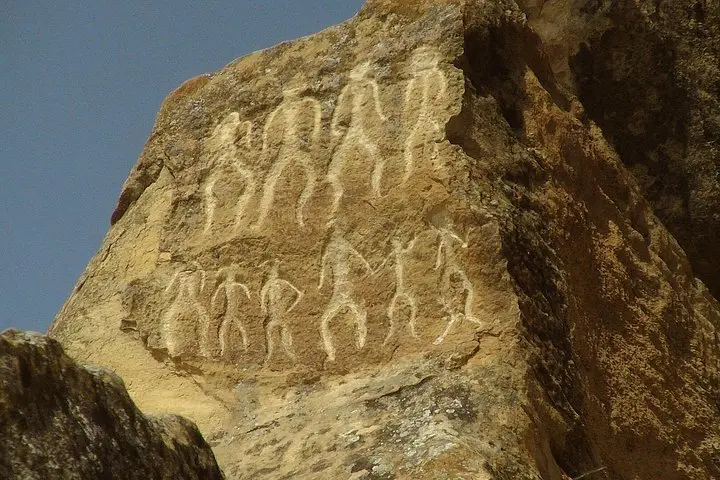
A low sun cuts across a wind-scoured plain as the minibus eases into a gravel lot; the Caspian hovers like a pale promise on the horizon. You step out and the first thing you notice is the silence—only the wind and distant gulls—then the slate-gray rock ahead, its faces scored with images older than recorded history. Guides kneel beside cavities where figures of people, boats and wild animals were chipped into stone tens of centuries ago, and you realize you’re standing in an archive of human movement: hunters, herders and the boats that once threaded the shoreline when the sea level and climate were very different.
Verified experiences and guided adventures in the surrounding area.
Operated by Outdoor Caucasus · Gobustan, Gobustan District
A low sun cuts across a wind-scoured plain as the minibus eases into a gravel lot; the Caspian hovers like a pale promise on the horizon. You step out and the first thing you notice is the silence—only the wind and distant gulls—then the slate-gray rock ahead, its faces scored with images older than recorded history. Guides kneel beside cavities where figures of people, boats and wild animals were chipped into stone tens of centuries ago, and you realize you’re standing in an archive of human movement: hunters, herders and the boats that once threaded the shoreline when the sea level and climate were very different.
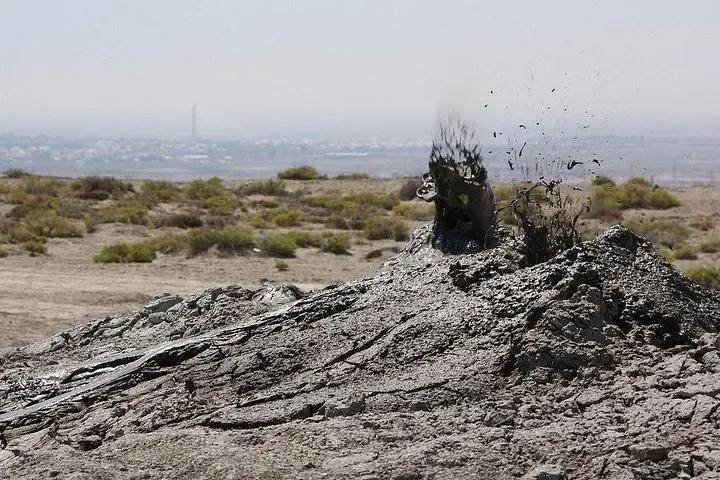
Gobustan’s petroglyphs are part of a landscape that reads like a geological and cultural fieldbook. The carved panels—created over millennia from late Paleolithic to Bronze Age times—show seasonal hunting scenes, animals and boats. The site was recognized by UNESCO in 2007 for its role in tracing human occupation of the South Caucasus. Nearby the earth steams and gurgles: Azerbaijan hosts hundreds of mud volcanoes, and the bubbling cones here are fed by subterranean gas and clay rather than magma. The odd, otherworldly plumes and cracked cones are a reminder that the ground beneath the Caspian is still active.
On the return route the tour pauses at Bibi Heybat Mosque, a 20th-century reconstruction of a 13th-century spiritual complex whose tranquil courtyard gives context to the region’s medieval Islamic architecture. The mosque marks an abrupt cultural pivot from prehistoric panels to the living traditions of the modern city.
Practicalities are straightforward. The tour runs about five hours with roughly 120 km of driving roundtrip from central Baku; expect around two hours total driving time each way depending on traffic. The walking at the petroglyph site is brief but over uneven stone and dusty trails—sturdy footwear matters. Guides cover entrance fees and bottled water is supplied, but there are few services at the sites: bring snacks if you need them.
Timing matters: mornings and late afternoons offer the best light for photos and cooler temperatures, while midsummer heat and wind can be intense. Mud volcanoes are generally safe from a distance—observe posted boundaries and follow your guide; the ground around active vents can be unstable. Respect the petroglyphs: do not touch or lean on engraved panels to avoid oils and erosion.
This day trip compresses three distinct experiences—prehistoric rock art, active geology and medieval reverence—into a tidy circuit from Baku. It’s ideal for travelers who want a compact, interpretive glimpse into Azerbaijan’s deep-time story without a multi-day commitment, provided you come prepared for sun, dust and a bit of bumpy driving.
The roundtrip is about 120 km with roughly two hours of driving total each way depending on traffic; the full tour lasts about five hours.
Mud volcanoes are generally safe if you stay behind marked boundaries—vents can be unstable and occasionally hot, so follow your guide’s directions.
National park fees are typically included in organized tours; confirm at booking but expect admission to be covered for this excursion.
No—oils and abrasion from touch accelerate deterioration; observe signage and keep a respectful distance.
Facilities are limited at the park; bring snacks and use restrooms before departure or in Baku en route.
Infants and small children can usually be accommodated, but the terrain around petroglyphs is rocky; strollers may be of limited use on trails.
Outdoor Caucasus operates guided outdoor trips and adventures with an emphasis on safety, stewardship, and memorable experiences.
A low sun cuts across a wind-scoured plain as the minibus eases into a gravel lot; the Caspian hovers like a pale promise on the horizon. You step out and the first thing you notice is the silence—only the wind and distant gulls—then the slate-gray rock ahead, its faces scored with images older than recorded history. Guides kneel beside cavities where figures of people, boats and wild animals were chipped into stone tens of centuries ago, and you realize you’re standing in an archive of human movement: hunters, herders and the boats that once threaded the shoreline when the sea level and climate were very different.
A low sun cuts across a wind-scoured plain as the minibus eases into a gravel lot; the Caspian hovers like a pale promise on the horizon. You step out and the first thing you notice is the silence—only the wind and distant gulls—then the slate-gray rock ahead, its faces scored with images older than recorded history. Guides kneel beside cavities where figures of people, boats and wild animals were chipped into stone tens of centuries ago, and you realize you’re standing in an archive of human movement: hunters, herders and the boats that once threaded the shoreline when the sea level and climate were very different.
Gobustan’s petroglyphs are part of a landscape that reads like a geological and cultural fieldbook. The carved panels—created over millennia from late Paleolithic to Bronze Age times—show seasonal hunting scenes, animals and boats. The site was recognized by UNESCO in 2007 for its role in tracing human occupation of the South Caucasus. Nearby the earth steams and gurgles: Azerbaijan hosts hundreds of mud volcanoes, and the bubbling cones here are fed by subterranean gas and clay rather than magma. The odd, otherworldly plumes and cracked cones are a reminder that the ground beneath the Caspian is still active.
On the return route the tour pauses at Bibi Heybat Mosque, a 20th-century reconstruction of a 13th-century spiritual complex whose tranquil courtyard gives context to the region’s medieval Islamic architecture. The mosque marks an abrupt cultural pivot from prehistoric panels to the living traditions of the modern city.
Practicalities are straightforward. The tour runs about five hours with roughly 120 km of driving roundtrip from central Baku; expect around two hours total driving time each way depending on traffic. The walking at the petroglyph site is brief but over uneven stone and dusty trails—sturdy footwear matters. Guides cover entrance fees and bottled water is supplied, but there are few services at the sites: bring snacks if you need them.
Timing matters: mornings and late afternoons offer the best light for photos and cooler temperatures, while midsummer heat and wind can be intense. Mud volcanoes are generally safe from a distance—observe posted boundaries and follow your guide; the ground around active vents can be unstable. Respect the petroglyphs: do not touch or lean on engraved panels to avoid oils and erosion.
This day trip compresses three distinct experiences—prehistoric rock art, active geology and medieval reverence—into a tidy circuit from Baku. It’s ideal for travelers who want a compact, interpretive glimpse into Azerbaijan’s deep-time story without a multi-day commitment, provided you come prepared for sun, dust and a bit of bumpy driving.