THE ADVENTURE COLLECTIVE® · Independent discovery and booking for outdoor travel

In three hours from Baku, a guided drive brings you to Gobustan’s prehistoric petroglyphs and nearby mud volcanoes—raw landscapes where ancient engravings meet bubbling earth. This half‑day safari mixes short walks, a rustic vehicle transfer, and hands‑on geology with clear, practical pointers for first‑time visitors.
In three hours from Baku, a guided drive brings you to Gobustan’s prehistoric petroglyphs and nearby mud volcanoes—raw landscapes where ancient engravings meet bubbling earth. This half‑day safari mixes short walks, a rustic vehicle transfer, and hands‑on geology with clear, practical pointers for first‑time visitors.
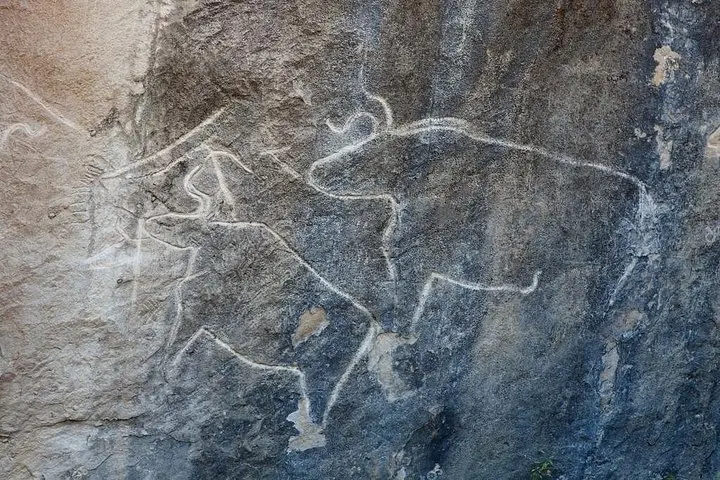
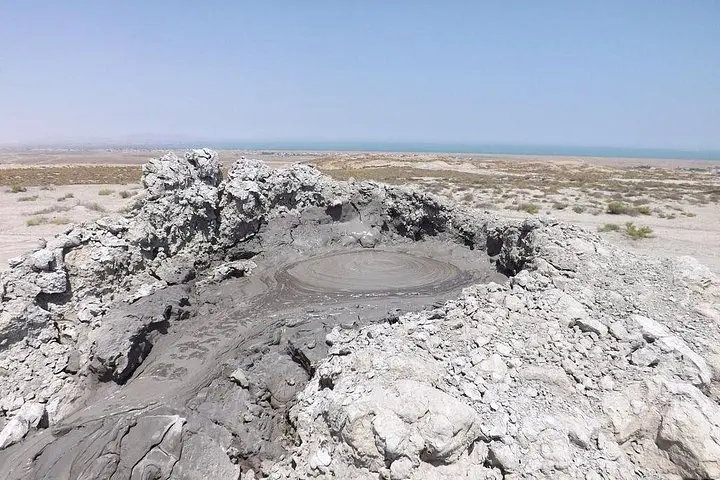
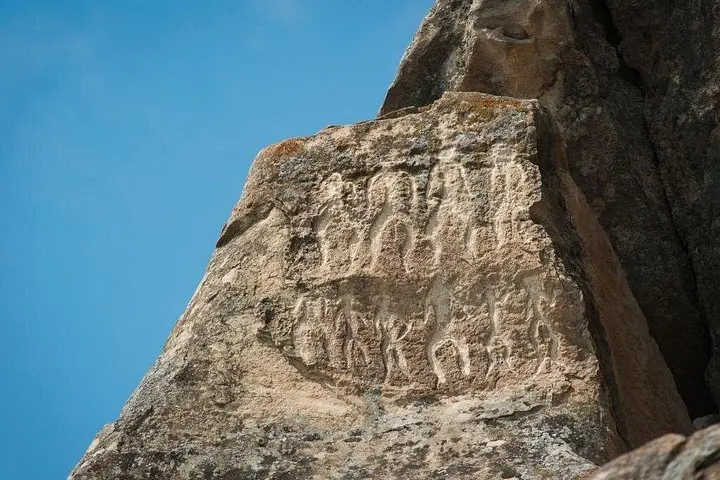
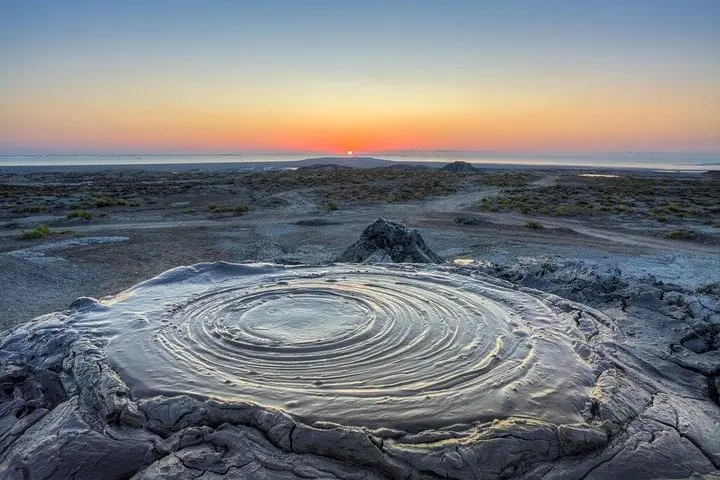
You step out of the van into a wind that pushes across the Caspian plain with a dry, insistent voice. The ground here is a cracked palette of ochre and gray; overhead the sky feels wide enough to hold the ages. To the north, a line of low, blackened mounds sends up lazy plumes of gas and viscous mud—small, sulking mouths of the earth. To the south, flat slabs of weathered rock host shallow grooves: animals, boats, hands, faces—petroglyphs carved by people who lived and moved through this landscape between 5,000 and 40,000 years ago.
Verified experiences and guided adventures in the surrounding area.
Operated by Azerbaijanguide.az · Qobustan, Qobustan District
You step out of the van into a wind that pushes across the Caspian plain with a dry, insistent voice. The ground here is a cracked palette of ochre and gray; overhead the sky feels wide enough to hold the ages. To the north, a line of low, blackened mounds sends up lazy plumes of gas and viscous mud—small, sulking mouths of the earth. To the south, flat slabs of weathered rock host shallow grooves: animals, boats, hands, faces—petroglyphs carved by people who lived and moved through this landscape between 5,000 and 40,000 years ago.
Gobustan, roughly 60 km southwest of Baku, is a place where human history and geology sit cheek-by-jowl. The reserve’s 6,000-plus engravings record a long human use of these marshy coastal plains during a wetter, post‑glacial epoch. In 2007 UNESCO added Gobustan Rock Art Cultural Landscape to its list, recognizing both the archaeological significance and the ways these images chart changes in climate, fauna, and human technology.
The mud volcanoes that punctuate the surrounding plain are a different kind of archive: geological pages that still turn. Azerbaijan contains hundreds of these features; the mud spits and bubbles because hydrocarbon gases beneath the surface force up clay and water. The result is equal parts spectacle and scientific curiosity—small eruptions that can surprise with a hiss and a wet, slow bloom.
A typical three‑hour tour pairs a guided walk at the petroglyph site with a rough‑road, off‑road detour to the mud volcanoes. Expect short hikes—most panels are within a few hundred meters of the parking area—and a bumpy vehicle transfer where guides often switch to old Soviet‑era Ladas for the worst of the track. The terrain is flat but uneven; wear sturdy shoes and bring sun protection and water.
Practicalities: the tour runs as a half‑day from Baku with hotel pickup available; allow an hour each for the museum and the main rock panels, and plan a short, adaptive visit to the mud volcanoes depending on road conditions. Photography is rewarding—wide lenses capture the plains and petroglyph fields, while telephotos compress the steam and patterns on the mud domes. Be mindful that rock art is fragile: don’t touch the engravings and follow marked routes.
For travelers wanting both geology and prehistory in a compact outing, Gobustan delivers. It’s an accessible slice of Azerbaijan’s raw edges, where the land still speaks—sometimes by carving on stone, sometimes by burping mud into the air.
About 60 km; travel time is roughly 40–70 minutes each way depending on traffic and pickup locations.
Museum admission is included per the itinerary; confirm any additional local fees with your operator at booking.
Yes if supervised—stay at a safe distance from active vents and follow your guide’s instructions; strollers are supported but terrain is uneven.
No—touching damages the ancient surfaces and is prohibited to protect the panels for future generations.
The operator lists wheelchair‑accessible transportation and options, though access to some petroglyph panels may be limited by terrain.
Wear shoes you don’t mind getting dirty; the mud can splash and the track can be dusty, so lightweight, washable clothing is best.
Azerbaijanguide.az operates guided outdoor trips and adventures with an emphasis on safety, stewardship, and memorable experiences.
You step out of the van into a wind that pushes across the Caspian plain with a dry, insistent voice. The ground here is a cracked palette of ochre and gray; overhead the sky feels wide enough to hold the ages. To the north, a line of low, blackened mounds sends up lazy plumes of gas and viscous mud—small, sulking mouths of the earth. To the south, flat slabs of weathered rock host shallow grooves: animals, boats, hands, faces—petroglyphs carved by people who lived and moved through this landscape between 5,000 and 40,000 years ago.
You step out of the van into a wind that pushes across the Caspian plain with a dry, insistent voice. The ground here is a cracked palette of ochre and gray; overhead the sky feels wide enough to hold the ages. To the north, a line of low, blackened mounds sends up lazy plumes of gas and viscous mud—small, sulking mouths of the earth. To the south, flat slabs of weathered rock host shallow grooves: animals, boats, hands, faces—petroglyphs carved by people who lived and moved through this landscape between 5,000 and 40,000 years ago.
Gobustan, roughly 60 km southwest of Baku, is a place where human history and geology sit cheek-by-jowl. The reserve’s 6,000-plus engravings record a long human use of these marshy coastal plains during a wetter, post‑glacial epoch. In 2007 UNESCO added Gobustan Rock Art Cultural Landscape to its list, recognizing both the archaeological significance and the ways these images chart changes in climate, fauna, and human technology.
The mud volcanoes that punctuate the surrounding plain are a different kind of archive: geological pages that still turn. Azerbaijan contains hundreds of these features; the mud spits and bubbles because hydrocarbon gases beneath the surface force up clay and water. The result is equal parts spectacle and scientific curiosity—small eruptions that can surprise with a hiss and a wet, slow bloom.
A typical three‑hour tour pairs a guided walk at the petroglyph site with a rough‑road, off‑road detour to the mud volcanoes. Expect short hikes—most panels are within a few hundred meters of the parking area—and a bumpy vehicle transfer where guides often switch to old Soviet‑era Ladas for the worst of the track. The terrain is flat but uneven; wear sturdy shoes and bring sun protection and water.
Practicalities: the tour runs as a half‑day from Baku with hotel pickup available; allow an hour each for the museum and the main rock panels, and plan a short, adaptive visit to the mud volcanoes depending on road conditions. Photography is rewarding—wide lenses capture the plains and petroglyph fields, while telephotos compress the steam and patterns on the mud domes. Be mindful that rock art is fragile: don’t touch the engravings and follow marked routes.
For travelers wanting both geology and prehistory in a compact outing, Gobustan delivers. It’s an accessible slice of Azerbaijan’s raw edges, where the land still speaks—sometimes by carving on stone, sometimes by burping mud into the air.