THE ADVENTURE COLLECTIVE® · Independent discovery and booking for outdoor travel

Walk where prehistoric hunters left their marks and peer into mud cones that slowly breathe up ancient earth. This private day tour from Baku pairs Gobustan’s petroglyphs with lunar mud volcanoes and a compact primer on Azerbaijan’s geological and cultural past.
Walk where prehistoric hunters left their marks and peer into mud cones that slowly breathe up ancient earth. This private day tour from Baku pairs Gobustan’s petroglyphs with lunar mud volcanoes and a compact primer on Azerbaijan’s geological and cultural past.
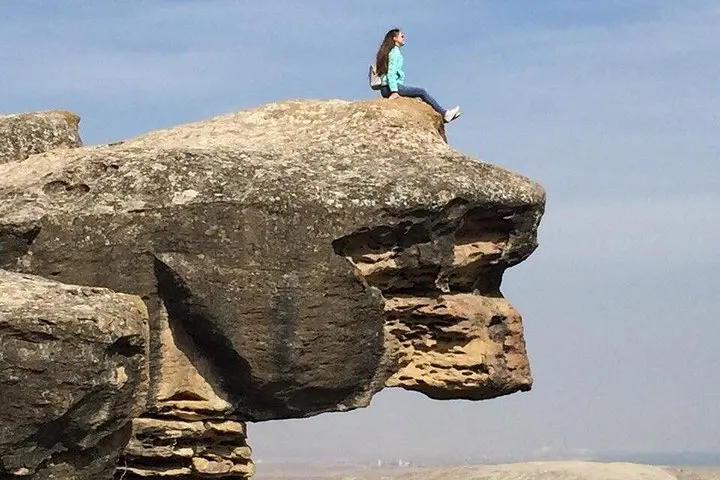
A morning outside Baku opens with the road unspooling across steppe that the wind seems to push forward like a whispering current. The car drops you at a low, stony ridge where the first petroglyphs sit open to the sky — carved human figures frozen mid-hunt, boats that still seem to be heading out to an imagined sea. Up close the rock is a rough, honeyed canvas; run a hand along it and you can feel millennia of weather. The guide speaks softly, pointing to antlered animals and concentric circles, while beyond the ridge the plain rolls toward a scatter of mud cones that breathe faint steam into the cold air.
Verified experiences and guided adventures in the surrounding area.
Operated by Guided Azerbaijan · Gobustan, Gobustan District
A morning outside Baku opens with the road unspooling across steppe that the wind seems to push forward like a whispering current. The car drops you at a low, stony ridge where the first petroglyphs sit open to the sky — carved human figures frozen mid-hunt, boats that still seem to be heading out to an imagined sea. Up close the rock is a rough, honeyed canvas; run a hand along it and you can feel millennia of weather. The guide speaks softly, pointing to antlered animals and concentric circles, while beyond the ridge the plain rolls toward a scatter of mud cones that breathe faint steam into the cold air.
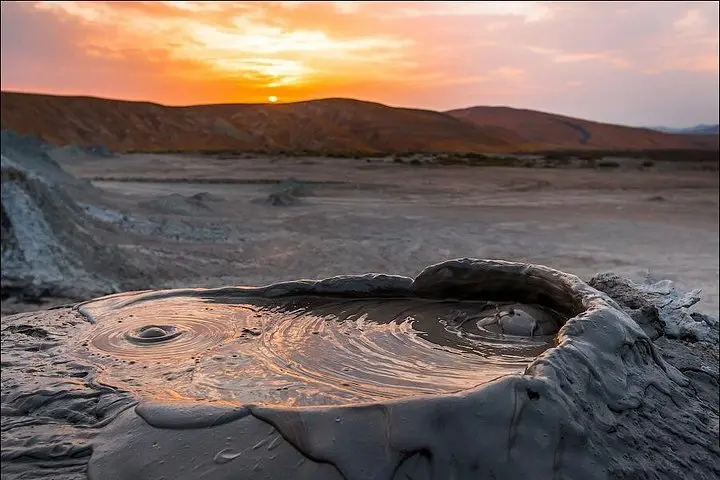
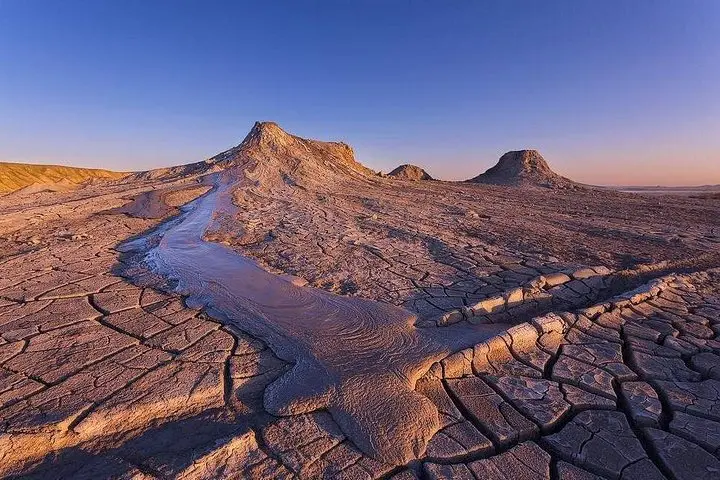
Gobustan National Park is where Azerbaijan’s Stone Age past reads like a field notebook. Archaeologists recorded thousands of engravings here in the 20th century — Mesolithic hunters, ritual scenes and schematic boats — evidence of a coastline and communities that shifted as the Caspian rose and fell. The same geology that preserved those images produced the region’s mud volcanoes: gas-driven upwellings that force rich, cool mud to the surface and build small, lunar hills. Those cones are not fiery: they simmer, slump and occasionally belch clay, offering a tactile geology lesson about subterranean pressure and organic decay.
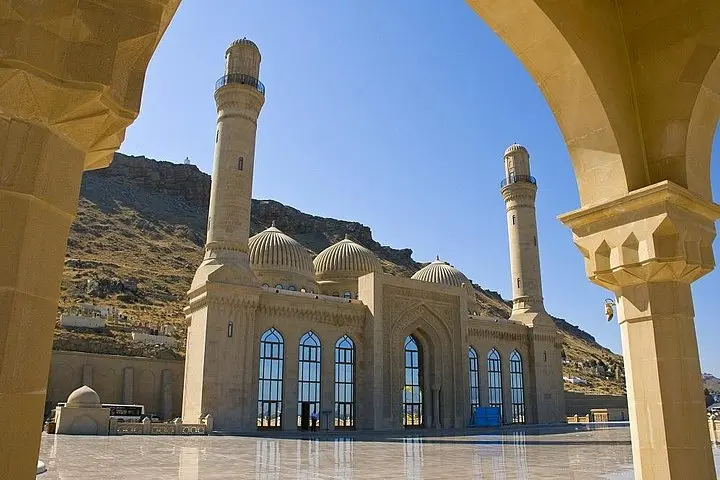
Culturally, the route ties industrial heritage and faith into a single day: a stop at Bibiheybat Mosque shows modern religious architecture built on older foundations, and the tour points out the site of early oil extraction — reminders that this landscape has been a resource and a crossroads for centuries.
Practically, the private tour from Baku runs about 4–5 hours, suitable for most fitness levels and guided in English (confirm at booking). Start times avoid midday heat in summer; the reserve’s boardwalks and uneven rock surfaces require good walking shoes and sun protection. Photography is rewarding at first and last light when shadows bring petroglyphs into relief, while the mud volcanoes make for dramatic close-ups — but dress for stains if you plan to touch the mud. Guides commonly swap the modern minivan for a Soviet Lada to reach the volcanoes, a quaint detail that also means short, bumpy rides.
Insider notes: buy a ticket for the small museum first to get context before viewing the panels, and ask your guide about the symbolic motifs — local interpretation can illuminate what looks abstract to a visitor. For conservation, stay on marked paths: the petroglyphs are fragile and oils from skin accelerate erosion. Bring water, a sun hat and a light layer for coastal winds — the landscape is direct, instructive and surprisingly intimate, a day trip that turns geology and human history into a single readable landscape.
The private tour runs about 4–5 hours (240–300 minutes) including museum time, rock panels and a short visit to the mud volcanoes.
Yes — the itinerary includes admission to Gobustan Museum and the park’s main petroglyph sites as stated in the tour details.
Guides often permit taking a small amount of mud; bring a durable plastic bag and ask your guide for local customs and safety advice.
Yes — the tour is rated suitable for all fitness levels, but children should be supervised around uneven rock surfaces and the mud volcano area.
The tour uses a mix of air-conditioned vehicle and short transfers in a Soviet-era Lada to reach the remote mud cones over rough track.
Guides are typically licensed and speak English; confirm language needs when booking if you require another language.
Guided Azerbaijan operates guided outdoor trips and adventures with an emphasis on safety, stewardship, and memorable experiences.
A morning outside Baku opens with the road unspooling across steppe that the wind seems to push forward like a whispering current. The car drops you at a low, stony ridge where the first petroglyphs sit open to the sky — carved human figures frozen mid-hunt, boats that still seem to be heading out to an imagined sea. Up close the rock is a rough, honeyed canvas; run a hand along it and you can feel millennia of weather. The guide speaks softly, pointing to antlered animals and concentric circles, while beyond the ridge the plain rolls toward a scatter of mud cones that breathe faint steam into the cold air.
A morning outside Baku opens with the road unspooling across steppe that the wind seems to push forward like a whispering current. The car drops you at a low, stony ridge where the first petroglyphs sit open to the sky — carved human figures frozen mid-hunt, boats that still seem to be heading out to an imagined sea. Up close the rock is a rough, honeyed canvas; run a hand along it and you can feel millennia of weather. The guide speaks softly, pointing to antlered animals and concentric circles, while beyond the ridge the plain rolls toward a scatter of mud cones that breathe faint steam into the cold air.
Gobustan National Park is where Azerbaijan’s Stone Age past reads like a field notebook. Archaeologists recorded thousands of engravings here in the 20th century — Mesolithic hunters, ritual scenes and schematic boats — evidence of a coastline and communities that shifted as the Caspian rose and fell. The same geology that preserved those images produced the region’s mud volcanoes: gas-driven upwellings that force rich, cool mud to the surface and build small, lunar hills. Those cones are not fiery: they simmer, slump and occasionally belch clay, offering a tactile geology lesson about subterranean pressure and organic decay.
Culturally, the route ties industrial heritage and faith into a single day: a stop at Bibiheybat Mosque shows modern religious architecture built on older foundations, and the tour points out the site of early oil extraction — reminders that this landscape has been a resource and a crossroads for centuries.
Practically, the private tour from Baku runs about 4–5 hours, suitable for most fitness levels and guided in English (confirm at booking). Start times avoid midday heat in summer; the reserve’s boardwalks and uneven rock surfaces require good walking shoes and sun protection. Photography is rewarding at first and last light when shadows bring petroglyphs into relief, while the mud volcanoes make for dramatic close-ups — but dress for stains if you plan to touch the mud. Guides commonly swap the modern minivan for a Soviet Lada to reach the volcanoes, a quaint detail that also means short, bumpy rides.
Insider notes: buy a ticket for the small museum first to get context before viewing the panels, and ask your guide about the symbolic motifs — local interpretation can illuminate what looks abstract to a visitor. For conservation, stay on marked paths: the petroglyphs are fragile and oils from skin accelerate erosion. Bring water, a sun hat and a light layer for coastal winds — the landscape is direct, instructive and surprisingly intimate, a day trip that turns geology and human history into a single readable landscape.