THE ADVENTURE COLLECTIVE® · Independent discovery and booking for outdoor travel

Take the less-traveled line from Gokyo over Cho La to Everest Base Camp: high lakes, a major pass and summit views from Kala Patthar. This route blends glacier scenery, Sherpa culture and serious altitude—plan for acclimatization, basic lodging and rugged terrain.
Take the less-traveled line from Gokyo over Cho La to Everest Base Camp: high lakes, a major pass and summit views from Kala Patthar. This route blends glacier scenery, Sherpa culture and serious altitude—plan for acclimatization, basic lodging and rugged terrain.
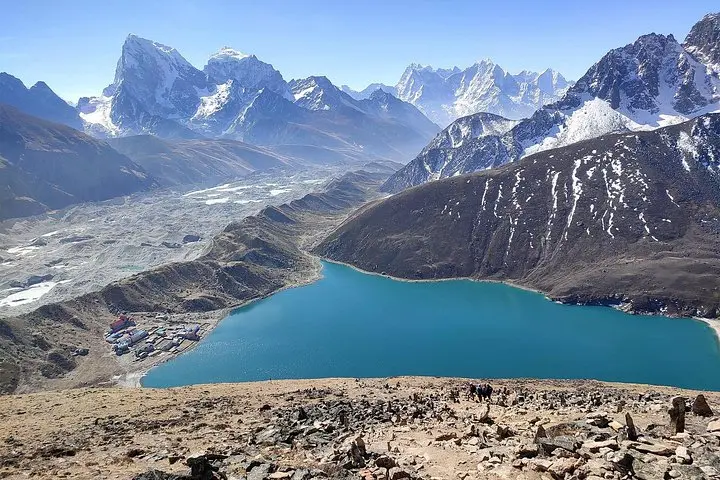
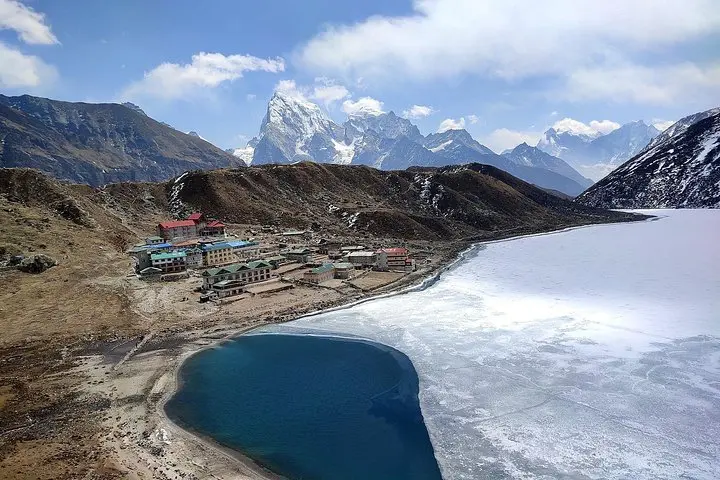
Morning light slices across the mirror-smooth Gokyo Lakes and for a moment the world pauses: ice-cliff rims, prayer flags fluttering like breath, and a route that threads glacier moraine toward Everest itself. The trek begins with a heartbeat—Lukla’s short runway, the river daring you across suspension bridges, and climbs that make each inhalation count.
Verified experiences and guided adventures in the surrounding area.
Operated by Ace the Himalaya · Lukla, Province No. 1
Morning light slices across the mirror-smooth Gokyo Lakes and for a moment the world pauses: ice-cliff rims, prayer flags fluttering like breath, and a route that threads glacier moraine toward Everest itself. The trek begins with a heartbeat—Lukla’s short runway, the river daring you across suspension bridges, and climbs that make each inhalation count.
The route crosses land shaped by the collision of India and Eurasia: steep ridges, moraine fields of the Ngozumpa Glacier and the raw uplift that created the Khumbu Himal. Sherpa villages and high-altitude gompas map human history here—trade, Tibetan Buddhist practice and the modern era of Himalayan mountaineering pioneered by Tenzing Norgay and his community.
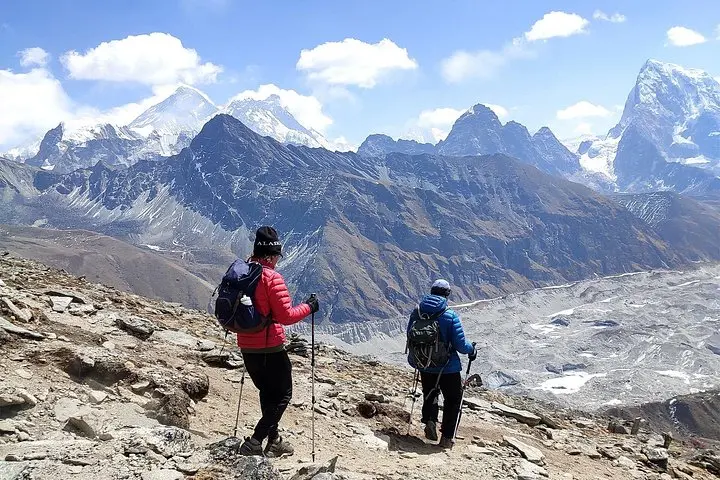
Expect a variety of terrain: packed dirt trails, stone steps, glacier forefields and a high pass—Cho La—where wind and snow rearrange the day. Gokyo Ri rewards persistent lungs with panoramas of Everest, Cho Oyu and Makalu; Kala Patthar gives arguably the clearest Everest face view without technical climbing.
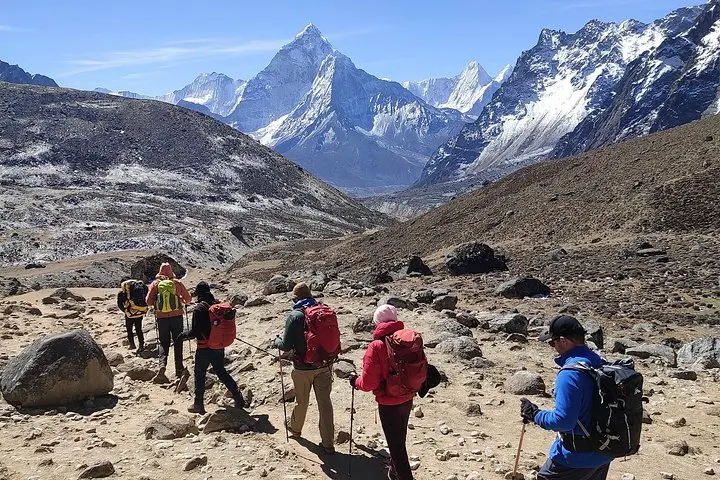
Practically: this is a long, high-altitude trek (peaks above 5,400 m). Allow strict acclimatization days, travel light and use a porter system. Footwear with stiff soles, layered insulation and sun protection are non-negotiable. Water is available but carry treatment or use provided filtration; expect basic guesthouse accommodation and limited communications above Namche.
Plan for flight delays into/out of Lukla, buy TIMS and Sagarmatha Park permits, and travel with an experienced guide. Respect local customs, pack out waste, and move deliberately—altitude, not scenery, will set your pace.
Yes—Sagarmatha National Park entry and TIMS permits are required; your operator usually arranges them before departure.
Cho La (≈5,300 m) is a sustained, steep crossing that can be icy; expect a 7–8 hour day and wind exposure—experienced guides and traction are recommended.
Minor symptoms are treated by descent and rest; serious AMS requires immediate descent and medical evacuation—carry insurance covering helicopter rescue.
Autumn (Sept–Nov) and spring (Mar–May) offer the most stable weather, clearer views and active lodges along the route.
Ace the Himalaya operates guided outdoor trips and adventures with an emphasis on safety, stewardship, and memorable experiences.
Morning light slices across the mirror-smooth Gokyo Lakes and for a moment the world pauses: ice-cliff rims, prayer flags fluttering like breath, and a route that threads glacier moraine toward Everest itself. The trek begins with a heartbeat—Lukla’s short runway, the river daring you across suspension bridges, and climbs that make each inhalation count.
Morning light slices across the mirror-smooth Gokyo Lakes and for a moment the world pauses: ice-cliff rims, prayer flags fluttering like breath, and a route that threads glacier moraine toward Everest itself. The trek begins with a heartbeat—Lukla’s short runway, the river daring you across suspension bridges, and climbs that make each inhalation count.
The route crosses land shaped by the collision of India and Eurasia: steep ridges, moraine fields of the Ngozumpa Glacier and the raw uplift that created the Khumbu Himal. Sherpa villages and high-altitude gompas map human history here—trade, Tibetan Buddhist practice and the modern era of Himalayan mountaineering pioneered by Tenzing Norgay and his community.
Expect a variety of terrain: packed dirt trails, stone steps, glacier forefields and a high pass—Cho La—where wind and snow rearrange the day. Gokyo Ri rewards persistent lungs with panoramas of Everest, Cho Oyu and Makalu; Kala Patthar gives arguably the clearest Everest face view without technical climbing.
Practically: this is a long, high-altitude trek (peaks above 5,400 m). Allow strict acclimatization days, travel light and use a porter system. Footwear with stiff soles, layered insulation and sun protection are non-negotiable. Water is available but carry treatment or use provided filtration; expect basic guesthouse accommodation and limited communications above Namche.
Plan for flight delays into/out of Lukla, buy TIMS and Sagarmatha Park permits, and travel with an experienced guide. Respect local customs, pack out waste, and move deliberately—altitude, not scenery, will set your pace.