THE ADVENTURE COLLECTIVE® · Independent discovery and booking for outdoor travel

Perched above the clouds in Ba Na Hills, the Golden Bridge unfurls a 150‑meter golden walkway held aloft by sculpted stone hands. This guided day trip from Hoi An or Da Nang pairs engineered viewpoints with montane gardens—plan early, dress for changeable weather, and expect crowds.
Perched above the clouds in Ba Na Hills, the Golden Bridge unfurls a 150‑meter golden walkway held aloft by sculpted stone hands. This guided day trip from Hoi An or Da Nang pairs engineered viewpoints with montane gardens—plan early, dress for changeable weather, and expect crowds.
Morning mist lifts off the Han River as the van winds up through tropical foothills — by the time you step onto the Golden Bridge the clouds feel close enough to touch. The bridge’s two stone “hands” hold a 150‑meter ribbon of golden walkway that curves out from the Paradise Garden, framing views across cloud-smudged valleys and the French Village beyond.
Verified experiences and guided adventures in the surrounding area.
Operated by Hoi an local tour · Da Nang, Da Nang
Morning mist lifts off the Han River as the van winds up through tropical foothills — by the time you step onto the Golden Bridge the clouds feel close enough to touch. The bridge’s two stone “hands” hold a 150‑meter ribbon of golden walkway that curves out from the Paradise Garden, framing views across cloud-smudged valleys and the French Village beyond.
Ba Na Hills began life as a 20th‑century French hill station; French colonial architecture, cobbled streets and manicured gardens sit atop an eroded volcanic ridge that drops toward the coast. Geologically the site is ancient basalt and lateritic soils carved by monsoon seasons; biologically it’s a transition from lowland tropical forest to montane scrub, where orchids and lobelia bloom in season and occasional macaques appear near trails.
Culturally the complex is a modern tourist creation—cable cars, themed gardens and restored villas—yet it borrows heavily from local craft and colonial motifs. Expect crowds at peak hours and an engineered experience: paved promenades, viewpoint platforms and wayfinding in multiple languages.
Practical guidance: plan for an 8‑hour round trip from Hoi An or Da Nang, arrive early to beat the midday tour buses, and use the cable car system to maximize time at viewpoints. Wear comfortable walking shoes—surfaces are paved but include staircases—and bring rain protection during the wet season. Hydrate and move slowly at higher elevation; photo opportunities are frequent but lines can be long, so allocate time rather than rushing.
The Golden Bridge is part architecture, part landscape stage—visit for the views, but come prepared for an organized, high‑traffic mountain attraction.
Most itineraries allocate 1–2 hours at the bridge within an overall 6–8 hour day trip, including transfer time from Hoi An or Da Nang.
Many group tours include transportation and guide services but not always admission or cable car fares—check your booking details before you go.
The bridge itself is paved, but access often involves cable car rides and steps; accessibility varies—contact the operator to confirm options for mobility assistance.
Early morning on weekdays is least crowded; midmorning to afternoon sees the most tour groups, especially in high season (spring and summer).
Hoi an local tour operates guided outdoor trips and adventures with an emphasis on safety, stewardship, and memorable experiences.
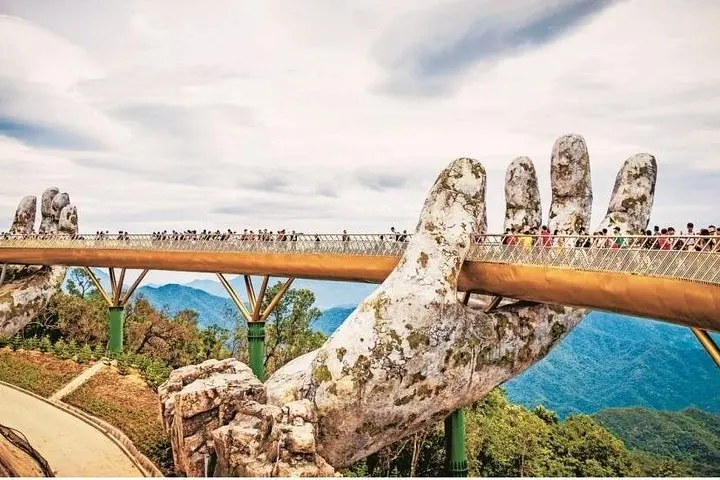
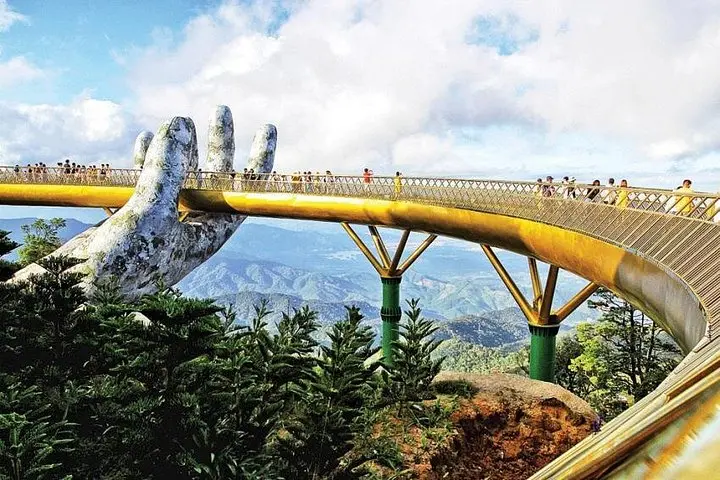

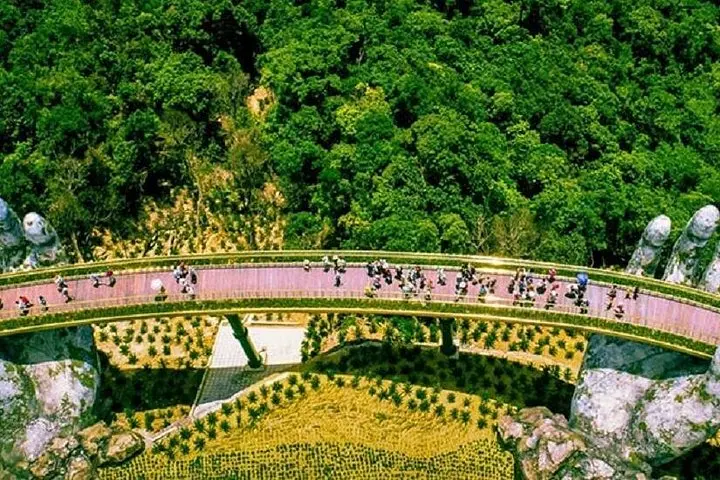
Morning mist lifts off the Han River as the van winds up through tropical foothills — by the time you step onto the Golden Bridge the clouds feel close enough to touch. The bridge’s two stone “hands” hold a 150‑meter ribbon of golden walkway that curves out from the Paradise Garden, framing views across cloud-smudged valleys and the French Village beyond.
Morning mist lifts off the Han River as the van winds up through tropical foothills — by the time you step onto the Golden Bridge the clouds feel close enough to touch. The bridge’s two stone “hands” hold a 150‑meter ribbon of golden walkway that curves out from the Paradise Garden, framing views across cloud-smudged valleys and the French Village beyond.
Ba Na Hills began life as a 20th‑century French hill station; French colonial architecture, cobbled streets and manicured gardens sit atop an eroded volcanic ridge that drops toward the coast. Geologically the site is ancient basalt and lateritic soils carved by monsoon seasons; biologically it’s a transition from lowland tropical forest to montane scrub, where orchids and lobelia bloom in season and occasional macaques appear near trails.
Culturally the complex is a modern tourist creation—cable cars, themed gardens and restored villas—yet it borrows heavily from local craft and colonial motifs. Expect crowds at peak hours and an engineered experience: paved promenades, viewpoint platforms and wayfinding in multiple languages.
Practical guidance: plan for an 8‑hour round trip from Hoi An or Da Nang, arrive early to beat the midday tour buses, and use the cable car system to maximize time at viewpoints. Wear comfortable walking shoes—surfaces are paved but include staircases—and bring rain protection during the wet season. Hydrate and move slowly at higher elevation; photo opportunities are frequent but lines can be long, so allocate time rather than rushing.
The Golden Bridge is part architecture, part landscape stage—visit for the views, but come prepared for an organized, high‑traffic mountain attraction.