THE ADVENTURE COLLECTIVE® · Independent discovery and booking for outdoor travel

Leave Reykjavík for an afternoon of geysers, waterfalls and rift valleys. This Golden Circle tour combines Þingvellir, Strokkur, Gullfoss and (on earlier departures) Kerið crater into a compact 7–8 hour loop—ideal for travelers who want geological spectacle without an all-day commitment.
Leave Reykjavík for an afternoon of geysers, waterfalls and rift valleys. This Golden Circle tour combines Þingvellir, Strokkur, Gullfoss and (on earlier departures) Kerið crater into a compact 7–8 hour loop—ideal for travelers who want geological spectacle without an all-day commitment.
The bus slips out of Reykjavík after a late-morning roll call and the city’s tidy rooftops give way to a wide, volcanic country that feels intent on keeping travelers awake. Wind tugs at your jacket as the first stop opens into the raw mechanics of Iceland: steam, spray and the pavements of cooled lava. On this afternoon loop you meet the Golden Circle’s three signature acts—Þingvellir, Geysir (Strokkur) and Gullfoss—while some departures include a walk along the rim of Kerið, a bowl of red volcanic rock and blue water.
Verified experiences and guided adventures in the surrounding area.
Operated by BusTravel Iceland · Reykjavík, Capital Region
The bus slips out of Reykjavík after a late-morning roll call and the city’s tidy rooftops give way to a wide, volcanic country that feels intent on keeping travelers awake. Wind tugs at your jacket as the first stop opens into the raw mechanics of Iceland: steam, spray and the pavements of cooled lava. On this afternoon loop you meet the Golden Circle’s three signature acts—Þingvellir, Geysir (Strokkur) and Gullfoss—while some departures include a walk along the rim of Kerið, a bowl of red volcanic rock and blue water.
Þingvellir is where geology and history share a stage. The rift valley marks the visible boundary between the North American and Eurasian plates; cracked, moss-draped fissures and clear, cold streams thread through a plain that hosted Iceland’s first parliament in the late 900s. Walk the flat trails and you’ll feel the slow tug of continents beneath your feet as guide commentary rewinds a nation’s lawmaking to one of Europe’s oldest assemblies.
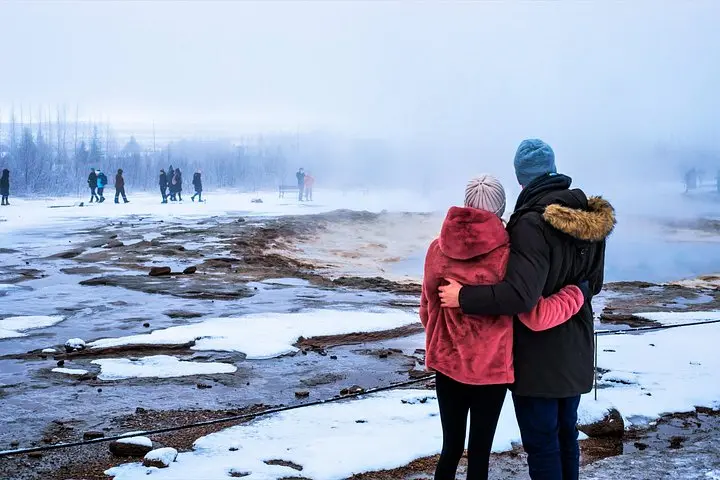
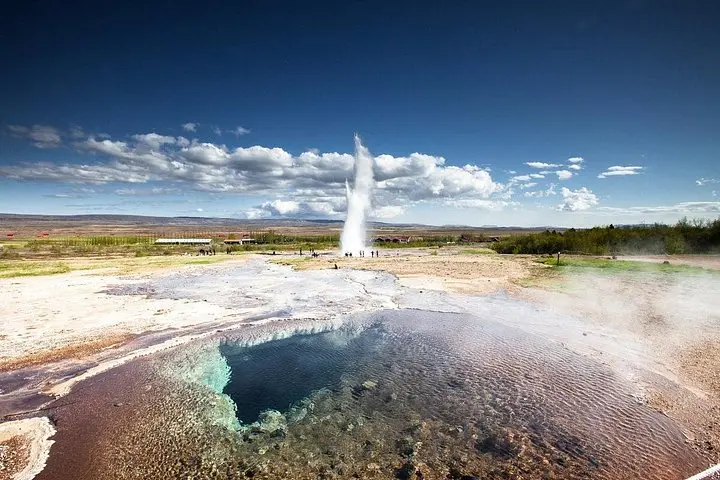
At Geysir geothermal area, Strokkur punctuates the calm every 7–10 minutes, throwing up a column of scalding water—often 15–20 meters high—while neighbor Geysir sits quiet, a reminder that geothermal features are living, changeable things. The air carries a sulfur tang, and wooden walkways keep the fragile ground intact underfoot.
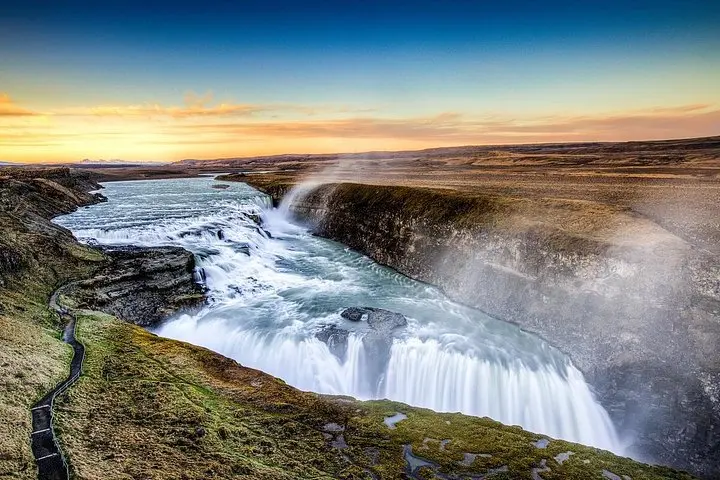
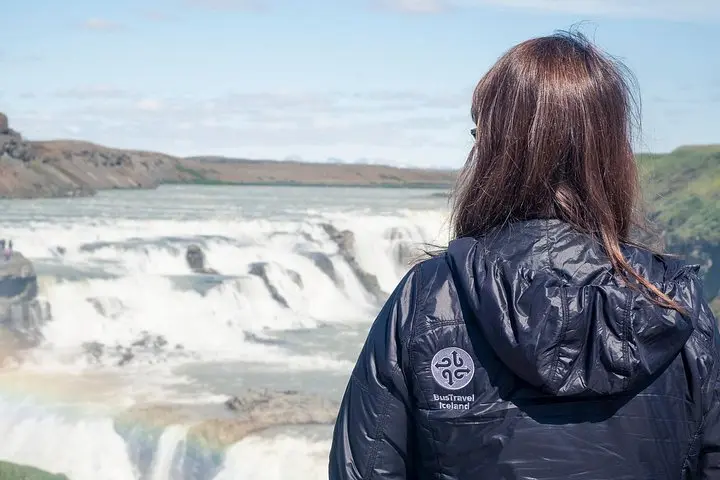
Gullfoss is the theatrical finale: two stages of falls, roughly 11 and 21 meters, channeling more than 100 m3 of water per second into a canyon that grinds out mist and a near-constant rainbow on sunny days. The viewing platforms are exposed; the falls announce themselves before you can see them.
Kerið crater, included on earlier departures, is a shallow caldera about 55 meters deep with vivid red slopes and a bright blue pool—an accessible counterpoint to the larger, wetter drama at Gullfoss.
Practicalities: the full advertised duration is 8 hours (480 minutes); later departures are shorter (about 7 hours) and may skip Kerið. Most tours start and end at Tour Bus Stop 12, Höfðatorg (coords 64.144389, -21.910327). Pickup windows can run up to 30 minutes—plan to be waiting at your pickup point on time. Dress in windproof, waterproof layers and sturdy shoes; even in summer, spray and gusts can be brutal. Bring a portable charger and a rain cover for cameras.
The route is low-technical and suitable for most fitness levels, but expect walking on uneven, sometimes slippery surfaces. Respect fenced areas at geothermal fields and stay on marked paths; these landscapes recover slowly from foot traffic. If you want Kerið, book an earlier departure; if you’re chasing northern lights, note that afternoon tours won’t give you evening flexibility.
This loop is a compact primer on Iceland’s elemental forces—plate tectonics, geothermal heat and relentless water—served with efficient guiding and plenty of photo stops. Plan layers, allow time for wind, and leave room in your camera roll for cloud-driven light shows.
The tour runs about 8 hours for the full Golden Circle; later departures (12:00 and after) are about 7 hours and may skip Kerið crater.
Kerið is included on the earlier 10:30 departures; later afternoon departures do not stop there.
Yes, but cruise passengers must provide ship and docking details at booking and confirm pickup; refunds are not issued if missed due to late ship arrival.
Yes—sites involve short, easy walks and viewing platforms; children must be accompanied by an adult.
Yes—there are basic facilities and food options at the Geysir area and visitor centers near Þingvellir and Gullfoss.
Tours operate in most weather; cancellations for full refunds occur if canceled at least 24 hours prior or if the operator cancels due to weather.
BusTravel Iceland operates guided outdoor trips and adventures with an emphasis on safety, stewardship, and memorable experiences.
The bus slips out of Reykjavík after a late-morning roll call and the city’s tidy rooftops give way to a wide, volcanic country that feels intent on keeping travelers awake. Wind tugs at your jacket as the first stop opens into the raw mechanics of Iceland: steam, spray and the pavements of cooled lava. On this afternoon loop you meet the Golden Circle’s three signature acts—Þingvellir, Geysir (Strokkur) and Gullfoss—while some departures include a walk along the rim of Kerið, a bowl of red volcanic rock and blue water.
The bus slips out of Reykjavík after a late-morning roll call and the city’s tidy rooftops give way to a wide, volcanic country that feels intent on keeping travelers awake. Wind tugs at your jacket as the first stop opens into the raw mechanics of Iceland: steam, spray and the pavements of cooled lava. On this afternoon loop you meet the Golden Circle’s three signature acts—Þingvellir, Geysir (Strokkur) and Gullfoss—while some departures include a walk along the rim of Kerið, a bowl of red volcanic rock and blue water.
Þingvellir is where geology and history share a stage. The rift valley marks the visible boundary between the North American and Eurasian plates; cracked, moss-draped fissures and clear, cold streams thread through a plain that hosted Iceland’s first parliament in the late 900s. Walk the flat trails and you’ll feel the slow tug of continents beneath your feet as guide commentary rewinds a nation’s lawmaking to one of Europe’s oldest assemblies.
At Geysir geothermal area, Strokkur punctuates the calm every 7–10 minutes, throwing up a column of scalding water—often 15–20 meters high—while neighbor Geysir sits quiet, a reminder that geothermal features are living, changeable things. The air carries a sulfur tang, and wooden walkways keep the fragile ground intact underfoot.
Gullfoss is the theatrical finale: two stages of falls, roughly 11 and 21 meters, channeling more than 100 m3 of water per second into a canyon that grinds out mist and a near-constant rainbow on sunny days. The viewing platforms are exposed; the falls announce themselves before you can see them.
Kerið crater, included on earlier departures, is a shallow caldera about 55 meters deep with vivid red slopes and a bright blue pool—an accessible counterpoint to the larger, wetter drama at Gullfoss.
Practicalities: the full advertised duration is 8 hours (480 minutes); later departures are shorter (about 7 hours) and may skip Kerið. Most tours start and end at Tour Bus Stop 12, Höfðatorg (coords 64.144389, -21.910327). Pickup windows can run up to 30 minutes—plan to be waiting at your pickup point on time. Dress in windproof, waterproof layers and sturdy shoes; even in summer, spray and gusts can be brutal. Bring a portable charger and a rain cover for cameras.
The route is low-technical and suitable for most fitness levels, but expect walking on uneven, sometimes slippery surfaces. Respect fenced areas at geothermal fields and stay on marked paths; these landscapes recover slowly from foot traffic. If you want Kerið, book an earlier departure; if you’re chasing northern lights, note that afternoon tours won’t give you evening flexibility.
This loop is a compact primer on Iceland’s elemental forces—plate tectonics, geothermal heat and relentless water—served with efficient guiding and plenty of photo stops. Plan layers, allow time for wind, and leave room in your camera roll for cloud-driven light shows.