THE ADVENTURE COLLECTIVE® · Independent discovery and booking for outdoor travel

An efficient, small-group full-day loop from Reykjavík that delivers Þingvellir’s rift valley, the geysers of Haukadalur, the thunder of Gullfoss, and the colorful Kerið crater—plus a local farm stop. Expect short walks, dramatic geology, and practical guidance for a long, wet day of sightseeing.
An efficient, small-group full-day loop from Reykjavík that delivers Þingvellir’s rift valley, the geysers of Haukadalur, the thunder of Gullfoss, and the colorful Kerið crater—plus a local farm stop. Expect short walks, dramatic geology, and practical guidance for a long, wet day of sightseeing.
You step onto the coach in Reykjavík as low clouds lift from the Atlantic, and the city recedes into a black-lava countryside that seems to inhale and exhale steam. The day unfolds like a geological primer: first Þingvellir’s rift valley where the earth has a visible fracture, then the steamy choreography of Strokkur at Geysir, the raw force of Gullfoss, and finally the jewel-toned bowl of Kerið crater. The guide—local, concise, attentive—threads history and practicalities between photo stops, and the van hums along country roads for an eight-hour loop.
Verified experiences and guided adventures in the surrounding area.
Operated by Guiding.is · Reykjavík, Capital Region
You step onto the coach in Reykjavík as low clouds lift from the Atlantic, and the city recedes into a black-lava countryside that seems to inhale and exhale steam. The day unfolds like a geological primer: first Þingvellir’s rift valley where the earth has a visible fracture, then the steamy choreography of Strokkur at Geysir, the raw force of Gullfoss, and finally the jewel-toned bowl of Kerið crater. The guide—local, concise, attentive—threads history and practicalities between photo stops, and the van hums along country roads for an eight-hour loop.
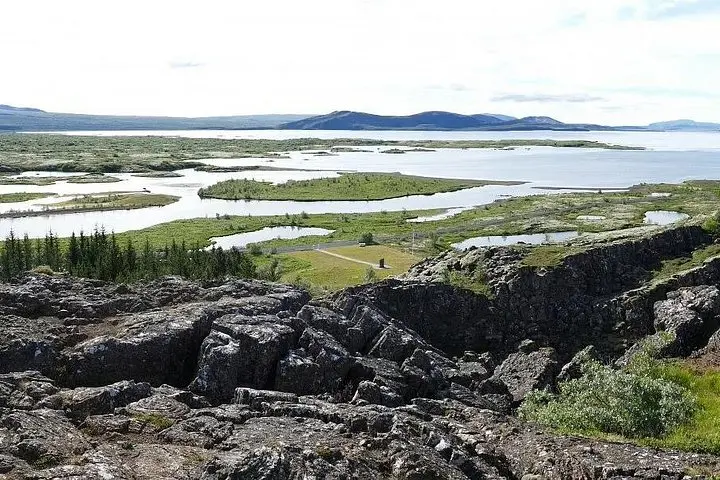
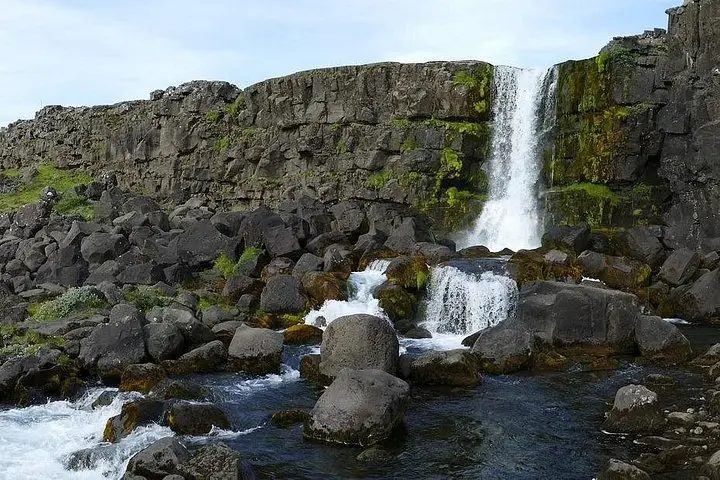
Þingvellir (Thingvellir) is more than a pretty canyon. It’s the historic seat of Alþingi, Iceland’s parliament founded in 930 AD, and a living classroom of plate tectonics: the North American and Eurasian plates drift apart here at roughly 2.5 cm per year. Paths run along fissures, over old lava fields, and past Öxarárfoss waterfall; the terrain is mostly flat to rolling, with short paved and gravel walks totaling a few kilometers if you explore.
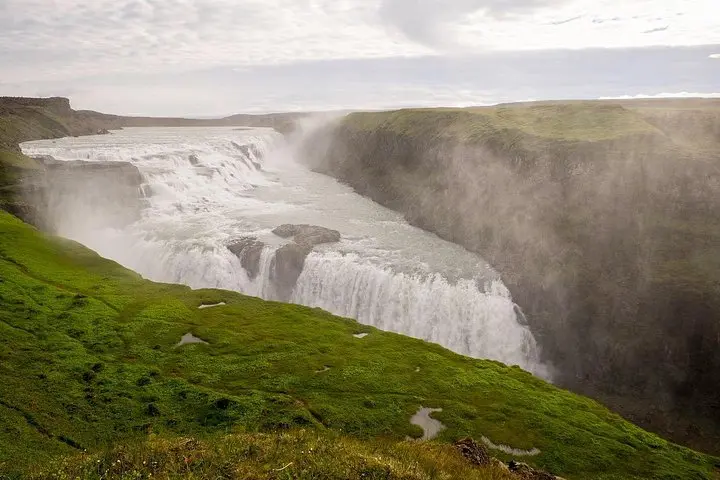
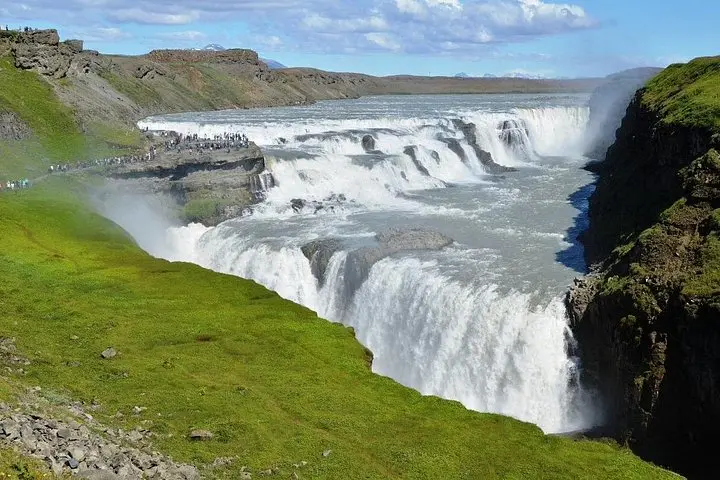
At Geysir geothermal area, Strokkur punctuates the steam with a predictable roar every 5–10 minutes—an easy place to practice timing a dramatic shot. Gullfoss is next: a two-tiered waterfall that throws glacier melt into a canyon with enough force to bruise the air; viewing platforms give different perspectives, and spray can soak an exposed camera in seconds.
Kerið closes the loop with color: a volcanic crater lake rimmed in oxidized red and green slopes and a shallow blue pool at the center. The crater measures roughly 170 meters across and plunges about 55 meters—simple switchback paths along the rim make for short, sharp viewpoints rather than long hikes.
Practical guide: the full loop is an active day—expect roughly 8 hours and about 230 km (≈140 miles) of driving with multiple short walks at each stop. Dress in waterproof layers; wind and spray are constants. Sturdy, waterproof footwear handles wet gravel and muddy paths. Bring a daypack with water, snacks, a spare memory card, and a charged power bank. Restrooms are available at major stops but limited between them; restaurants cluster near Geysir.
Logistics and tips: morning pickups across central Reykjavík start around 8:30–9:00. Small-group vans keep the pace brisk—plan for 30–60 minute visits at each main stop. If you’re chasing the northern lights, winter tours can be flexible, but summer’s midnight sun brings long golden hours and farm stops such as Efsti-Dalur or Hraðastaðir that showcase Icelandic livestock and horses.
This tour suits travelers who want an efficient, interpretive introduction to Iceland’s geology, history, and rural life—no technical skills required, just a readiness for wind, wet, and wonder.
The tour runs about 8 hours total with roughly 230 km (approx. 140 miles) of driving; expect multiple short stops for walking and photography.
Major stops like Geysir and Gullfoss have facilities and cafés; options between stops are limited, so bring snacks if you have dietary restrictions.
Yes—walks are short and terrain is generally easy, but the day is long and can be wet or windy; plan for frequent rests and appropriate clothing.
Yes—the itinerary includes a stop at Efsti-Dalur farm that many other tours skip; summer visits often include the Hraðastaðir farm zoo, while winter may add a horse farm stop.
Tours may be canceled or adjusted in severe weather for safety; this operator allows full refunds if you cancel at least 24 hours in advance and may cancel due to conditions.
No technical skills or special equipment are required—basic outdoor clothing and good footwear are sufficient.
Guiding.is operates guided outdoor trips and adventures with an emphasis on safety, stewardship, and memorable experiences.
You step onto the coach in Reykjavík as low clouds lift from the Atlantic, and the city recedes into a black-lava countryside that seems to inhale and exhale steam. The day unfolds like a geological primer: first Þingvellir’s rift valley where the earth has a visible fracture, then the steamy choreography of Strokkur at Geysir, the raw force of Gullfoss, and finally the jewel-toned bowl of Kerið crater. The guide—local, concise, attentive—threads history and practicalities between photo stops, and the van hums along country roads for an eight-hour loop.
You step onto the coach in Reykjavík as low clouds lift from the Atlantic, and the city recedes into a black-lava countryside that seems to inhale and exhale steam. The day unfolds like a geological primer: first Þingvellir’s rift valley where the earth has a visible fracture, then the steamy choreography of Strokkur at Geysir, the raw force of Gullfoss, and finally the jewel-toned bowl of Kerið crater. The guide—local, concise, attentive—threads history and practicalities between photo stops, and the van hums along country roads for an eight-hour loop.
Þingvellir (Thingvellir) is more than a pretty canyon. It’s the historic seat of Alþingi, Iceland’s parliament founded in 930 AD, and a living classroom of plate tectonics: the North American and Eurasian plates drift apart here at roughly 2.5 cm per year. Paths run along fissures, over old lava fields, and past Öxarárfoss waterfall; the terrain is mostly flat to rolling, with short paved and gravel walks totaling a few kilometers if you explore.
At Geysir geothermal area, Strokkur punctuates the steam with a predictable roar every 5–10 minutes—an easy place to practice timing a dramatic shot. Gullfoss is next: a two-tiered waterfall that throws glacier melt into a canyon with enough force to bruise the air; viewing platforms give different perspectives, and spray can soak an exposed camera in seconds.
Kerið closes the loop with color: a volcanic crater lake rimmed in oxidized red and green slopes and a shallow blue pool at the center. The crater measures roughly 170 meters across and plunges about 55 meters—simple switchback paths along the rim make for short, sharp viewpoints rather than long hikes.
Practical guide: the full loop is an active day—expect roughly 8 hours and about 230 km (≈140 miles) of driving with multiple short walks at each stop. Dress in waterproof layers; wind and spray are constants. Sturdy, waterproof footwear handles wet gravel and muddy paths. Bring a daypack with water, snacks, a spare memory card, and a charged power bank. Restrooms are available at major stops but limited between them; restaurants cluster near Geysir.
Logistics and tips: morning pickups across central Reykjavík start around 8:30–9:00. Small-group vans keep the pace brisk—plan for 30–60 minute visits at each main stop. If you’re chasing the northern lights, winter tours can be flexible, but summer’s midnight sun brings long golden hours and farm stops such as Efsti-Dalur or Hraðastaðir that showcase Icelandic livestock and horses.
This tour suits travelers who want an efficient, interpretive introduction to Iceland’s geology, history, and rural life—no technical skills required, just a readiness for wind, wet, and wonder.