THE ADVENTURE COLLECTIVE® · Independent discovery and booking for outdoor travel

Spend a day tracing Iceland’s elemental chapters: the rift valley where democracy began, a field of steaming geysers, and a two-tiered waterfall that roars with glacial power. This guided Golden Circle tour packs geology, history and accessible walking into a single, well-paced day.
Spend a day tracing Iceland’s elemental chapters: the rift valley where democracy began, a field of steaming geysers, and a two-tiered waterfall that roars with glacial power. This guided Golden Circle tour packs geology, history and accessible walking into a single, well-paced day.
By the time the bus slips out of Reykjavík the city’s edges have already blurred into open road and low, folded lava fields. The tour’s rhythm is steady — a comfortable seat, a professional guide’s quiet commentary, and windows that frame an island that composes itself in chapters: tectonic scars, boiling earth, and a waterfall that refuses to be polite.
Verified experiences and guided adventures in the surrounding area.
Operated by Gray Line Iceland · Reykjavík, Capital Region
By the time the bus slips out of Reykjavík the city’s edges have already blurred into open road and low, folded lava fields. The tour’s rhythm is steady — a comfortable seat, a professional guide’s quiet commentary, and windows that frame an island that composes itself in chapters: tectonic scars, boiling earth, and a waterfall that refuses to be polite.
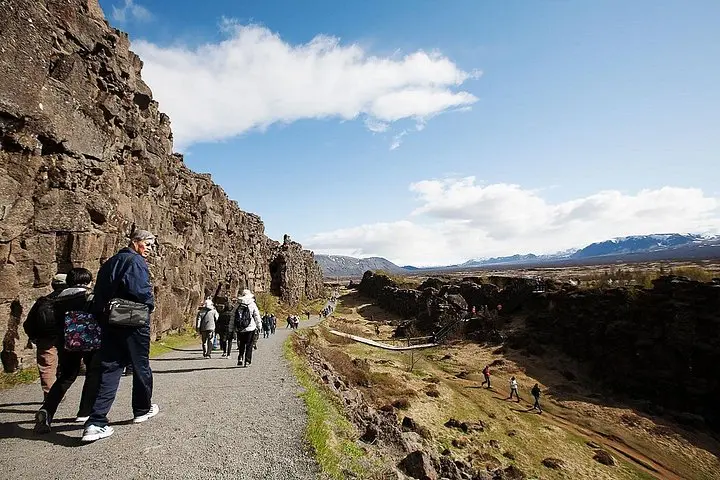
Thingvellir opens the day with a different sort of spectacle: not one of brute force but of slow, inevitable motion. Walk the Almannagjá rift and you can feel the Atlantic and Eurasian plates arguing with each other, the land pulling apart centimeter by centimeter. This is where Iceland’s Alþingi — one of the world’s oldest parliaments — met in the 10th century. History hangs in the air here the way mist hangs over Thingvallavatn, Iceland’s largest natural lake.
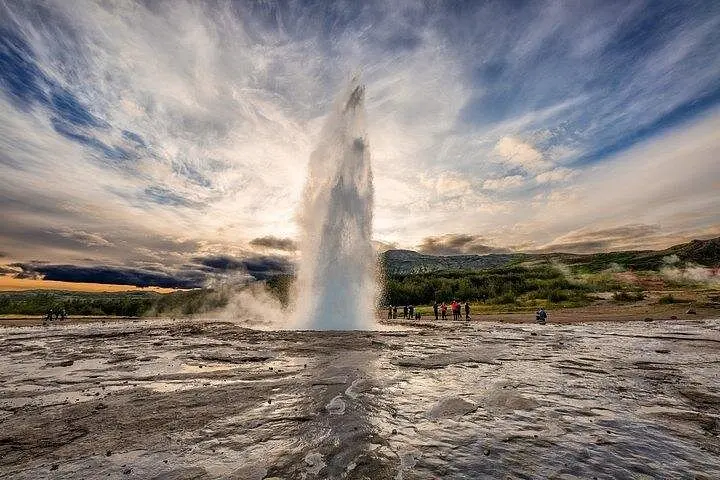
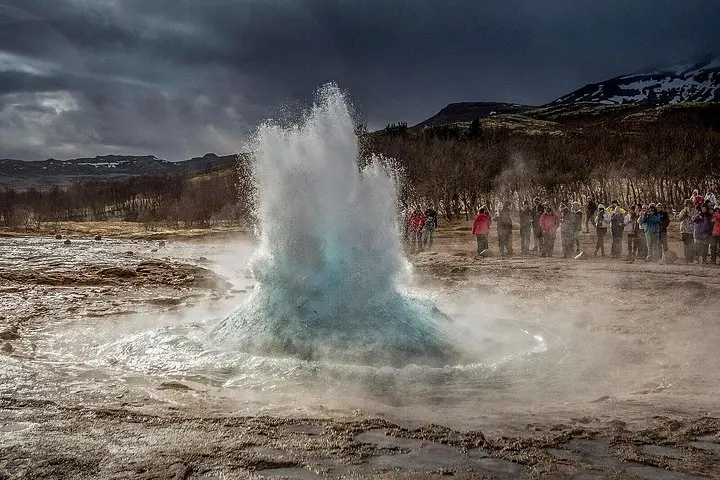
Haukadalur’s geothermal theater follows. Steam sighs from vents, mud hisses, and Strokkur, the showier of the geysers, punctuates the field every few minutes with a vertical plume of scalding water. Geysir gave its name to geysers worldwide; today it mostly slumbers, but the surrounding geothermal activity still grabs attention. Bring distance between you and an eruption — the air briefly tastes of sulfur and surprise.
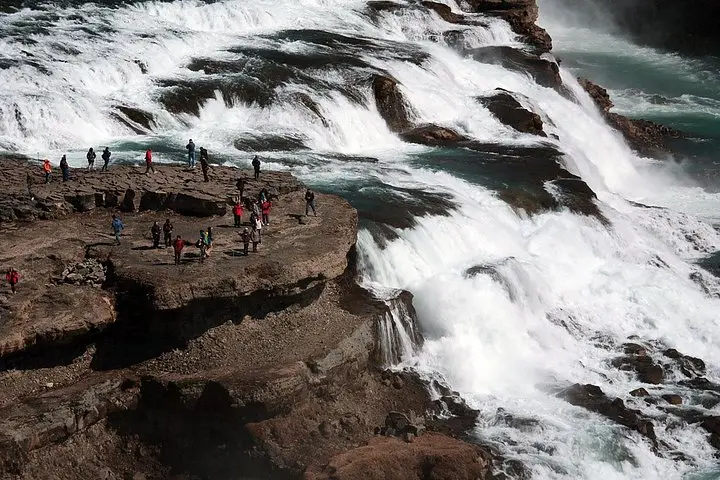
Gullfoss closes the loop with thunder. The Hvítá River dares gravity, dropping a combined 32 meters down two tiers into a canyon. Walk the upper and lower paths for different perspectives — the upper walk gives sweeping context, the lower brings the roar close enough to feel dampness on your face. On bright days spray throws rainbows across the falls, while in winter the falls carve a moodier silhouette edged in ice.
Practical edge: the tour is a long day of short walks and a lot of driving — expect roughly 6–8 hours including stops. Surfaces at each site vary from paved viewpoints to uneven gravel and packed earth; bring waterproof outer layers and grippy footwear. The itinerary covers cultural, geological, and natural highlights with a guide who explains both Viking-era law and glacial rivers. Amenities are available at main stops, but food is limited to snack cafés; pack water and snacks if you prefer options.
Timing matters — summer brings long daylight and crowds, winter brings limited hours but dramatic light and possible northern lights on the return drive. Respect the landscape: stay on marked paths, avoid trampling fragile ground, and follow guide directions around thermal vents. With modest preparation, the Golden Circle is a concentrated day of Iceland’s defining forces - politics carved in stone, heat rising from the earth, and water that will not be held back.
The tour runs about 6–8 hours door-to-door from central Reykjavík, including stops at Thingvellir, Geysir and Gullfoss.
Admission is included where noted by the operator; general site access to Thingvellir, Geysir and Gullfoss is free, though parking or visitor center fees may apply in some seasons.
The tour is family-friendly with short walks; however, uneven surfaces at sites may make strollers difficult—foldable wheelchairs are accommodated with assistance.
Pickup from selected hotels and meeting points is offered; confirm your pickup location with the operator after booking.
Possibly in winter if conditions are right, but the tour’s schedule and daylight hours make aurora sightings unpredictable—ask the guide about evening transfers that maximize viewing time.
The tour operates in most conditions, but the operator may cancel for safety; dress for wind and rain and follow the guide’s instructions at each site.
Gray Line Iceland operates guided outdoor trips and adventures with an emphasis on safety, stewardship, and memorable experiences.
By the time the bus slips out of Reykjavík the city’s edges have already blurred into open road and low, folded lava fields. The tour’s rhythm is steady — a comfortable seat, a professional guide’s quiet commentary, and windows that frame an island that composes itself in chapters: tectonic scars, boiling earth, and a waterfall that refuses to be polite.
By the time the bus slips out of Reykjavík the city’s edges have already blurred into open road and low, folded lava fields. The tour’s rhythm is steady — a comfortable seat, a professional guide’s quiet commentary, and windows that frame an island that composes itself in chapters: tectonic scars, boiling earth, and a waterfall that refuses to be polite.
Thingvellir opens the day with a different sort of spectacle: not one of brute force but of slow, inevitable motion. Walk the Almannagjá rift and you can feel the Atlantic and Eurasian plates arguing with each other, the land pulling apart centimeter by centimeter. This is where Iceland’s Alþingi — one of the world’s oldest parliaments — met in the 10th century. History hangs in the air here the way mist hangs over Thingvallavatn, Iceland’s largest natural lake.
Haukadalur’s geothermal theater follows. Steam sighs from vents, mud hisses, and Strokkur, the showier of the geysers, punctuates the field every few minutes with a vertical plume of scalding water. Geysir gave its name to geysers worldwide; today it mostly slumbers, but the surrounding geothermal activity still grabs attention. Bring distance between you and an eruption — the air briefly tastes of sulfur and surprise.
Gullfoss closes the loop with thunder. The Hvítá River dares gravity, dropping a combined 32 meters down two tiers into a canyon. Walk the upper and lower paths for different perspectives — the upper walk gives sweeping context, the lower brings the roar close enough to feel dampness on your face. On bright days spray throws rainbows across the falls, while in winter the falls carve a moodier silhouette edged in ice.
Practical edge: the tour is a long day of short walks and a lot of driving — expect roughly 6–8 hours including stops. Surfaces at each site vary from paved viewpoints to uneven gravel and packed earth; bring waterproof outer layers and grippy footwear. The itinerary covers cultural, geological, and natural highlights with a guide who explains both Viking-era law and glacial rivers. Amenities are available at main stops, but food is limited to snack cafés; pack water and snacks if you prefer options.
Timing matters — summer brings long daylight and crowds, winter brings limited hours but dramatic light and possible northern lights on the return drive. Respect the landscape: stay on marked paths, avoid trampling fragile ground, and follow guide directions around thermal vents. With modest preparation, the Golden Circle is a concentrated day of Iceland’s defining forces - politics carved in stone, heat rising from the earth, and water that will not be held back.