THE ADVENTURE COLLECTIVE® · Independent discovery and booking for outdoor travel

A private, full-day circuit from Reykjavík that packs Þingvellir’s rift valley, Strokkur’s eruptions, the thunder of Gullfoss, and Kerið’s blue crater into one accessible itinerary. Expect short walks, dramatic geology, and local farm food along the way.
A private, full-day circuit from Reykjavík that packs Þingvellir’s rift valley, Strokkur’s eruptions, the thunder of Gullfoss, and Kerið’s blue crater into one accessible itinerary. Expect short walks, dramatic geology, and local farm food along the way.
You meet your guide at Reykjavík’s City Hall before dawn, the harbor air cold enough to make your breath visible as the van slides out onto Route 1. The drive is quiet for a while, farms receding into lava fields, and then the landscape opens: plate boundaries, boiling earth, and a waterfall that roars like an old machine. Over the next eight to ten hours this private circuit will take you through Iceland’s most elemental scenes—each stop a different way the island insists on being noticed.
Verified experiences and guided adventures in the surrounding area.
Operated by Iceland Adventures · Reykjavík, Capital Region
You meet your guide at Reykjavík’s City Hall before dawn, the harbor air cold enough to make your breath visible as the van slides out onto Route 1. The drive is quiet for a while, farms receding into lava fields, and then the landscape opens: plate boundaries, boiling earth, and a waterfall that roars like an old machine. Over the next eight to ten hours this private circuit will take you through Iceland’s most elemental scenes—each stop a different way the island insists on being noticed.
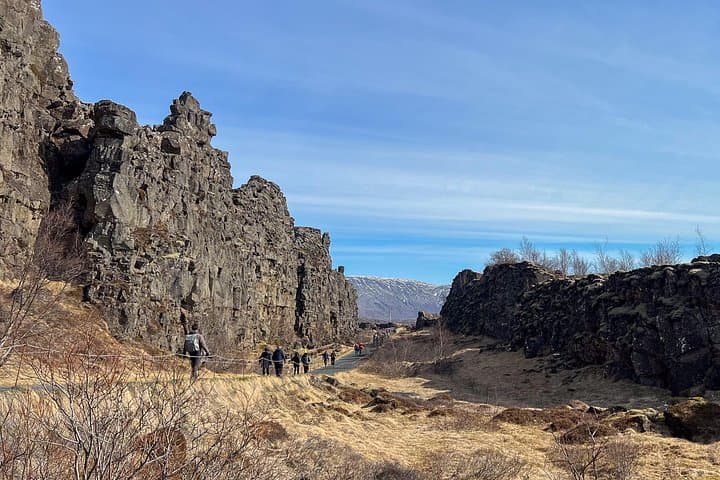
At Þingvellir, the rift valley exposes the slow violence of continents separating. Walk along boardwalks that thread the Almannagjá gorge and you can feel the plates at work beneath your feet; the clear water of Silfra hints at glacial melt hidden upstream. This is where Iceland’s medieval parliament, the Alþingi, was founded in 930 AD—an assembly point for law, trade, and saga-telling that still echoes in the place names and the crisp, open air.
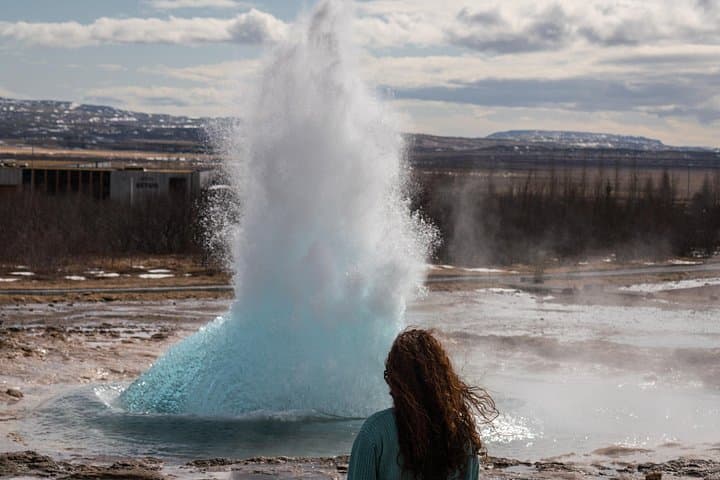
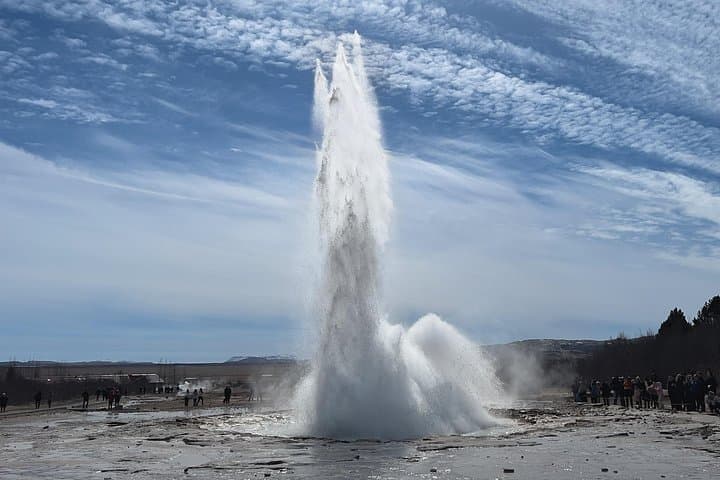
The geothermal theatre of Geysir is theatrical in the best sense. Strokkur punctuates the field every few minutes, impatiently spitting boiling water into the sky while fumaroles hiss and steam sculls across the boardwalks. The smell of sulfur is part of the show—sharp, mineral, alive.
Gullfoss brings a different kind of force: the river Hvítá channels through a two-tiered canyon and drops with a sound like distant artillery. On clear days a spray-born rainbow can frame the falls; on stormy ones the mist dares you to draw near. The pathways here have stairs and viewpoints that change the scale of the fall, from broad to terrifyingly intimate.
Kerið closes the loop with color—an old volcanic crater ringed in oxidized basalt and a jewel-blue lake in its bowl. The rim walk only takes 30–45 minutes but it’s an efficient way to read volcanic history in cross-section.
The tour is more than sightseeing: you’ll taste Icelandic farm cuisine at Efstidalur or eat among greenhouse tomatoes at Friðheimar, both offering a local counterpoint to the raw geology.
Practicalities: expect an 8–10 hour day with several short walks (up to 2–3 kilometers of easy-to-moderate walking total), comfortable shoes, and layered waterproof clothing—weather swings fast. The tour is private with flexible hotel pick-up across Reykjavík; the operator allows cancellations up to 24 hours before departure. If you hope for the northern lights, choose a winter date and keep plans loose—clear skies and solar activity are required.
This classic loop is accessible for most travelers but rewards attention: arrive curious, carry a thermos, and let the geology, steam, and water shape your day.
The tour lasts about 8–10 hours; typical departures are in the morning from Reykjavík’s City Hall bus stop with return in the evening.
Yes; the operator offers customizable pick-up from many Reykjavík hotels—confirm your pickup during booking.
Lunch is not included but the itinerary stops at a local farm restaurant (Efstidalur) or Friðheimar greenhouse where you can purchase lunch.
The tour notes stroller accessibility for infants; however, some paths have stairs or uneven ground—bring a carrier for rougher stretches.
Tours may be canceled for bad weather; the operator’s policy allows full refunds if canceled at least 24 hours before departure or if bad weather forces cancellation.
Possibly in winter if conditions are right, but the Golden Circle is best for daytime geology; aurora viewing requires clear, dark skies and solar activity, so book extra nights for aurora-specific excursions.
Iceland Adventures operates guided outdoor trips and adventures with an emphasis on safety, stewardship, and memorable experiences.

You meet your guide at Reykjavík’s City Hall before dawn, the harbor air cold enough to make your breath visible as the van slides out onto Route 1. The drive is quiet for a while, farms receding into lava fields, and then the landscape opens: plate boundaries, boiling earth, and a waterfall that roars like an old machine. Over the next eight to ten hours this private circuit will take you through Iceland’s most elemental scenes—each stop a different way the island insists on being noticed.
You meet your guide at Reykjavík’s City Hall before dawn, the harbor air cold enough to make your breath visible as the van slides out onto Route 1. The drive is quiet for a while, farms receding into lava fields, and then the landscape opens: plate boundaries, boiling earth, and a waterfall that roars like an old machine. Over the next eight to ten hours this private circuit will take you through Iceland’s most elemental scenes—each stop a different way the island insists on being noticed.
At Þingvellir, the rift valley exposes the slow violence of continents separating. Walk along boardwalks that thread the Almannagjá gorge and you can feel the plates at work beneath your feet; the clear water of Silfra hints at glacial melt hidden upstream. This is where Iceland’s medieval parliament, the Alþingi, was founded in 930 AD—an assembly point for law, trade, and saga-telling that still echoes in the place names and the crisp, open air.
The geothermal theatre of Geysir is theatrical in the best sense. Strokkur punctuates the field every few minutes, impatiently spitting boiling water into the sky while fumaroles hiss and steam sculls across the boardwalks. The smell of sulfur is part of the show—sharp, mineral, alive.
Gullfoss brings a different kind of force: the river Hvítá channels through a two-tiered canyon and drops with a sound like distant artillery. On clear days a spray-born rainbow can frame the falls; on stormy ones the mist dares you to draw near. The pathways here have stairs and viewpoints that change the scale of the fall, from broad to terrifyingly intimate.
Kerið closes the loop with color—an old volcanic crater ringed in oxidized basalt and a jewel-blue lake in its bowl. The rim walk only takes 30–45 minutes but it’s an efficient way to read volcanic history in cross-section.
The tour is more than sightseeing: you’ll taste Icelandic farm cuisine at Efstidalur or eat among greenhouse tomatoes at Friðheimar, both offering a local counterpoint to the raw geology.
Practicalities: expect an 8–10 hour day with several short walks (up to 2–3 kilometers of easy-to-moderate walking total), comfortable shoes, and layered waterproof clothing—weather swings fast. The tour is private with flexible hotel pick-up across Reykjavík; the operator allows cancellations up to 24 hours before departure. If you hope for the northern lights, choose a winter date and keep plans loose—clear skies and solar activity are required.
This classic loop is accessible for most travelers but rewards attention: arrive curious, carry a thermos, and let the geology, steam, and water shape your day.