THE ADVENTURE COLLECTIVE® · Independent discovery and booking for outdoor travel

A full-day loop from Reykjavík that pairs raw geology with living culture — stand in the Þingvellir rift, watch Strokkur erupt, feel the thunder of Gullfoss, and soak in a hot spring. Practical, scenic, and achievable in one inspired day.
A full-day loop from Reykjavík that pairs raw geology with living culture — stand in the Þingvellir rift, watch Strokkur erupt, feel the thunder of Gullfoss, and soak in a hot spring. Practical, scenic, and achievable in one inspired day.
The bus eases out of Reykjavík while the low sun throws long shadows across black lava fields. In scarcely an hour the asphalt gives way to a landscape that feels engineered by extremes: rift valleys that cleave the earth, steam vents that huff warnings, and a waterfall that seems to throw itself into the gorge.
Verified experiences and guided adventures in the surrounding area.
Operated by Olafur Omarsson · Reykjavik, Capital Region
The bus eases out of Reykjavík while the low sun throws long shadows across black lava fields. In scarcely an hour the asphalt gives way to a landscape that feels engineered by extremes: rift valleys that cleave the earth, steam vents that huff warnings, and a waterfall that seems to throw itself into the gorge.
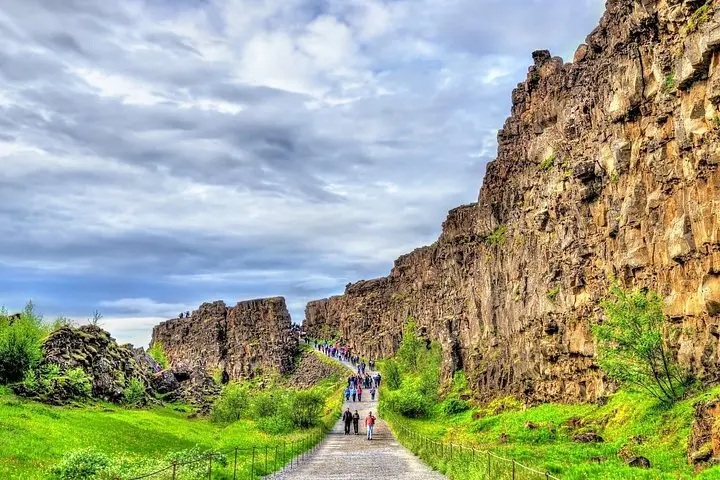
The day begins at Þingvellir (Thingvellir), where the field of Almannagjá slices open like a wound in the high plain. Walking the marked path, travelers stand in the cleft between the North American and Eurasian plates; the ground here has subsided roughly 70 meters. It’s a place of layered narratives — early Icelandic lawmaking (an assembly began here in 930), and slow, relentless tectonics shaping the country’s character.
Down the road, Gullfoss makes the geology audible. The two-tiered fall drops a combined 32 meters into the Hvítá canyon, the river daring the air itself as it becomes mist. On bright days, spray catches light and throws rainbows across the spray; in wind or winter it dresses in ice and thunders still.
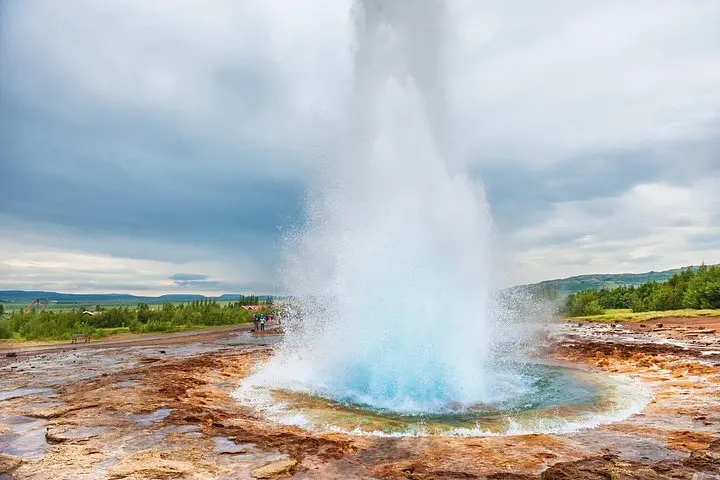
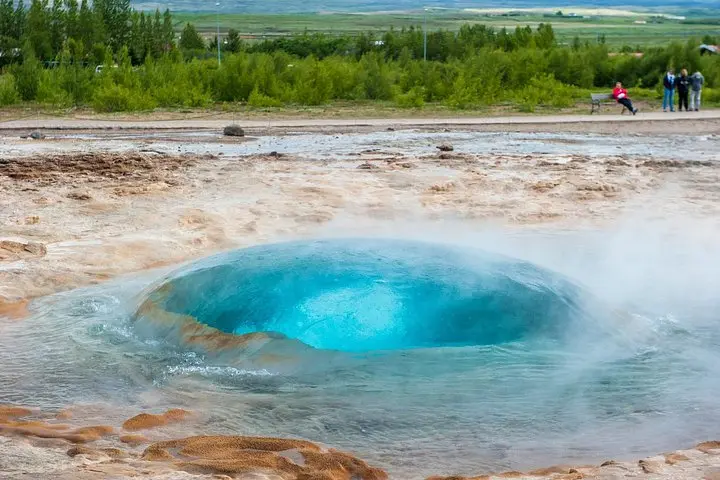
At Geysir geothermal area the earth is actively theatrical. The eponymous Great Geysir is mostly dormant, but Strokkur erupts reliably every 4–10 minutes, boiling water launched in a clean column — a reminder that the crust beneath Iceland is restless. Paths are fenced and crusts fragile; follow the boardwalks and signs.
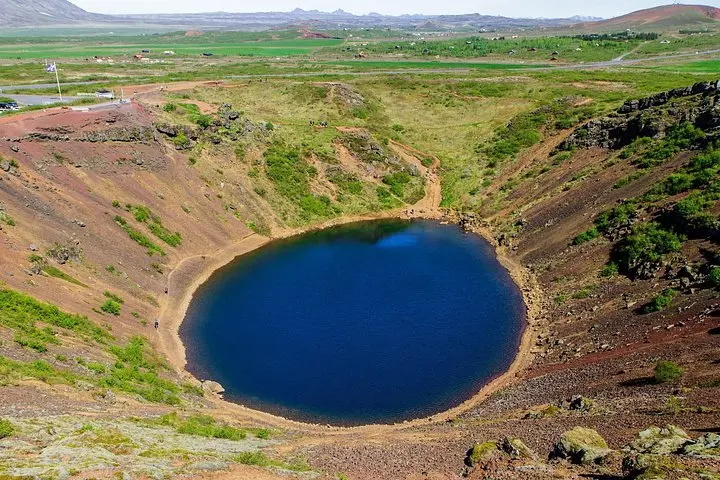
The route threads human-scale stops among geological wonders. Friðheimar is a greenhouse and family farm that grows tomatoes year-round under artificial lights and keeps Icelandic horses; the tomato soup served warm feels like a local ritual. Kerið crater, about 6,500 years old and roughly 270 by 170 meters with a 55-meter rim, is a compact reminder of volcanic violence and time’s patient sculpting. The day often wraps with a dip at the Secret Lagoon — an older, quieter hot pool — which calms salt-and-steel travel nerves.
Practical notes: this private, air-conditioned tour runs about 6–8 hours and includes short walks at each site (most routes are under 2 km; expect minimal elevation gain except around Kerið’s rim). Weather changes fast — bring a waterproof outer layer and sturdy shoes with grip for wet boardwalks and muddy trails. Winter daylight is short; consider morning departures to maximize light.
Culturally, the Golden Circle compresses Icelandic essentials — geothermal power, Norse settlement history, and a landscape that both provides and challenges. Respect marked trails, pack reusable water and a small daypack, and leave time at each stop to listen: gulls, steam, and the river each have a cadence that explains why people have been drawn to these places for a thousand years.
The tour lasts approximately 6–8 hours including stops at Thingvellir, Geysir, Gullfoss, Friðheimar, Kerið, and the Secret Lagoon.
Yes — the itinerary typically includes a visit to the Secret Lagoon; bring swimwear and a towel (some tours provide towels for a fee).
Lunch isn’t included, but the tour stops at Friðheimar where you can purchase meals like their tomato soup; bring snacks if you prefer.
Yes — the tour notes stroller access and infant seats are available; inform the operator when booking for arrangements.
Most stops have short, easy walks, but some viewpoints have steps or uneven ground; contact the operator to discuss specific accessibility needs.
Warm, layered clothing with a windproof, waterproof outer layer, warm hat and gloves, and shoes with good traction are recommended for winter tours.
Olafur Omarsson operates guided outdoor trips and adventures with an emphasis on safety, stewardship, and memorable experiences.
The bus eases out of Reykjavík while the low sun throws long shadows across black lava fields. In scarcely an hour the asphalt gives way to a landscape that feels engineered by extremes: rift valleys that cleave the earth, steam vents that huff warnings, and a waterfall that seems to throw itself into the gorge.
The bus eases out of Reykjavík while the low sun throws long shadows across black lava fields. In scarcely an hour the asphalt gives way to a landscape that feels engineered by extremes: rift valleys that cleave the earth, steam vents that huff warnings, and a waterfall that seems to throw itself into the gorge.
The day begins at Þingvellir (Thingvellir), where the field of Almannagjá slices open like a wound in the high plain. Walking the marked path, travelers stand in the cleft between the North American and Eurasian plates; the ground here has subsided roughly 70 meters. It’s a place of layered narratives — early Icelandic lawmaking (an assembly began here in 930), and slow, relentless tectonics shaping the country’s character.
Down the road, Gullfoss makes the geology audible. The two-tiered fall drops a combined 32 meters into the Hvítá canyon, the river daring the air itself as it becomes mist. On bright days, spray catches light and throws rainbows across the spray; in wind or winter it dresses in ice and thunders still.
At Geysir geothermal area the earth is actively theatrical. The eponymous Great Geysir is mostly dormant, but Strokkur erupts reliably every 4–10 minutes, boiling water launched in a clean column — a reminder that the crust beneath Iceland is restless. Paths are fenced and crusts fragile; follow the boardwalks and signs.
The route threads human-scale stops among geological wonders. Friðheimar is a greenhouse and family farm that grows tomatoes year-round under artificial lights and keeps Icelandic horses; the tomato soup served warm feels like a local ritual. Kerið crater, about 6,500 years old and roughly 270 by 170 meters with a 55-meter rim, is a compact reminder of volcanic violence and time’s patient sculpting. The day often wraps with a dip at the Secret Lagoon — an older, quieter hot pool — which calms salt-and-steel travel nerves.
Practical notes: this private, air-conditioned tour runs about 6–8 hours and includes short walks at each site (most routes are under 2 km; expect minimal elevation gain except around Kerið’s rim). Weather changes fast — bring a waterproof outer layer and sturdy shoes with grip for wet boardwalks and muddy trails. Winter daylight is short; consider morning departures to maximize light.
Culturally, the Golden Circle compresses Icelandic essentials — geothermal power, Norse settlement history, and a landscape that both provides and challenges. Respect marked trails, pack reusable water and a small daypack, and leave time at each stop to listen: gulls, steam, and the river each have a cadence that explains why people have been drawn to these places for a thousand years.