THE ADVENTURE COLLECTIVE® · Independent discovery and booking for outdoor travel

In one efficient half-day loop from Reykjavík, the Golden Circle tour delivers geysers that erupt on cue, a thunderous waterfall carved by glacial rivers, and the rift valley where Iceland’s parliament began. It’s geology and history served with the convenience of a guided bus.
In one efficient half-day loop from Reykjavík, the Golden Circle tour delivers geysers that erupt on cue, a thunderous waterfall carved by glacial rivers, and the rift valley where Iceland’s parliament began. It’s geology and history served with the convenience of a guided bus.
A wind-swept bus slips away from Reykjavík and the city becomes a line of rooftops behind you. Within an hour the asphalt gives way to pumice fields and low lava ridges; the guide’s voice softens as the road approaches places that seem to be made by different rules—steam rising like signals from the earth, a river hissing into a gorge, and a rocky plain split in two. This is the Golden Circle, Iceland’s compact primer on volcanic power, glacial melt, and human history, delivered in a focused 6½-hour loop.
Verified experiences and guided adventures in the surrounding area.
Operated by Reykjavik Excursions · Reykjavík, Capital Region
A wind-swept bus slips away from Reykjavík and the city becomes a line of rooftops behind you. Within an hour the asphalt gives way to pumice fields and low lava ridges; the guide’s voice softens as the road approaches places that seem to be made by different rules—steam rising like signals from the earth, a river hissing into a gorge, and a rocky plain split in two. This is the Golden Circle, Iceland’s compact primer on volcanic power, glacial melt, and human history, delivered in a focused 6½-hour loop.
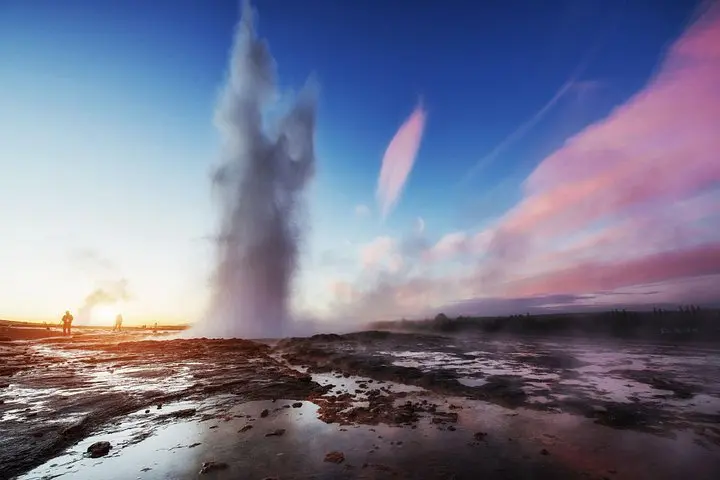
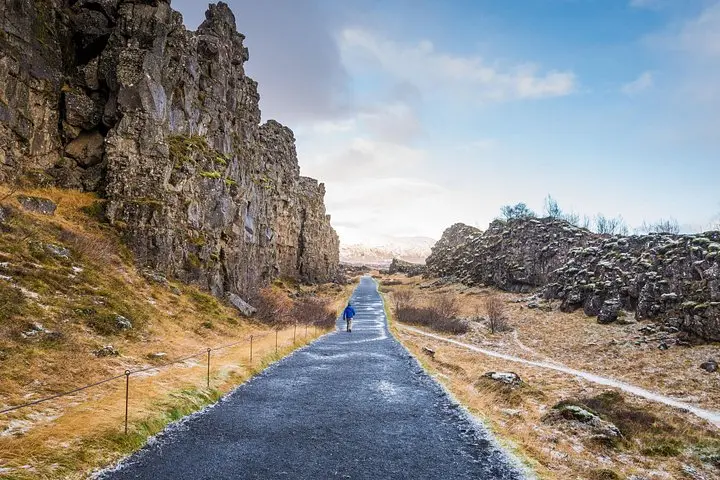
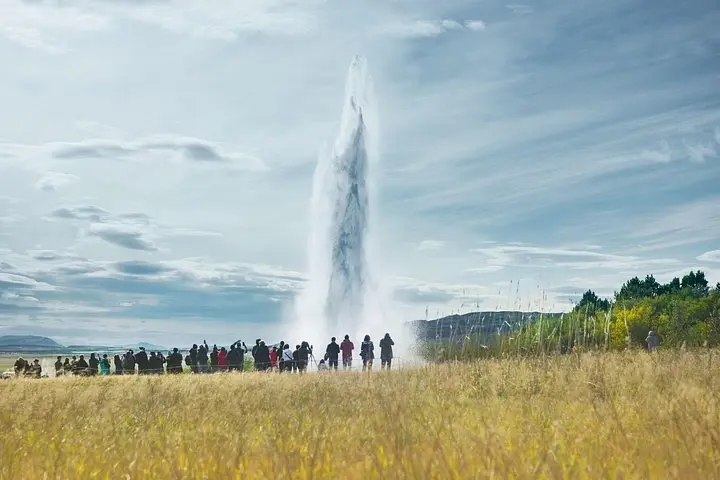
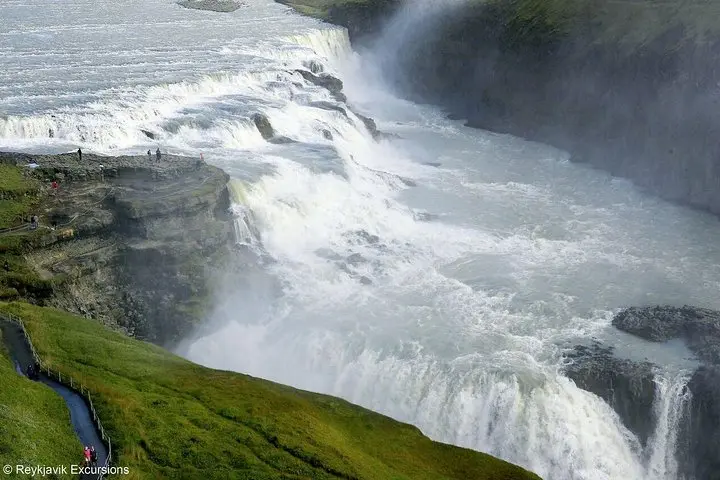
The route threads three defining stops. At the Geysir geothermal area, Strokkur punctuates the landscape every few minutes—a column of boiling water that tests your reflexes with each eruption. Gullfoss follows: the Hvítá river narrows and then plunges in tiers into a jagged canyon, sending sprays that catch light and sometimes hold rainbows. Þingvellir National Park is less theatrical in motion but heavier in meaning; the rift valley between the North American and Eurasian plates is visible in rocky fissures and cliffs, and the flat meadow was the stage for Alþingi, the world’s oldest surviving parliamentary institution since 930 AD.
Geology is the guide here as much as the human story. The geysers are signs of shallow magma and groundwater colliding; Gullfoss exists because meltwater from Langjökull glacier is channeled into the Hvítá, its force shaped by volcanic bedrock and glacial debris over millennia. Culturally, this route runs through farming communities and greenhouses that use geothermal heat to grow tomatoes and cucumbers year-round—an odd, warm island of agriculture at high latitude.
Practicalities matter on this compressed itinerary. The tour departs from BSI Bus Terminal in Reykjavík—be there 15 minutes early, or 30 minutes for hotel pickup options. Time at each major stop is limited (roughly 60 minutes at Geysir, 45 at Gullfoss, 30 at Þingvellir), so prioritize what you want to do: photography, short hikes, or a quick visit to a café. Dress in windproof, waterproof layers and wear sturdy shoes—the paths around Gullfoss can be slippery and gusty. Bring a refillable water bottle, and plan for limited snack options between stops; the bus has Wi-Fi and narration, but the natural sites are where the audio goes quiet and the wind speaks.
For first-time visitors, this tour is the best single-day primer on Icelandic landscapes: geological theater, a waterfall with attitude, and a political landscape older than many nations. For photographers and travelers who want to move efficiently without driving, it’s practical, comfortably paced, and surprisingly intimate when the coach doors open and the elements remind you how these places were formed.
The main departure is from BSI Bus Terminal in Reykjavík; arrive at least 15 minutes early (30 minutes if you’ve booked hotel pickup).
The scheduled duration is about 6.5 hours, including travel and stop times—expect roughly 60 minutes at Geysir, 45 at Gullfoss, and 30 at Þingvellir on this itinerary.
Admission to the sites is generally free; the tour price covers transportation, guide services, and optional pickup—no park fees are required for these stops.
Yes—paths are short and the tour is classified as easy; however, some viewpoints at Gullfoss involve stairs and wind exposure that may be uncomfortable for very young children or those with mobility issues.
Yes—the BSI Bus Terminal offers luggage storage for a small fee if you need to store bags before or after the tour.
The operator can cancel tours for severe weather; their policy allows full refunds if canceled at least 24 hours before, and the tour may be canceled closer to departure for safety reasons.
Reykjavik Excursions operates guided outdoor trips and adventures with an emphasis on safety, stewardship, and memorable experiences.
A wind-swept bus slips away from Reykjavík and the city becomes a line of rooftops behind you. Within an hour the asphalt gives way to pumice fields and low lava ridges; the guide’s voice softens as the road approaches places that seem to be made by different rules—steam rising like signals from the earth, a river hissing into a gorge, and a rocky plain split in two. This is the Golden Circle, Iceland’s compact primer on volcanic power, glacial melt, and human history, delivered in a focused 6½-hour loop.
A wind-swept bus slips away from Reykjavík and the city becomes a line of rooftops behind you. Within an hour the asphalt gives way to pumice fields and low lava ridges; the guide’s voice softens as the road approaches places that seem to be made by different rules—steam rising like signals from the earth, a river hissing into a gorge, and a rocky plain split in two. This is the Golden Circle, Iceland’s compact primer on volcanic power, glacial melt, and human history, delivered in a focused 6½-hour loop.
The route threads three defining stops. At the Geysir geothermal area, Strokkur punctuates the landscape every few minutes—a column of boiling water that tests your reflexes with each eruption. Gullfoss follows: the Hvítá river narrows and then plunges in tiers into a jagged canyon, sending sprays that catch light and sometimes hold rainbows. Þingvellir National Park is less theatrical in motion but heavier in meaning; the rift valley between the North American and Eurasian plates is visible in rocky fissures and cliffs, and the flat meadow was the stage for Alþingi, the world’s oldest surviving parliamentary institution since 930 AD.
Geology is the guide here as much as the human story. The geysers are signs of shallow magma and groundwater colliding; Gullfoss exists because meltwater from Langjökull glacier is channeled into the Hvítá, its force shaped by volcanic bedrock and glacial debris over millennia. Culturally, this route runs through farming communities and greenhouses that use geothermal heat to grow tomatoes and cucumbers year-round—an odd, warm island of agriculture at high latitude.
Practicalities matter on this compressed itinerary. The tour departs from BSI Bus Terminal in Reykjavík—be there 15 minutes early, or 30 minutes for hotel pickup options. Time at each major stop is limited (roughly 60 minutes at Geysir, 45 at Gullfoss, 30 at Þingvellir), so prioritize what you want to do: photography, short hikes, or a quick visit to a café. Dress in windproof, waterproof layers and wear sturdy shoes—the paths around Gullfoss can be slippery and gusty. Bring a refillable water bottle, and plan for limited snack options between stops; the bus has Wi-Fi and narration, but the natural sites are where the audio goes quiet and the wind speaks.
For first-time visitors, this tour is the best single-day primer on Icelandic landscapes: geological theater, a waterfall with attitude, and a political landscape older than many nations. For photographers and travelers who want to move efficiently without driving, it’s practical, comfortably paced, and surprisingly intimate when the coach doors open and the elements remind you how these places were formed.