THE ADVENTURE COLLECTIVE® · Independent discovery and booking for outdoor travel

A private, full‑day minibus tour that covers Iceland’s signature Golden Circle: Þingvellir’s rift valley, the spouting Strokkur geyser, and the thunderous Gullfoss. This guided route pairs geological spectacle with bite‑size walks and local context—ideal for travelers who want a compact, insightful day out of Reykjavik.
A private, full‑day minibus tour that covers Iceland’s signature Golden Circle: Þingvellir’s rift valley, the spouting Strokkur geyser, and the thunderous Gullfoss. This guided route pairs geological spectacle with bite‑size walks and local context—ideal for travelers who want a compact, insightful day out of Reykjavik.
You step onto the minibus at Reykjavík’s old harbor and the city’s black lava roofs slide away as the driver eases onto Route 1. Within an hour the skyline loosens into broad fields, sheep clustered like punctuation. At Þingvellir the ground itself does the talking: the North American and Eurasian plates yaw a slow, visible gap and the fault lines cut the valley into clean, geometric rifts. Walking between them feels like moving through the spine of the island — tectonics rendered in rock and water.
Verified experiences and guided adventures in the surrounding area.
Operated by Friend In Iceland Tours · Reykjavík, Capital Region
You step onto the minibus at Reykjavík’s old harbor and the city’s black lava roofs slide away as the driver eases onto Route 1. Within an hour the skyline loosens into broad fields, sheep clustered like punctuation. At Þingvellir the ground itself does the talking: the North American and Eurasian plates yaw a slow, visible gap and the fault lines cut the valley into clean, geometric rifts. Walking between them feels like moving through the spine of the island — tectonics rendered in rock and water.
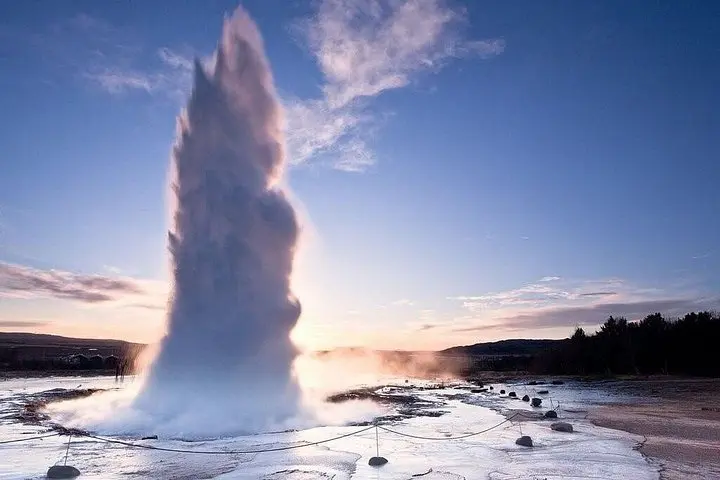
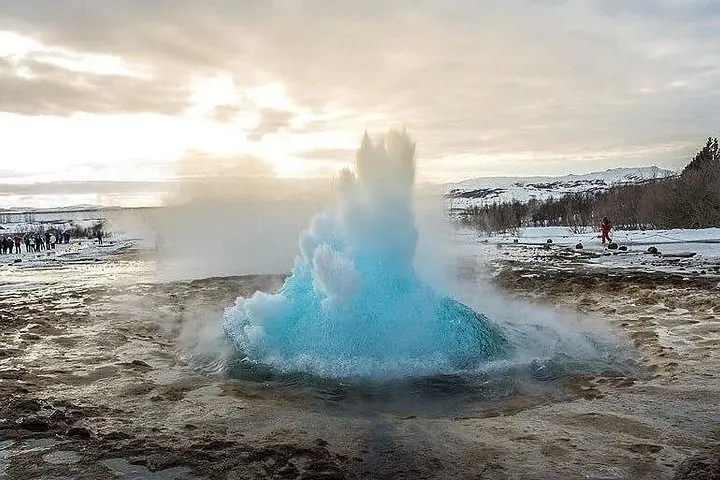
History sits plain here. Þingvellir hosted Alþingi from 930 AD, where Viking chieftains met to make laws; the lawrock still marks where arguments were settled centuries ago. The tour’s next chapters read steam and thunder. At the Geysir geothermal area, Strokkur obliges by spouting a column of hot water every few minutes, the steam smelling faintly of sulfur as the ground breathes under your feet. It’s a show of geological impatience: pressure builds, then the earth releases in a slick, sudden vertical motion.
Gullfoss is a different kind of force. Two stepped drops — a shorter curtain followed by a larger plunge — send spray into the sun until rainbows appear without apology. The Hvítá river seems to dare you closer, pulling at your camera strap with its velocity. Nearby Faxi, often overlooked, offers quieter access to salmon ladders and sheep folds, a reminder that human and natural systems have coexisted here for generations.
The mini‑bus format keeps things practical: short walks, clear viewpoints, and a guide who adjusts the day to light and weather. Guides explain the geology in plain terms, point out traditional turf houses, and flag Icelandic horses grazing in the distance — small, stout animals with big eyes that seem used to attention.
Practical notes: this is an eight‑hour day with intermittent walking on uneven paths. Weather changes fast; layers and waterproof shoes make the difference between a photo‑filled day and a damp retreat. Bring a camera with a fast shutter for Strokkur and a wide lens for Gullfoss; a small daypack with fluids, snacks, and a power bank keeps you moving between stops.
Timing matters: arrive early in summer for softer light and fewer buses; in winter watch for road changes and shorter daylight. The private format means flexibility — ask to linger at a vista or shorten a stop. Respect marked paths in geothermal zones and follow your guide’s directions; the ground can be fragile and dangerously hot. Leave with the impression of an island that shapes people and vice versa — raw, direct, and surprisingly intimate.
The tour meets and finishes downtown Reykjavík by the old harbour; hotel pickup is available on request and must be confirmed in advance.
The standard duration is about 8 hours with short walks of 10–30 minutes at each main stop—suitable for most fitness levels.
Parking fees are included; most natural sites like Þingvellir and Gullfoss don’t charge an entrance fee, though some attractions may charge for optional access.
Yes—infants can ride in strollers and must sit on laps; the tour is family‑friendly with easy walking sections.
The Golden Circle has low light pollution in parts, improving aurora chances in winter, but sightings depend on solar activity and clear skies—this is not guaranteed.
Tours may be canceled or rescheduled for safety in severe weather or poor road conditions; the operator typically requires 24‑hour notice for full refunds.
Friend In Iceland Tours operates guided outdoor trips and adventures with an emphasis on safety, stewardship, and memorable experiences.
You step onto the minibus at Reykjavík’s old harbor and the city’s black lava roofs slide away as the driver eases onto Route 1. Within an hour the skyline loosens into broad fields, sheep clustered like punctuation. At Þingvellir the ground itself does the talking: the North American and Eurasian plates yaw a slow, visible gap and the fault lines cut the valley into clean, geometric rifts. Walking between them feels like moving through the spine of the island — tectonics rendered in rock and water.
You step onto the minibus at Reykjavík’s old harbor and the city’s black lava roofs slide away as the driver eases onto Route 1. Within an hour the skyline loosens into broad fields, sheep clustered like punctuation. At Þingvellir the ground itself does the talking: the North American and Eurasian plates yaw a slow, visible gap and the fault lines cut the valley into clean, geometric rifts. Walking between them feels like moving through the spine of the island — tectonics rendered in rock and water.
History sits plain here. Þingvellir hosted Alþingi from 930 AD, where Viking chieftains met to make laws; the lawrock still marks where arguments were settled centuries ago. The tour’s next chapters read steam and thunder. At the Geysir geothermal area, Strokkur obliges by spouting a column of hot water every few minutes, the steam smelling faintly of sulfur as the ground breathes under your feet. It’s a show of geological impatience: pressure builds, then the earth releases in a slick, sudden vertical motion.
Gullfoss is a different kind of force. Two stepped drops — a shorter curtain followed by a larger plunge — send spray into the sun until rainbows appear without apology. The Hvítá river seems to dare you closer, pulling at your camera strap with its velocity. Nearby Faxi, often overlooked, offers quieter access to salmon ladders and sheep folds, a reminder that human and natural systems have coexisted here for generations.
The mini‑bus format keeps things practical: short walks, clear viewpoints, and a guide who adjusts the day to light and weather. Guides explain the geology in plain terms, point out traditional turf houses, and flag Icelandic horses grazing in the distance — small, stout animals with big eyes that seem used to attention.
Practical notes: this is an eight‑hour day with intermittent walking on uneven paths. Weather changes fast; layers and waterproof shoes make the difference between a photo‑filled day and a damp retreat. Bring a camera with a fast shutter for Strokkur and a wide lens for Gullfoss; a small daypack with fluids, snacks, and a power bank keeps you moving between stops.
Timing matters: arrive early in summer for softer light and fewer buses; in winter watch for road changes and shorter daylight. The private format means flexibility — ask to linger at a vista or shorten a stop. Respect marked paths in geothermal zones and follow your guide’s directions; the ground can be fragile and dangerously hot. Leave with the impression of an island that shapes people and vice versa — raw, direct, and surprisingly intimate.